
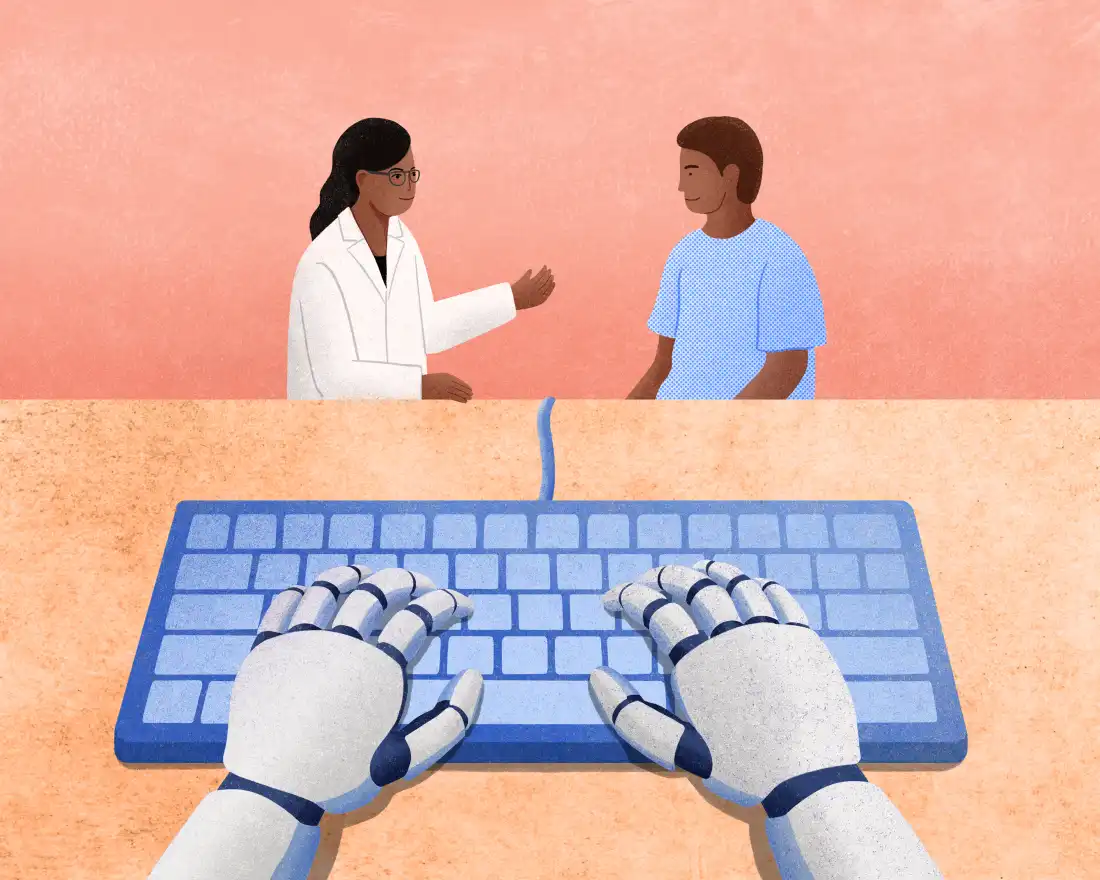
Dr. Mara Gordon, a family physician in Camden, NJ, regularly addresses reader health questions. An emerging concern involves the use of artificial intelligence (AI) scribes in medical practice.
The Role of AI Scribes
AI scribes are increasingly popular in the medical field. Physicians use them to document patient interactions across various settings, from gynecologists’ offices to emergency rooms. These tools help with note-taking, allowing doctors to focus more on patient interactions. By using AI scribes, doctors can maintain eye contact with patients instead of dividing their attention between the patient and a computer screen.
How AI Scribes Operate
During a medical visit, doctors may ask patients if they are comfortable using AI scribes. With patient consent, the doctor uses a smartphone app to record the conversation. The technology employs automatic speech recognition to differentiate between the doctor’s and the patient’s voices, which can include multiple speakers if necessary. After recording, the conversation is transcribed, and a specialized large language model transforms it into a preliminary medical note. These notes adhere to medical standards specific to the speciality and type of visit, incorporating patient information, physical exam details, and medical decision-making.
AI Scribe Technology
There are different AI scribe products available. While some are integrated into electronic medical records, others are accessible as free apps downloadable on smartphones. Many doctors, including Dr. Gordon, use personal smartphones to record patient visits with these apps, which can occasionally cause minor issues such as notification pings during recordings.
Privacy Concerns
Even though doctors might use personal phones for recording, the data is uploaded to a HIPAA-compliant cloud, ensuring no information remains on the device. The compliance with the Health Insurance Portability and Accountability Act (HIPAA) ensures patient privacy. AI scribe companies are responsible for protecting this data, and they encrypt information and manage access to prevent data breaches.
Potential Errors and Liabilities
AI scribes can make errors, such as misinterpreting patient information. Doctors must thoroughly review AI-generated notes before finalizing them in records. Although these tools assist with administrative tasks, doctors remain liable for the content. Errors can include mistaking affirmatives for negatives, like mixing up “I do” with “I do not,” which can lead to significant medical misunderstandings.
Equity and Language Limitations
Currently, AI scribes primarily function with English-speaking patients, which raises concerns about exacerbating health disparities. The technology’s reliance on English limits its accessibility, potentially affecting patient-comfort levels and their willingness to share sensitive information.
Usage Beyond Notetaking and Opting-Out
Most companies remove recordings after use, safeguarding privacy and preventing legal issues. While potential exists to analyze these recordings for research purposes, they are currently not used beyond notetaking. Patients can choose not to use AI scribes, allowing doctors to return to manual note-taking during consultations.
The Integration of AI in Healthcare
Completely opting out of AI in healthcare poses challenges, since AI aids in several areas like billing and clinical decision-making. Machine learning tools assist in evaluating patient risks and warning about potential health issues.
Human Element in Medicine
Although AI scribes promise efficiency, human intelligence remains vital in medicine. Primary care cannot fully rely on AI, as the core lies in the patient-doctor relationship, which technology cannot replace.
Dr. Mara Gordon contributes to a newsletter titled Your Doctor Friend, available on Substack.