
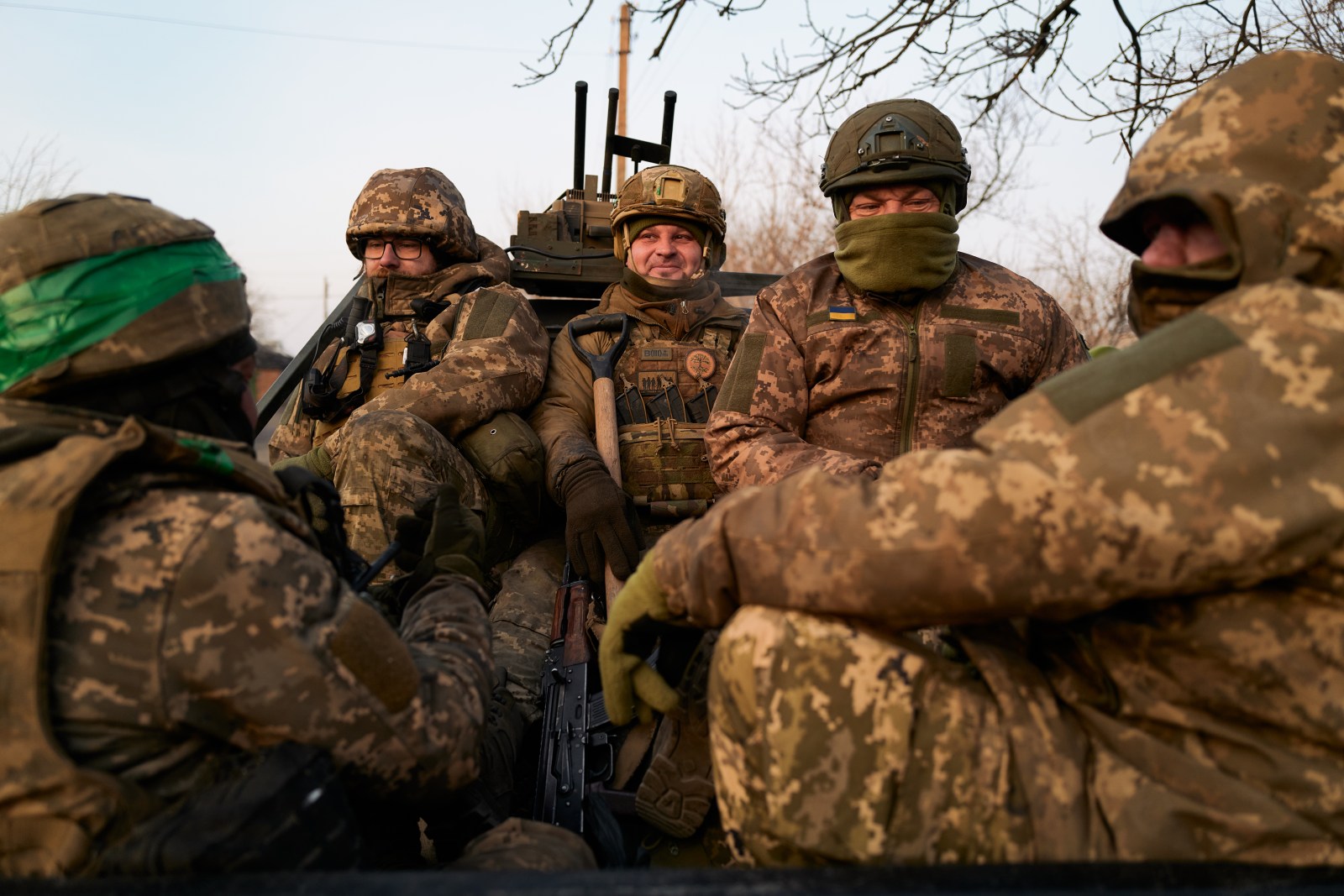
Ukrainian forces have effectively advanced in the Donetsk region by strategically deceiving Russia’s military command while staying silent about their progress. A Ukrainian commander shared that Ukraine’s success against the Russian position north of Lyman in Donetsk Oblast was not acknowledged until recently.
Operation Vivaldi halted Russia’s plans to encircle the ‘Fortress Belt’ due to Ukraine’s careful information management. Major Maksym Zhorin, deputy commander of Ukraine’s 3rd Army Corps, explained that the Fortress Belt comprises heavily fortified cities crucial to defending the eastern Donbas. Securing the Donbas remains a key target for Russian President Vladimir Putin.
Military analyst Giorgi Revishvili emphasized the importance of maintaining informational silence during this intelligence-dominated and drone-intensive phase of the war. Revishvili shared these insights with Newsweek, noting that security measures are critical.
Operation Vivaldi’s Achievements
Brigadier General Andrii Biletskyi, commander of Ukraine’s 3rd Army Corps, revealed that Russian forces had planned to converge on Barvinkove, Kharkiv Oblast. This move aimed to seize all of Donetsk Oblast. Biletskyi’s forces successfully countered Russia’s strategy to encircle the Fortress Belt from both the north via Lyman and Sviatohirsk, and the south via Dobropillya.
Surprise played a key role, with effective operational security and counter-drone strategies reducing Russian operational awareness. Zhorin attributed part of this success to unexpected tactics.
Securing Strategic Gains
Ukrainian forces used a ‘protective drone’ system, complete with electronic warfare systems, to keep advances hidden. This system neutralized approximately 20,000 Russian drones. During the Oleksandrivka counteroffensive in spring, Ukrainian forces cleverly concealed their positions with distant flag-raising activities.
Revishvili, who analyzes Russia’s military for the Substack ‘Russia Analyzed’, pointed out that limiting public discussions of operations helps mislead Russian forces, reducing their battlefield insight.
Russian forces, according to Revishvili, have a history of misleading superiors to avoid blame when front-line conditions worsen.
Gaining an Edge in Drone Warfare
The Ukrainian 3rd Army Corps noted that strikes in Luhansk impaired Russian fuel access and drone operations, granting Ukraine an advantage in drone warfare supporting mechanized advances in Lyman.
Careful Ukrainian planning proved crucial, especially in suppressing Russian defensive positions and unmanned systems to protect operational zones. Revishvili highlighted the role of favorable weather, which assisted in thwarting Russian movements and advancing in areas like Serednie.
The Institute for the Study of War, a Washington-based think tank, observed that both Ukrainian and Russian forces are cautiously testing mechanized maneuvering, aiming to break from positional warfare. So far, Ukraine’s approach has been more effective, as Revishvili mentioned, showcasing the viability of maneuver warfare even in a technologically advanced battlefield.
For further insights on this story, contact Newsweek editors Matthew Robinson and Shakeema Edwards.