
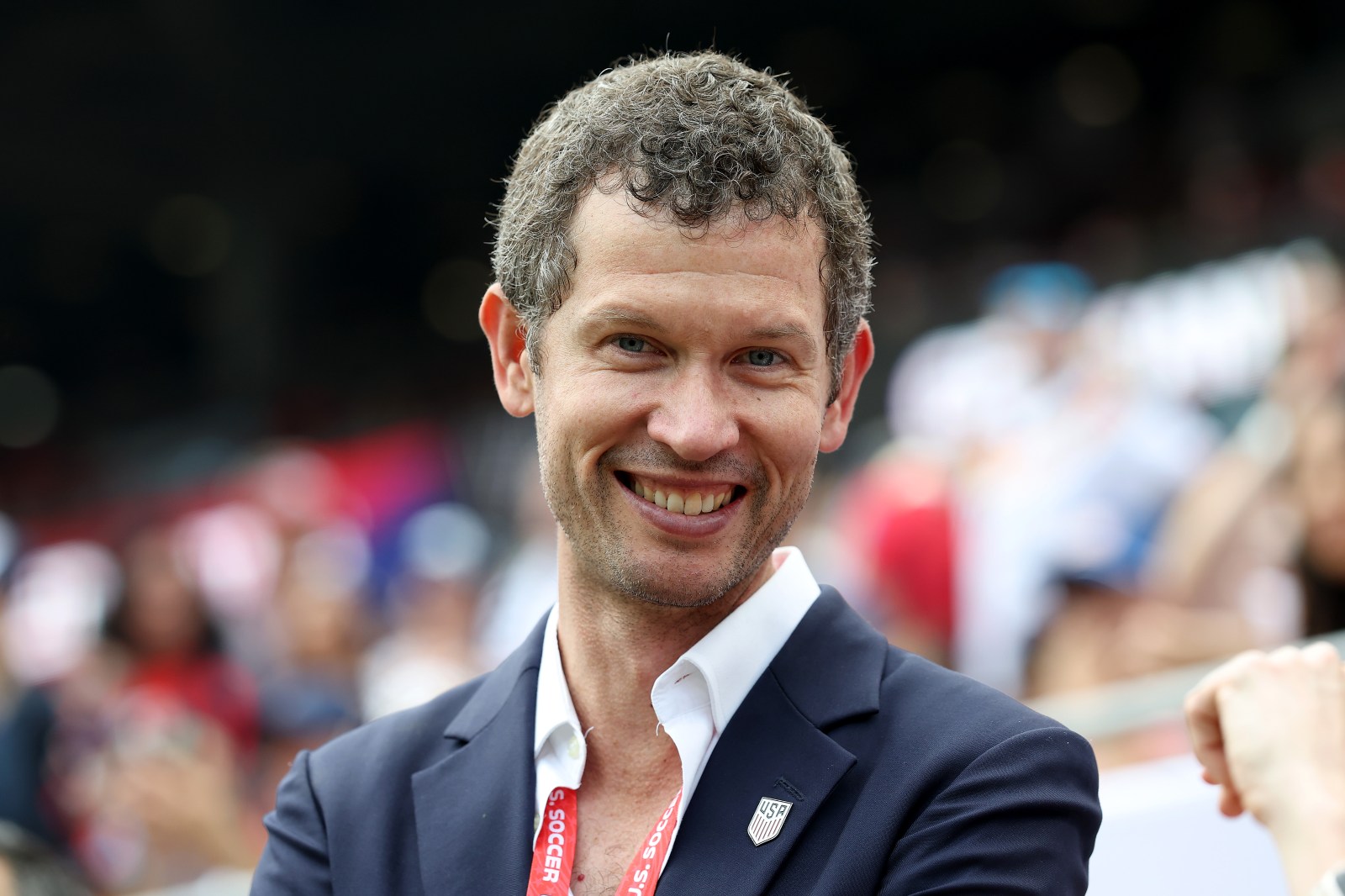
Sports have the ability to leave lasting memories. Most people vividly remember their first game or the moment their favorite team triumphed. For JT Batson, CEO of U.S. Soccer Federation, his early days on the soccer field are still fresh in his mind as the 2026 FIFA World Cup approaches. He shared with Newsweek his recollections of playing at the YMCA in Augusta, Georgia. He recalled, “My earliest memory was playing in Augusta, Georgia. The hot jerseys, unsophisticated then, are still vivid in my mind. Soccer was unfamiliar to most around, having older adults with backgrounds in other American sports. But Augusta College, now Augusta University, had a soccer team, which brought in players from around the globe who stayed and coached us.”
For Batson, these memories are more than anecdotes; they laid the groundwork for his current work. He acknowledges, “I grew up with baseball, basketball, tennis, and golf. I stuck with soccer because of better coaches, more fun, and that’s what my friends were playing. The coaches’ impact was unforgettable.”
World Cup 2026: An American Soccer Milestone
As the U.S. co-hosts the 2026 World Cup with Canada and Mexico, the focus isn’t just on on-field performance—though that remains pivotal—but also on expanding soccer’s reach in America. Batson emphasized, “We’re ensuring this World Cup catalyzes more Americans playing soccer.” The charm of soccer, “the Beautiful Game,” lies in its simplicity, needing only a ball. Yet, in the U.S., other sports dominate public spaces and minds.
Batson observed, “When thinking of great athletes from disadvantaged communities, basketball comes to mind due to its accessibility. Every park seems to have a basketball hoop.” This insight has driven initiatives like the Soccer Forward Foundation’s “Soccer at Schools,” partnered with Bank of America to integrate soccer into every U.S. school. The “Places to Play” initiative aims to ensure children have safe, accessible locations to play soccer.
Considering urban areas, Batson remarked, “Soccer should be everywhere: on blacktop surfaces, old tennis courts, high school gyms, not just suburban fields. It should access where children are, using events as inspiration.” He also noted, “Our national teams now reflect America’s diversity, enabling everyone to see themselves in our players.”
Coaching: A Key to Soccer’s Growth
While informal coaching happens in parks and schools, structured guidance is critical. Reflecting on his own experiences, Batson said, “Coaching is vital for U.S. Soccer. We’re responsible for coaching education in America, offering digital and in-person resources for aspiring professional coaches and beginners alike.” Investing in coaching ensures soccer becomes widespread, inclusive, and successful in the U.S.
Access and Affordability for Fans
Access and affordability have been major themes for the 2026 World Cup. With stadiums at limited capacity, many fans will lack game-day access. Batson mentioned focusing on community involvement through local events and partnerships to foster World Cup connections without expensive tickets.
Reflecting on personal memories, Batson recalled, “Watching the 1990 World Cup in a friend’s living room ingrained a sense of community and connection. We want fans to experience that locally.” New initiatives include launching successful jerseys with Nike, along with merchandise catering to diverse fan experiences.
Aim for On-Field Success
Outlining goals for U.S. Soccer, Batson stated, “Winning matters. Success in soccer means winning World Cups. Our women’s team aims for a fifth win next summer in Brazil, but success should span all national teams.” Investments in player pathways and infrastructure are essential for long-term success.
The hiring of elite coaches Mauricio Pochettino and Emma Hayes illustrates U.S. Soccer’s commitment. “They’re world-class leaders inspiring players and promoting youth development and coaching education,” Batson explained.
Defining Success for U.S. Soccer
Batson described success for the upcoming World Cup as generating widespread American belief and pride in the team. “A sophisticated fan base will take pride, and the Cup will create records and sustain extended impacts.” Uplifting millions of players and fostering community investment and sustained success are core goals for U.S. Soccer moving forward.