
The United States is implementing 25% tariffs on Brazilian imports due to perceived unfair trade practices by Brazil. These tariffs, proposed in June, will be applied starting July 22. Some goods are exempt from the tariffs, including coffee, beef, oranges, orange juice, certain oil and gas products, and aerospace components. These exemptions aim to prevent disruptions in the U.S. economy.
According to U.S. Trade Representative Jamieson Greer, Brazil’s actions such as penalizing U.S. tech firms for avoiding political censorship and inadequate anti-corruption enforcement have affected American access to Brazil’s market of over 210 million consumers. The administration strategically targets goods that lack U.S. substitutes and won’t harm the economy.
A year-long investigation by the U.S. Office of Trade Representative identified Brazil’s unfair practices like lax anti-corruption measures and unjust tariffs as reasons for the action. Despite these issues, the U.S. maintains a goods trade surplus with Brazil.
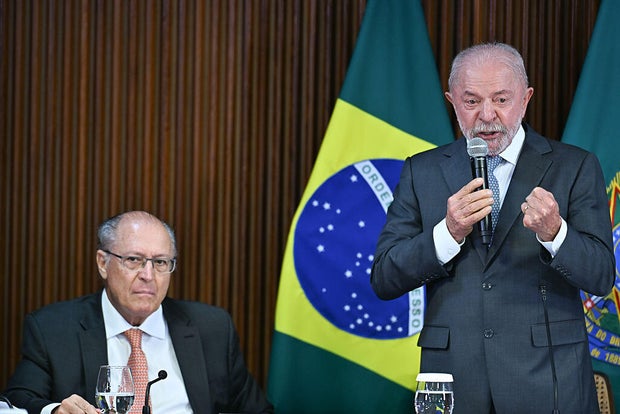
Brazilian President Luiz Inácio Lula da Silva reacted negatively to the tariff proposal, attributing motives to electoral politics, specifically blaming his competitor Sen. Flávio Bolsonaro. Bolsonaro, the former President’s son and recent visitor to Washington, was implicated in political maneuverings according to Lula. However, U.S. officials deny political influence, highlighting longstanding trade grievances. Despite recent discussions between the U.S. and Brazil, officials express dissatisfaction with Brazil’s progress.
The tariffs utilize Section 301 of the Trade Act of 1974, which permits investigations into unfair trade practices. Previously, Trump’s tariffs imposed using the International Emergency Economic Powers Act were revoked by the U.S. Supreme Court. They concluded Trump’s actions exceeded legal limits, including a 50% tariff on Brazil due to Jair Bolsonaro’s prosecution relating to electoral interference.
Trump’s relations with Lula improved notably after a May White House visit. A previous example of negotiation success was in November 2025, when the U.S. lifted 40% tariffs on certain Brazilian imports, citing progress in trade dealings. The current decision reflects ongoing efforts to address trade imbalances and unfair practices with Brazil.