
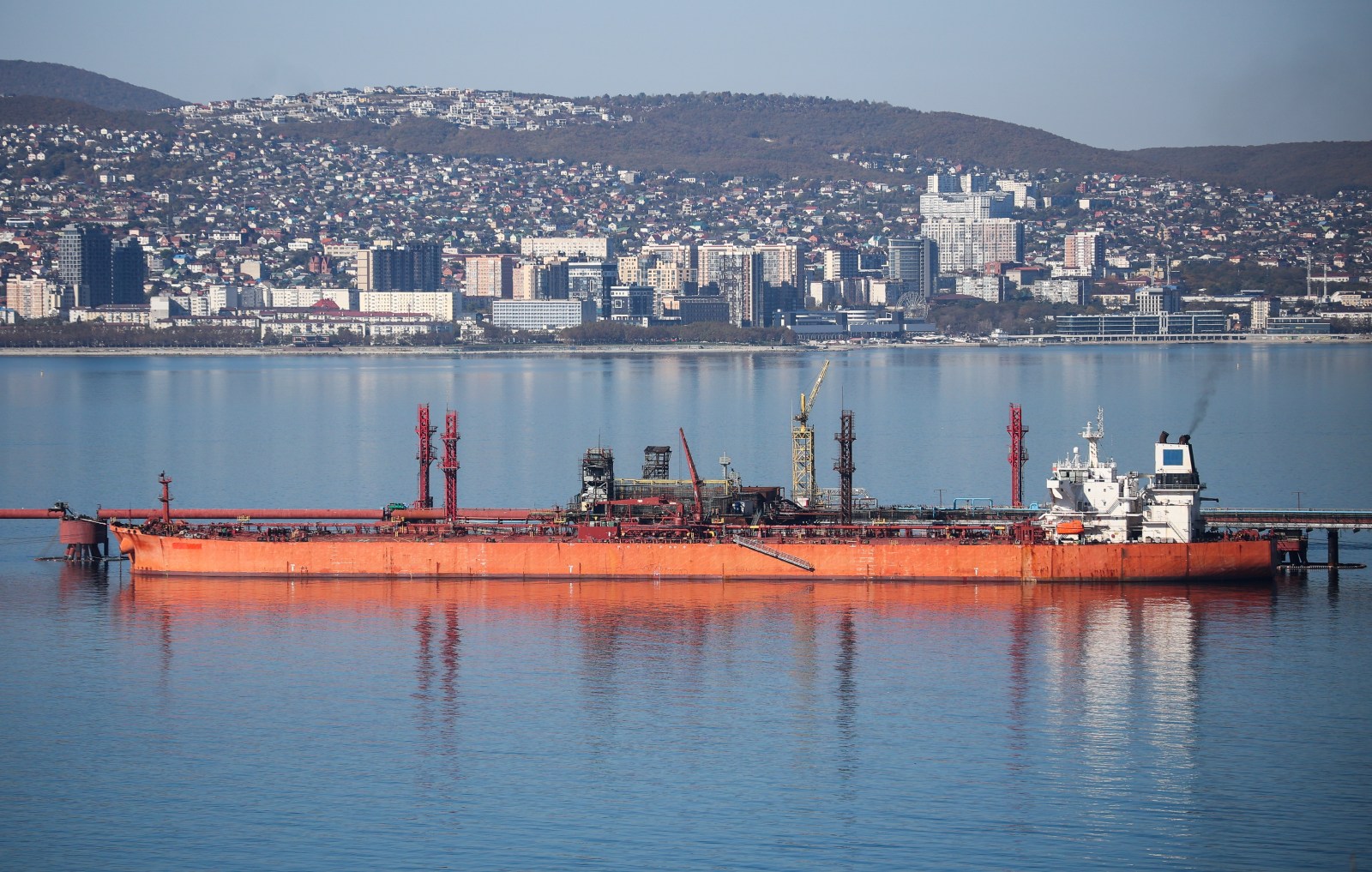
Three tankers carrying Russian diesel fuel are making their way to the U.S. These include two vessels reportedly affected by Western sanctions. This move comes as former President Donald Trump deals with criticism about his recent agreement with Russian President Vladimir Putin to resume fuel shipments. The tankers, named Agioi Fanendes, Leruo, and Talisman, left the Baltic port of Primorsk in Russia between October 16 and 22. They are set to arrive on the U.S. East Coast between November 7 and 11, based on data from vessel-tracking firm Kpler and AFP reports.
Details of the Tankers’ Journey
The Agioi Fanendes is heading to New York, while the other two vessels aim for the Atlantic Coast. According to Kpler, these tankers are transporting a total of 924,000 barrels of diesel. This amount represents about a third of the U.S. daily consumption in the transportation sector. This development follows Trump’s agreement, announced earlier this month, to allow Russian diesel back into international markets. The aim was to reduce fuel prices before the November 3 midterm elections.
The White House has provided minimal comment on the agreement, directing questions to the president’s prior remarks. In contrast, the deal has sparked criticism from Ukrainian President Volodymyr Zelensky and Trump’s Republican peers. Concerns revolve around the potential benefits to Moscow while its conflict with Ukraine persists.
Update on Specific Tankers
The Agioi Fanendes, registered under the Malta flag, transported around 40,000 metric tons of ultra-low-sulfur diesel from Primorsk on October 22. Initially heading to New York, its final destination remains undecided as it idles off Denmark’s Skagen coast.
The Agioi Fanendes ship manager, Eastmed, has been approached for comment.
The Sierra Leone-flagged Leruo, involved in carrying Russian cargo, loaded its diesel on October 16. Despite sanctions from the UK, Canada, and the EU, its Atlantic Coast arrival is anticipated by November 11. The tanker’s live position hasn’t updated for several days.
The third vessel, Talisman, reportedly also subject to U.S. and EU sanctions, is en route to the U.S. It is expected to arrive around November 9.
The involvement of these sanctioned vessels brings legal questions about how U.S. authorization of imports interacts with other Western sanctions.
Background on the Trump-Putin Diesel Agreement
Announced by Trump on October 9, the agreement involves Russia supplying diesel to the U.S. and global markets. Trump has positioned this as a strategy to decrease fuel costs for Americans, specifically targeting sectors like farming, ranching, and trucking before the midterms. Initial commitments were for Russia to supply over 300,000 metric tons of diesel, followed by 500,000 metric tons in November.
This agreement shifts U.S. policy, previously restricting Russian energy imports after Russia’s invasion of Ukraine in February 2022. The Treasury Department provided a six-month authorization for certain imports under the deal, extending to April 2027.
Simultaneously, Russia had limited exports due to domestic supply issues and refining sector disruptions. Russian Deputy Prime Minister Alexander Novak noted these tankers would supply the U.S. and international markets. A fourth tanker is projected to depart shortly.
Reactions and Criticisms
Ukraine’s Zelensky has denounced the agreement, calling it a sign of weakness that could help Russia sustain its war against Ukraine. Trump, however, has blamed Ukrainian attacks on Russian refineries for contributing to high fuel prices.
Some U.S. GOP members have also expressed dissatisfaction. Republican Senator Thom Tillis questioned the legality of Trump’s actions on October 11. Bipartisan senatorial pressure urges a reversal of the agreement, suggesting it might bolster Kremlin finances more than benefiting U.S. consumers.
Trump has defended the decision as beneficial to global fuel markets despite opposition. The impact on U.S. diesel prices remains uncertain, as analysts weigh whether these imports will boost supply sufficiently to affect global prices.