
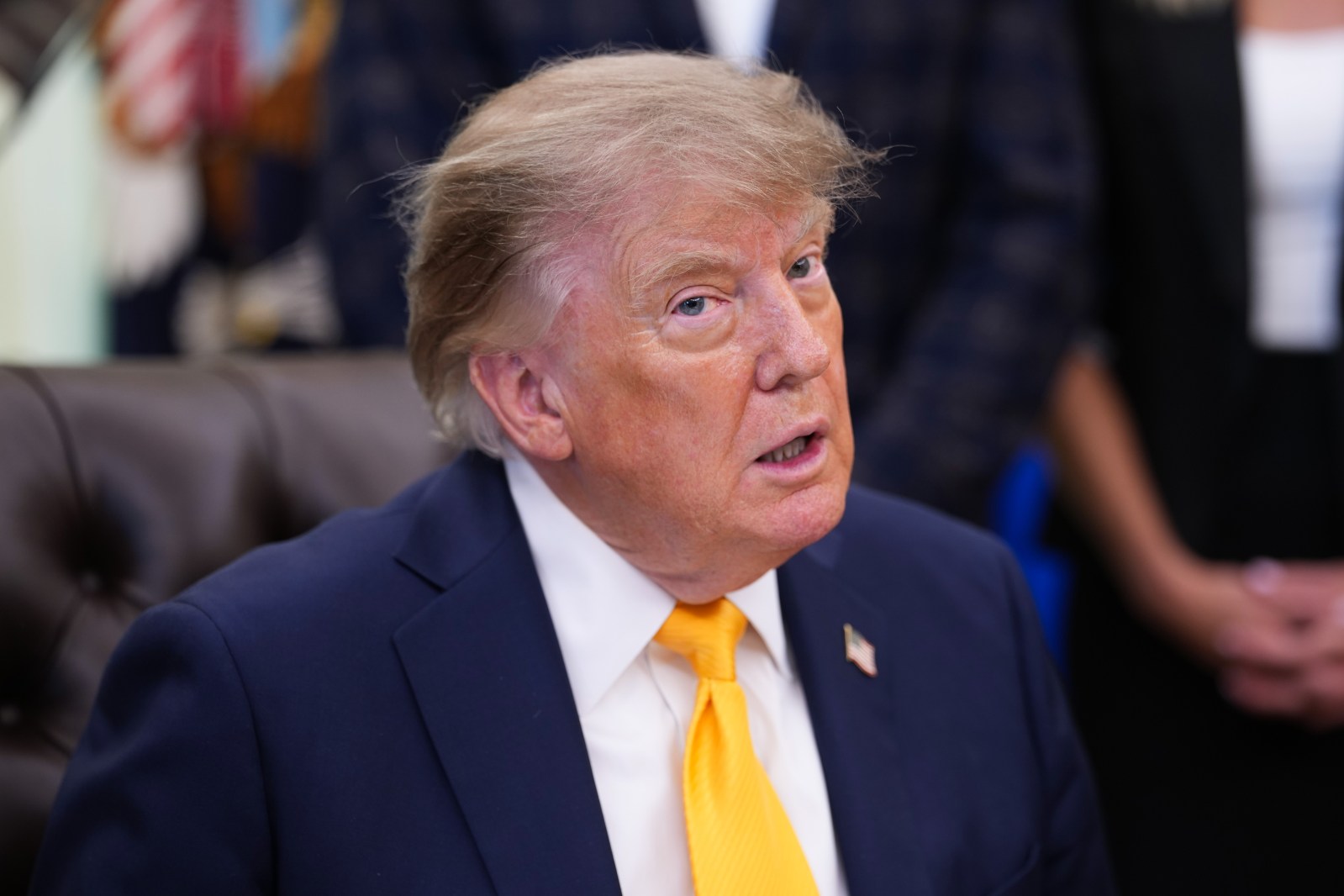
A recent survey reveals increased pessimism about the U.S. economy during Donald Trump’s presidency, with anxiety linked to affordability and the ongoing Iran conflict.
Financial Times and Focaldata’s latest poll, released Sunday, illustrates only 33% of registered voters approve of Trump’s performance, marking a three-point decline from the previous month and reaching the lowest approval rating since May.
Widespread dissatisfaction is evident as 66% of 2,178 adults surveyed believe the U.S. economy is moving in the wrong direction, a polling high. Trump’s approval regarding ‘inflation and the cost of living’ has plummeted to a historical low of 17%, with 69% disapproving. The support for his strategies concerning ‘jobs and the economy’ also decreased to 26%.
Gauging Economic Approval:
Only 18% of Americans perceive a financial improvement since Trump’s return to office the previous January, down from 32% in May. Those who feel financially worse off have increased to 57%, from 36%. The options ‘about the same’ or ‘don’t know’ have dropped to 26%, previously 36%.
An increase in negative sentiment emerges across parties, as 66% now view the economy as headed in the wrong direction, compared to 61% in May. Disapproval concerning Trump’s management of inflation/cost of living rose to 69% from 58%, while dissatisfaction over jobs/economy climbed to 58% from 51%.
Among Trump supporters, only 44% affirm the economy is on track, down from 55% in May, with contrary opinions rising to 40%. ‘Strong’ Republicans offer a narrow majority of 52%, down from 65%, believing in economic progress, compared to 32% disagreeing and 15% uncertain.
Midterm Election Concerns:
The polling results reflect accelerated pessimism since the Iran conflict started in late February, posing challenges for the administration and Trump’s party as economic matters, nearing midterm elections, become pivotal.
A Harris Poll conducted for The Guardian in July discovered 95% of Americans view the U.S. as facing an affordability crisis amid rising costs in groceries, gas, and similar expenses.
Fuel prices persistently high due to a bottleneck in the Strait of Hormuz shipping corridor, with diesel reaching heights nearing $6 per gallon.
Mid-August polling by FT and Focaldata indicates Democrats as more trusted than opposition regarding economic management, polling at 44% to 38%.
Evidently, economic issues hold the greatest importance for Americans preceding midterms, with 43% prioritizing ‘inflation and cost of living’, and 31% focusing on ‘economy and jobs’, alongside war and immigration scored at 20% and 16%, respectively.
A White House spokesperson responded to the results, acknowledging ‘temporary disruptions’ through war affecting the economy. The administration is committed to executing an economic agenda rooted in tax reductions, deregulation, and energy abundance.
August employment statistics from the Bureau of Labor Statistics (BLS) revealed job gains nearly tripling analyst expectations, supporting claims of ongoing private sector growth and re-industrialization initiatives.
However, political consultant Matt Klink advised Newsweek that rhetoric alone will not sway voters toward Trump’s program.
‘Economic skepticism jeopardizes the party in power, the Republicans, impacting working-class, rural, and independent voters longing for relief from price hikes,’ he expressed. ‘Should voters perceive continuous cost escalations and excuses from Washington, midterms risk becoming affordability referendums, a difficult ground for GOP.’
For further information, contact Newsweek editors Daniel Orton and Cristina Diciu.