
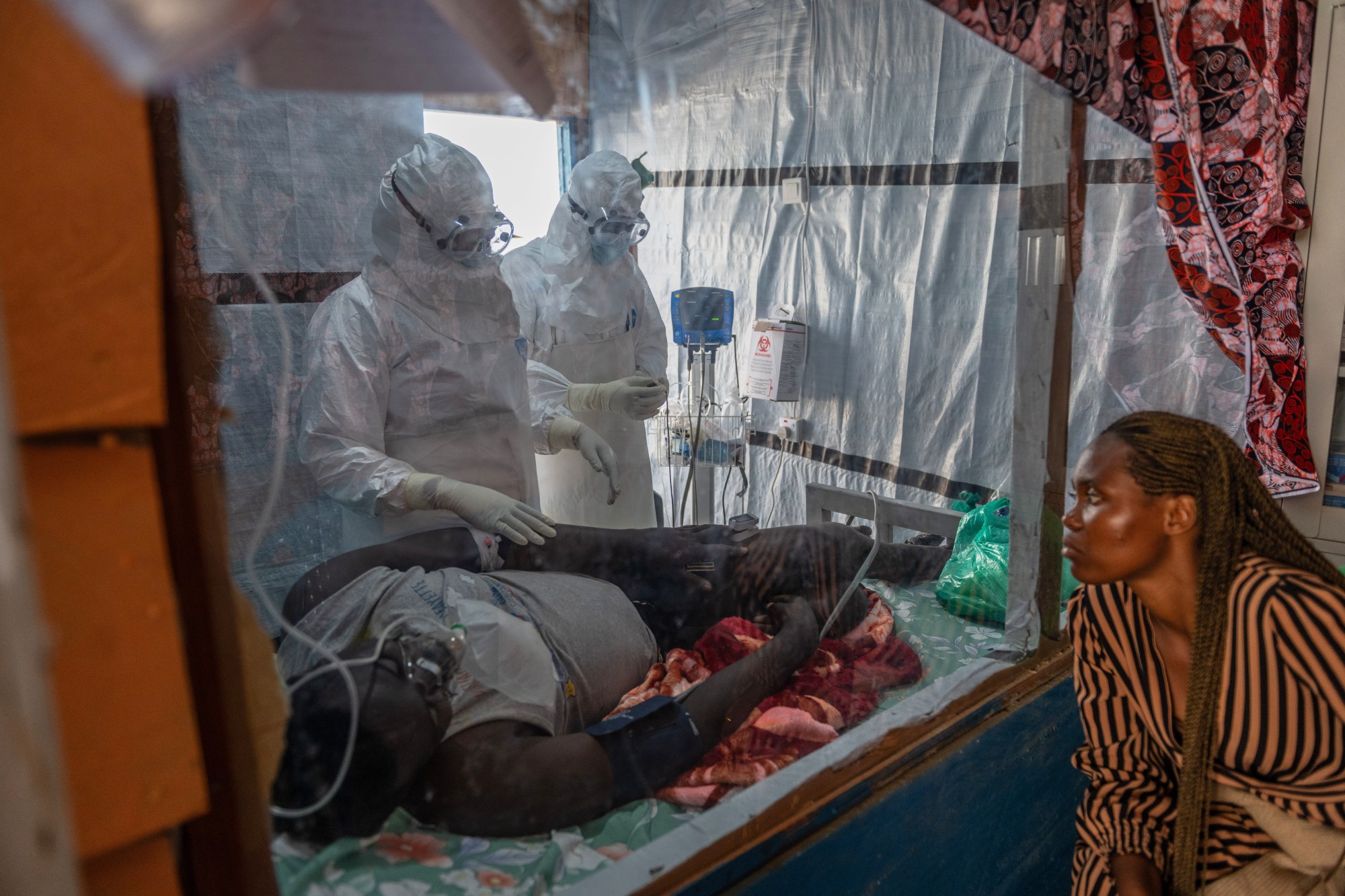
Healthcare workers in Congo are currently facing a critical challenge in dealing with the Ebola outbreak. The crisis is escalating, with 1,561 confirmed cases affecting both the Democratic Republic of Congo and Uganda. Hospitals and clinics are overwhelmed, and the death toll has surpassed 500 since the outbreak began in May.
Frontline workers in Ituri province, at the epicenter of the outbreak, are threatening to strike due to inadequate supplies and insufficient pay. Seventeen health workers have lost their lives, among 75 infected, emphasizing the dire situation. Community nurse Moise Bulabantu expressed grave concerns, stating, “We don’t have protective equipment. We’re extremely afraid.”
The bundibugyo ebolavirus lacks effective treatments or vaccines, requiring decisive action from global leaders. President Trump believes his role in arresting the spread of Ebola could lead to a Nobel Peace Prize. His leadership during Operation Warp Speed, which tackled the spread of COVID-19, demonstrated the impact of presidential support, effort, and speed.
The U.S., under Trump’s leadership, has already initiated assistance, including testing a new experimental treatment coordinated by the World Health Organization. Modern healthcare facilities are crucial in stopping the outbreak and protecting healthcare workers, as well as isolating and treating patients. Ebola Treatment Units, which have previously helped shut down Ebola outbreaks, could serve 100 patients each.
An immediate military action to deploy mobile MASH units in non-affected areas could contain the outbreak effectively. These units can be quickly constructed without interaction with infected individuals. Such operations would be swift, ensuring the military can build and depart without risking American lives.
Success in this intervention can be measured by a decline in Ebola cases, potentially attracting international acclaim and a Nobel Peace Prize for Trump. His commitment to global conflict resolution, including addressing the Ebola in Congo, embodies humanitarian leadership alongside American public health priorities. Preventing the spread of Ebola would demonstrate the U.S.’s ability to act faster than the virus, protecting both Americans and showcasing leadership worldwide.
Benjamin L. Sievers, an Oxford-Cambridge NIH scholar studying infectious diseases and immunology, emphasizes the significance of such efforts. ©2026 Nexstar Media Inc. All rights reserved. This material may not be published, broadcast, rewritten, or redistributed.