
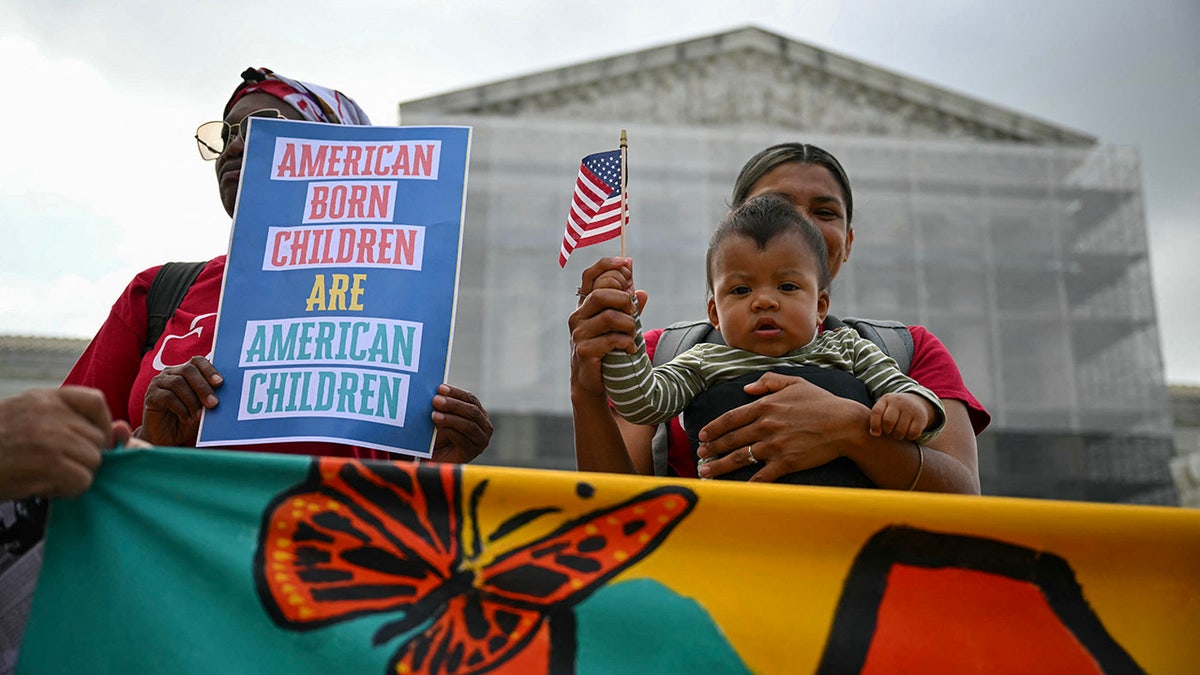
Conservative legal experts suggest that President Donald Trump’s recent moves on birthright citizenship and birth tourism might have stronger legal foundations than his previous efforts. This is in light of a Supreme Court ruling in June, which determined that children born in the United States to parents who are illegally or temporarily present are U.S. citizens at birth under the 14th Amendment. In response, Trump issued two new executive orders targeting these areas with narrower scopes.
Details of the Orders
The first order, signed on August 6, directs federal agencies to withhold citizenship recognition for certain children born in the U.S. when neither parent holds citizenship. This includes children whose parents belong to designated foreign terrorist organizations, are foreign-government employees, or are involved in fraudulent activities aiming for birthright citizenship.
Experts from the Manhattan Institute, America First Legal, and the America First Policy Institute argue that Trump’s new order relies on existing exceptions to birthright citizenship. These exceptions could potentially apply to this situation.
The Supreme Court has historically acknowledged exceptions for children of alien enemies and diplomats, according to Chad Mizelle, senior fellow at the America First Policy Institute. This means children of terrorists could be considered under these exceptions.
Legal Opinions and Challenges
The case United States v. Wong Kim Ark, decided in 1898, provides precedent for exceptions related to diplomats and alien enemies during hostile occupation. Trump’s new executive order asserts that members of foreign terrorist organizations fall under this ‘enemy exception.’
However, some legal experts warn that redefining ‘alien enemy’ without Congress’s input might put the administration on uncertain legal ground. David Bier from the Cato Institute points out that Congress typically defines who is subject to U.S. jurisdiction, adding that expanding this definition through executive orders could be seen as an overreach of executive power.
Amanda Frost, a University of Virginia School of Law professor, suggests that Trump’s attempt to apply foreign enemy status to terrorists residing in the U.S. may not align with historical legal precedents.
Standing and Legal Battles
Legal standing could also pose a challenge for those contesting Trump’s order. Plaintiffs need to demonstrate that they face a direct injury that a court can resolve. Gene Hamilton from America First Legal mentions the potential difficulty in establishing standing but notes that legal resistance has already started.
Order on Birth Tourism
Alongside the order on birthright citizenship, Trump issued another order targeting birth tourism. This directive asks the State Department and the Department of Homeland Security to deny visas or expel individuals suspected of entering the U.S. for childbirth-related citizenship claims.
Critics argue that existing measures already address birth tourism, citing State Department guidelines from 2020 that permit consular officers to reject visas if applicants appear intent on giving birth in the U.S. for citizenship purposes.
Future Directions
If the administration’s current efforts are unsuccessful, proponents of more restrictive birthright citizenship policies may look to Congress or consider a constitutional amendment, which would need ratification by three-fourths of the states.