
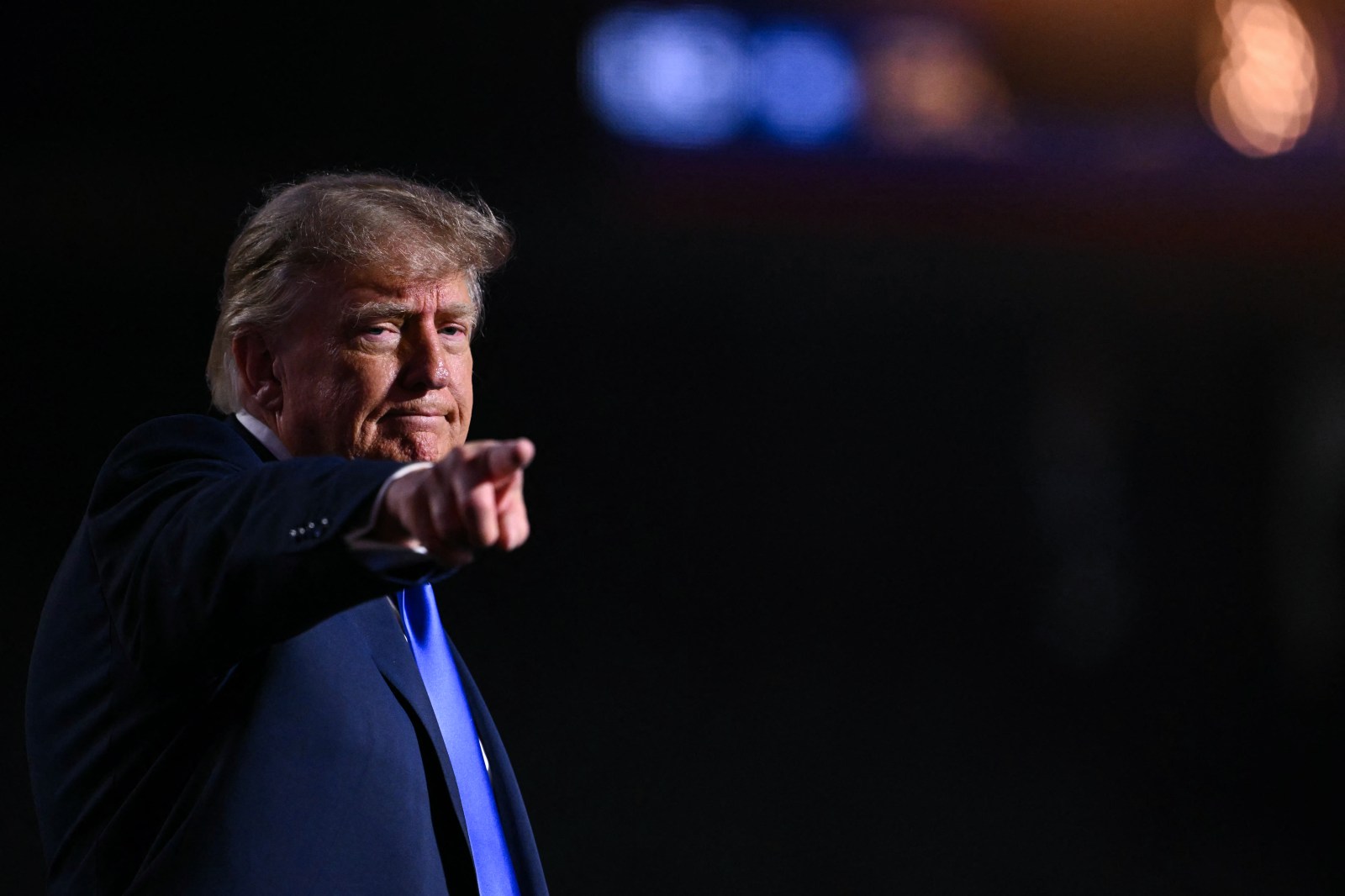
President Donald Trump announced a plan to issue a “dividend” to voters if Republicans gain control of both the House of Representatives and the Senate in the upcoming midterm elections. This proposal, unveiled at the GOP’s first midterm convention in Dallas, seeks to provide every adult U.S. citizen with $5,000, known as the “Trump Dividend.”
Estimated Costs and Skepticism
The proposed “Trump Dividend” has an estimated cost exceeding $1 trillion, not accounting for administrative expenses. Economists and lawmakers express doubt about the feasibility of financing such checks in the event of a Republican victory. Douglas Holtz-Eakin from the American Action Forum stated that Congress would need to appropriate funds, either through borrowing or raising taxes, estimating the cost between $1.3 trillion and $1.5 trillion. He emphasized the impracticality of securing such a large sum.
Despite skepticism, the White House remains confident, claiming that President Trump will continue to defy doubters and deliver tangible outcomes with public support.
Other Proposed Dividends
Beyond the recent announcement, Trump has supported other dividend concepts:
$5,000 DOGE Dividend Checks
Hedge fund manager James Fishback suggested a $5,000 payment per household using savings from the Department of Government Efficiency (DOGE), which targeted $2 trillion in spending cuts. Although the savings reached only $215 billion, Trump and Elon Musk endorsed the idea. Nonetheless, DOGE was disbanded in 2025 without substantial progress.
$2,000 Tariff Dividend Checks
Trump proposed a $2,000 payment from tariff revenue, excluding the wealthiest Americans. The Committee for a Responsible Federal Budget predicted costs around $600 billion, noting potential deficits of $6 trillion over the next decade. Legal challenges halted the initiative after related tariffs were struck down by the Supreme Court.
$1,000 Payment from ACA Subsidies
The president considered redirecting expiring ACA (Obamacare) subsidies directly to Americans. He advocated for payments ranging between $1,000 and $1,500, but the plan did not advance. Trump later introduced “The Great Healthcare Plan,” aimed at reducing costs and improving insurance accountability.
Future Prospects and Challenges
The latest dividend proposal has some support, with Senator Bernie Moreno planning to draft legislation for the “Trump Dividend.” Nonetheless, serious legal and economic hurdles remain, as highlighted by Erica York from the Tax Foundation, who argued that the initiative would exacerbate fiscal challenges by increasing deficits and fuel inflation.
Additionally, Trump announced $500 refunds to Americans allegedly overcharged under Obamacare, planned for distribution to nearly 1 million people. However, Jonathan Gruber, an MIT economist involved in Obamacare’s design, criticized this as a politically motivated gesture.
This intricate and controversial set of proposals raises ongoing debate over their legality, economic impacts, and feasibility.