
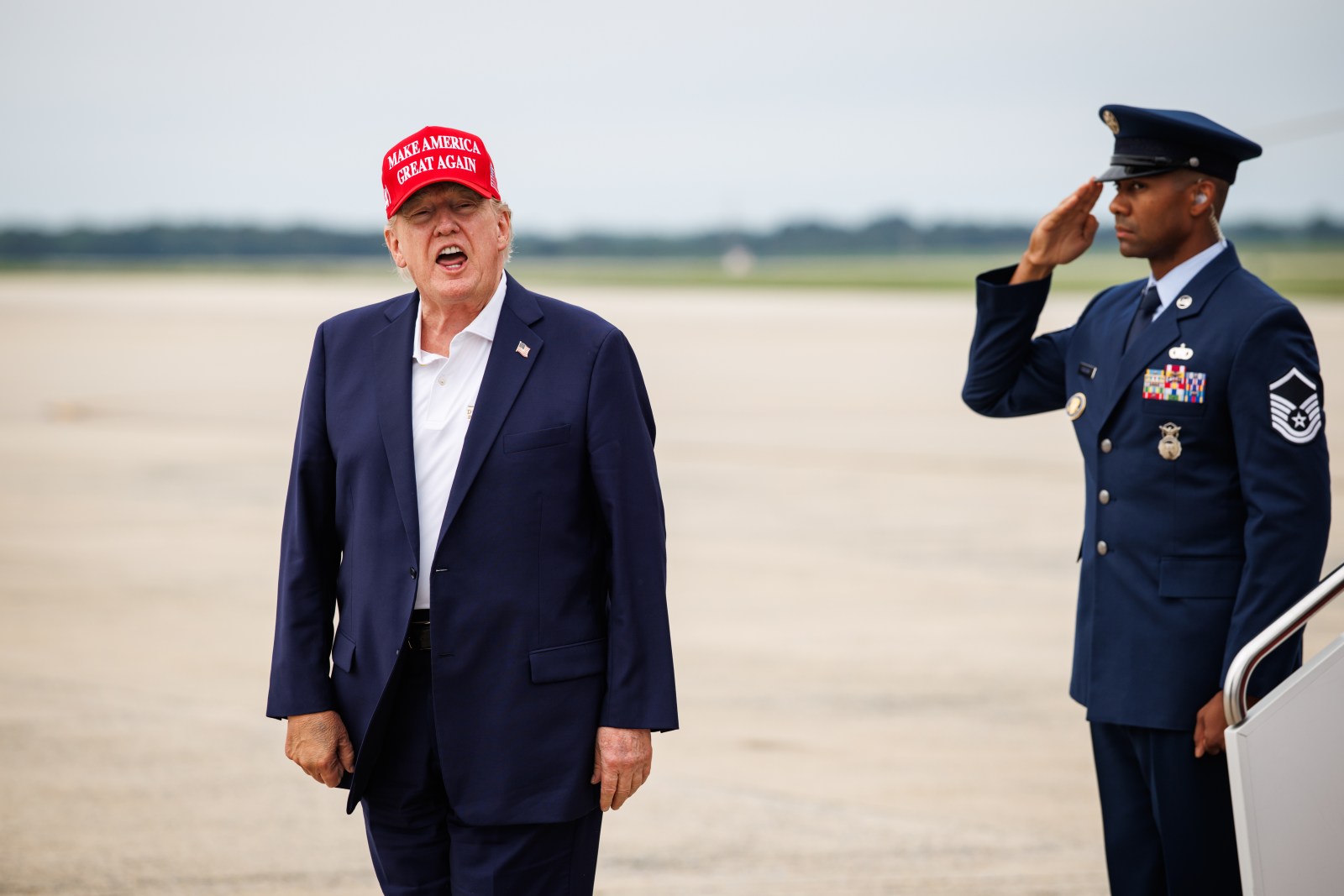
President Donald Trump has issued a threat to bomb Oman if the Gulf nation interferes with U.S. efforts related to Iran and the Strait of Hormuz. This statement, made during a Fox News interview, marks a new escalation in his aggressive rhetoric toward foreign governments. Trump said, “if Oman gets in the way, we’ll bomb” the country. This represents one of the most direct threats he has made toward a longstanding U.S. partner in the Middle East.
Oman has played a key diplomatic role between Washington and Tehran. The country has been involved in discussions surrounding the Strait of Hormuz, a vital energy shipping route. Newsweek reached out to both the White House and the Omani Embassy in Washington for comments. The Pentagon deferred to the White House on the matter.
Analysis by Newsweek indicates that since returning to office in January 2025, Trump has authorized military strikes in multiple countries. The U.S. and Israel launched strikes on Iran on February 28, 2026.
Why Oman Matters
Oman holds strategic importance on the Strait of Hormuz, through which about 20% of the world’s oil exports pass. It has maintained relations with both the United States and Iran and often serves as a mediator during periods of increased regional tension. Analysts describe Muscat, its capital, as a crucial diplomatic channel to Tehran. Trump’s comments are unusual compared to threats made against longstanding U.S. adversaries.
Countries Trump Has Already Struck
During his second term, Trump oversaw military operations in Somalia, Iraq, Yemen, Iran, Syria, Nigeria, and Venezuela. These actions included counterterrorism strikes against ISIS and al-Shabaab, the June 2025 attack on Iranian nuclear facilities, and the January 2026 operation in Venezuela resulting in President Nicolás Maduro’s capture.
One significant operation in June 2025 targeted Iranian nuclear facilities at Fordow, Natanz, and Isfahan after nuclear negotiations failed. Trump later stated the facilities were “completely and totally obliterated.” The administration also targeted Yemen’s Houthi movement, carried out extensive operations in Somalia and Syria, and struck ISIS targets in Iraq and Nigeria.
Where Trump Has Threatened Force
Beyond the countries already targeted, Trump has at times discussed military action in other regions. Before re-election, he did not rule out using force to control Greenland or the Panama Canal, citing U.S. national security. Danish and Panamanian officials rejected these suggestions.
Following the January 2026 operation against Venezuela, Trump suggested potential involvement in Cuba, Colombia, and Mexico. He mentioned possible action against Mexican cartels and intervention in Cuba and Colombia as possibilities. The recent warning directed at Oman indicates another potential target, framed as an explicit bombing threat rather than broader rhetoric.
Trump’s Use of Military Force and “No New Wars” Promise
Trump’s military actions contrast with his 2024 campaign theme, where he argued against new overseas conflicts and portrayed himself as a president ending wars. The White House and Trump allies deny any contradiction, describing strikes as limited actions aimed at protecting U.S. interests and preventing adversaries like Iran from gaining military capabilities.
Supporters view this approach as an extension of Trump’s “peace through strength” message, suggesting that displaying a willingness to use force can prevent larger conflicts. Critics argue Trump campaigned against endless wars and nation-building and promised a more restrained foreign policy.
How the MAGA Base Has Reacted
A significant backlash emerged over the conflict with Iran, with prominent America First figures warning that deeper U.S. involvement could lead to another major Middle East war. They emphasize that many supporters favored Trump to avoid such foreign conflicts.
Conversely, other Trump allies defended the strikes as vital for American interests and to stop Iran from becoming a greater threat. This has caused a division within the MAGA movement, between traditional national-security conservatives supporting military power and populist isolationists who view interventions with skepticism.
So far, there’s little evidence that the disagreement has weakened Trump’s standing among Republican voters overall, yet it highlights a fault line within the America First coalition.