
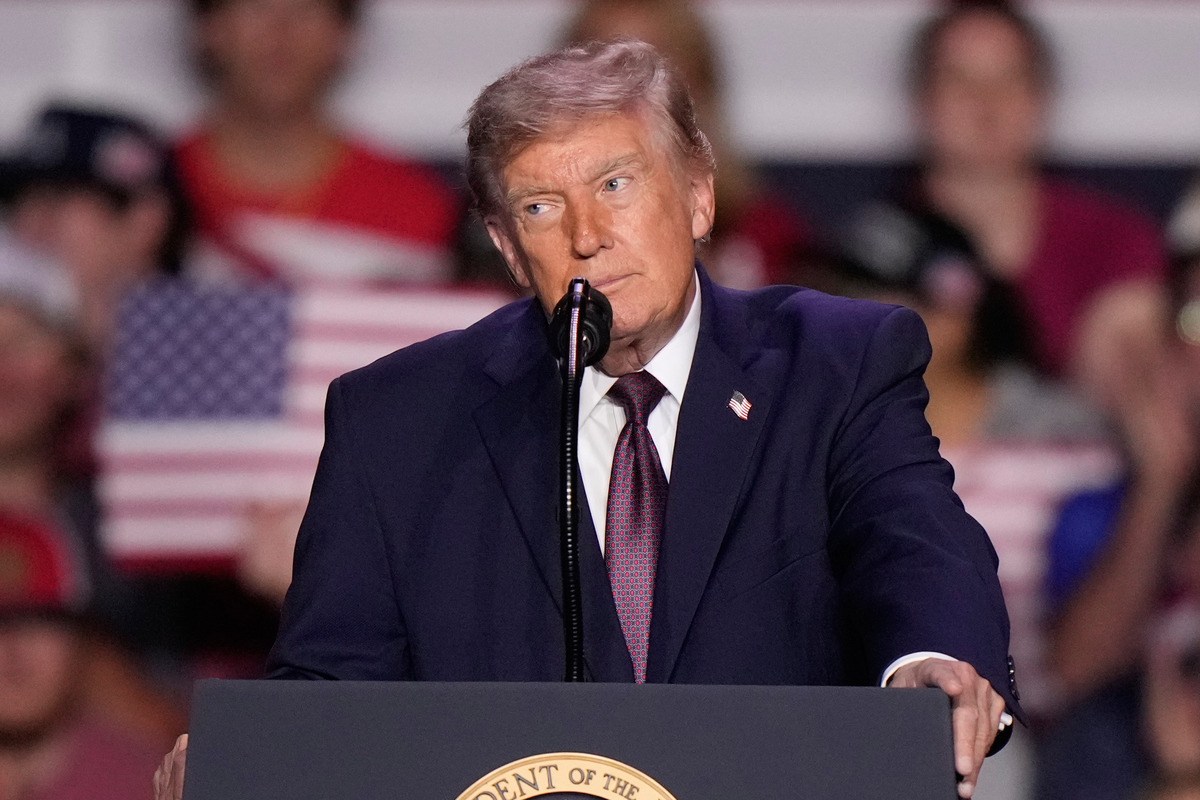
President Donald Trump has committed to expanding the use of capital punishment in the United States. This decision follows the botched execution attempt of Christa Pike, a convicted murderer, in Tennessee. Trump’s announcement came during a campaign rally in Mobile, Alabama. He emphasized introducing the death penalty for significant drug dealers, human traffickers, and those who kill police officers.
Pike’s attempted execution highlighted concerns around the death penalty. She was moved from Riverbend Maximum Security Institution in Nashville to the hospital after surviving two doses of pentobarbital. Her lawyers reported she was critically ill, unconscious, and attached to a ventilator with burn injuries.
Pike, convicted for the 1995 murder of Colleen Slemmer, had a troubled background. Her legal team argued for a life sentence, citing her traumatic childhood and abuse history. The crime involved satanic symbols, adding to the media attention. Pike has been incarcerated for decades and faced further charges of attempted murder in prison.
The use of multiple needles during the execution attempt reportedly caused Pike distress. Legal challenges failed to stop the execution process, with the Supreme Court denying a request for reprieve.
Tennessee Governor Bill Lee stated protocols were followed but paused further executions for the rest of 2026. This decision accompanies an investigation into Pike’s failed execution. Another execution attempt in Tennessee involving Tony Carruthers was also halted earlier this year due to similar complications.
“The worst we’ve ever seen and unlike any other botched execution in the modern era,” stated Robin Maher, Executive Director of the Death Penalty Information Center.
National opinions on the death penalty show a shift. Gallup reported that 52% of Americans supported it for murder convictions, a decrease from 80% in 1994. Opposition has reached 44%, the highest since 1966, with younger demographics increasingly against capital punishment.
Despite declining public support, Trump’s policies encourage federal executions. He signed an executive order on day one of his second term, pushing for the death penalty in severe cases involving illegal immigrants or slain law enforcement officers. By the end of 2025, executions in the U.S. rose to their highest in 16 years.
The Department of Justice considered reintroducing older execution methods like firing squads, electrocution, and lethal gas. This initiative reflects an ongoing debate about the death penalty’s place in the American justice system.