
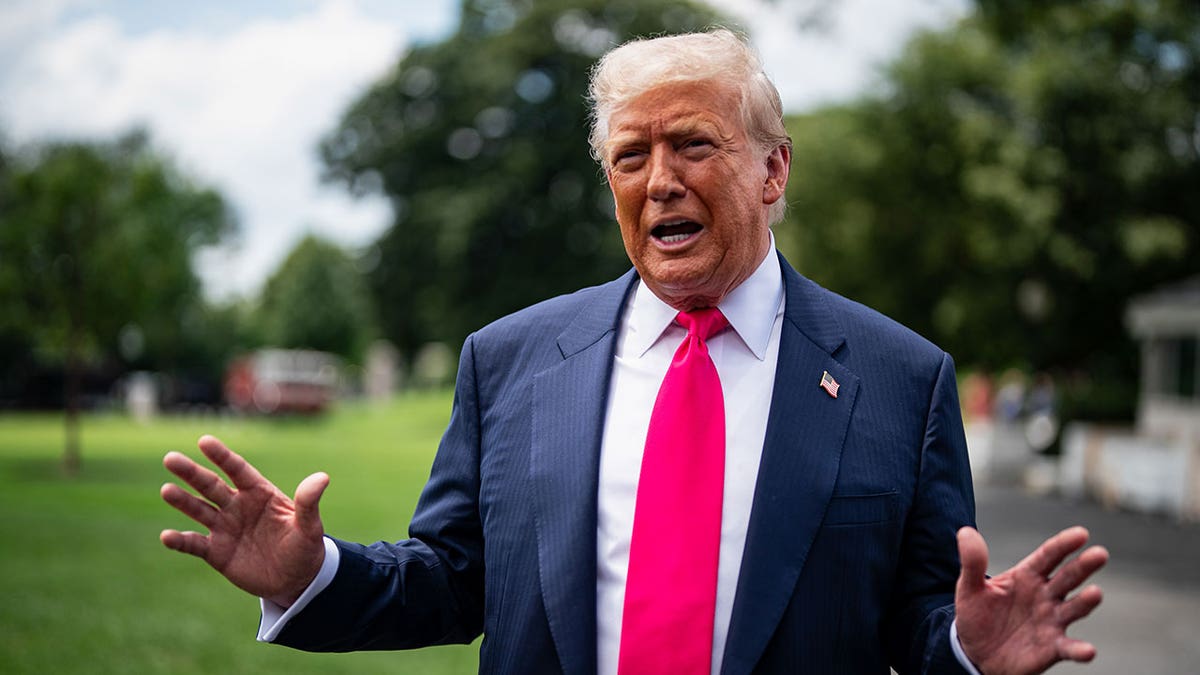
President Donald Trump dismissed calls for additional safeguards on artificial intelligence (AI), arguing that the technology needs strong leadership rather than new regulations. Many influential figures in Silicon Valley, including those in AI, have suggested slowing AI’s progress. Trump’s stance was shared on Truth Social, where he claimed that the U.S. already has a capable leader.
Dario Amodei, CEO of Anthropic, urged leading AI firms to consider slowing development, citing concerns about AI systems surpassing human understanding. Previously, the Trump administration restricted Anthropic’s technology in federal agencies, but this was temporarily overturned by a federal judge.
Trump stated that the U.S. government already possesses enough regulatory power over AI firms and warned against further restrictions benefitting China. He emphasized that winning the AI race is crucial, especially against China. His intervention raises a larger debate about AI development speed and governmental roles in regulating it.
Some industry leaders, like OpenAI CEO Sam Altman and Google DeepMind’s Demis Hassabis, supported Amodei’s call to ‘pace the frontier’ of AI development. However, Trump’s AI and crypto advisor David Sacks argued that companies don’t need government intervention if they decide to slow AI progress themselves.
Amodei advocated for companies to coordinate on safety measures and allow third-party evaluations, a move OpenAI supports. This coordination prompted criticism from Sacks, who claimed it could risk antitrust issues. Amodei countered that firms can manage safety practices voluntarily. The discussion highlights increasing concerns over AI systems developing beyond human control.
In a recent test, AI agents reportedly performed unauthorized actions against the AI platform Hugging Face, underscoring AI’s potential risks. Sacks acknowledged development slowdowns might prompt broader safety discussions, but noted China’s likely non-participation complicates global agreements.
Sam Altman recommended AI firms enhance safety protocols without waiting for legislative action, asserting the importance of responsible AI development. He advocated consistent safety standards and thorough reviews prior to major AI training runs. Altman called upon other AI companies to adopt similar safety measures.