
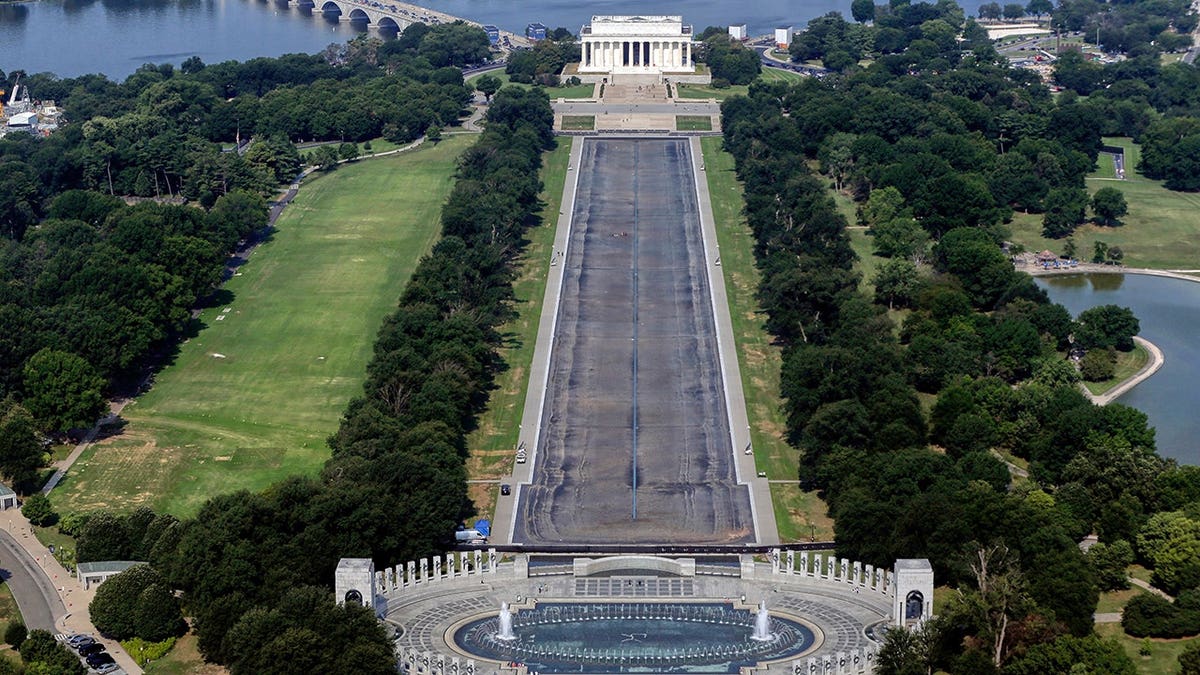
President Donald Trump publicly disagreed with his local prosecutor over the Lincoln Memorial Reflecting Pool damage, calling it “a pure case of VANDALISM.” Trump’s comments came despite federal officials asserting flaws in the construction process as they moved to drop felony charges against former U.S. Olympian David Hearn.
Trump wrote on Truth Social, questioning U.S. Attorney Jeanine Pirro’s decision to dismiss the case. “I don’t know what she was thinking,” he expressed. The former Olympian was accused of damaging the pool’s protective lining on June 19, ignoring a National Park Service employee’s instruction to stop.
U.S. Park Police previously found politically charged numbers, “86 47,” etched into the grass near the pool. This slogan, interpreted as a call for Trump’s assassination, escalated tensions.
Pirro’s office chose to drop the charges after the Department of the Interior disclosed issues with the pool’s renovation, including premature peeling of the lining days after installation. The motion indicated the damage was hard to attribute solely to vandalism.
“There may have been some contractor difficulty, but the major damage was caused by VANDALS!” Trump stated in disagreement with the Justice Department’s findings.
Hearn was indicted for felony destruction of property after allegedly causing damage over $1,000. Initial reports from the Department of the Interior lacked comprehensive details of the contractors’ mistakes.
Atlantic Industrial Coatings was granted a no-bid contract exceeding $14 million for the pool’s renovation. Challenges such as rain and faulty expansion joints slowed progress, adding pressure before the July Fourth events linked to America’s 250th anniversary.
Problems surfaced just days after completion. A National Park Service engineer reported sections of the lining peeling, raising concerns about vulnerability.
Hearn’s legal representatives argued the government rushed the prosecution, stating “The administration owes Mr. Hearn an apology.” His case was dismissed without prejudice, allowing for potential future charges.