
Chinese President Xi Jinping and President Donald Trump wrapped up a three-day summit on a Friday, coinciding with a federal judge’s decision to temporarily lift the Trump administration’s ban on outlets like CNN, MS NOW, and Politico. This restored live television coverage of White House events, allowing the media to fully broadcast presidential activities for the first time in days.
Xi’s visit concluded with a tea session at the White House, hosted by Trump and First Lady Melania Trump. In brief remarks aired from the White House Red Room, Trump praised the visit, describing it as a meeting of two exceptional individuals and highlighting the positive steps taken for both countries. He expressed appreciation for the media’s coverage, calling it fair, amidst ongoing disputes with major networks over press access.
A day earlier, Trump criticized major networks, including CNN, accusing them of bias for not covering President Xi’s arrival at the White House. On his Truth Social account, Trump called out the networks for declining to showcase what he described as a significant and visually appealing event.
“CNN and MSDNC refused to cover one of the Biggest and Most Beautiful Events to take place in many years,” Trump wrote.
The reception for Xi was notably warmer compared to Trump’s past comments before his presidency. During Xi’s 2015 U.S. visit, Trump had criticized the then-Obama administration’s welcoming of the Chinese leader, joking about offering a McDonald’s meal instead of a state dinner, in a 2015 interview on “The O’Reilly Factor.”
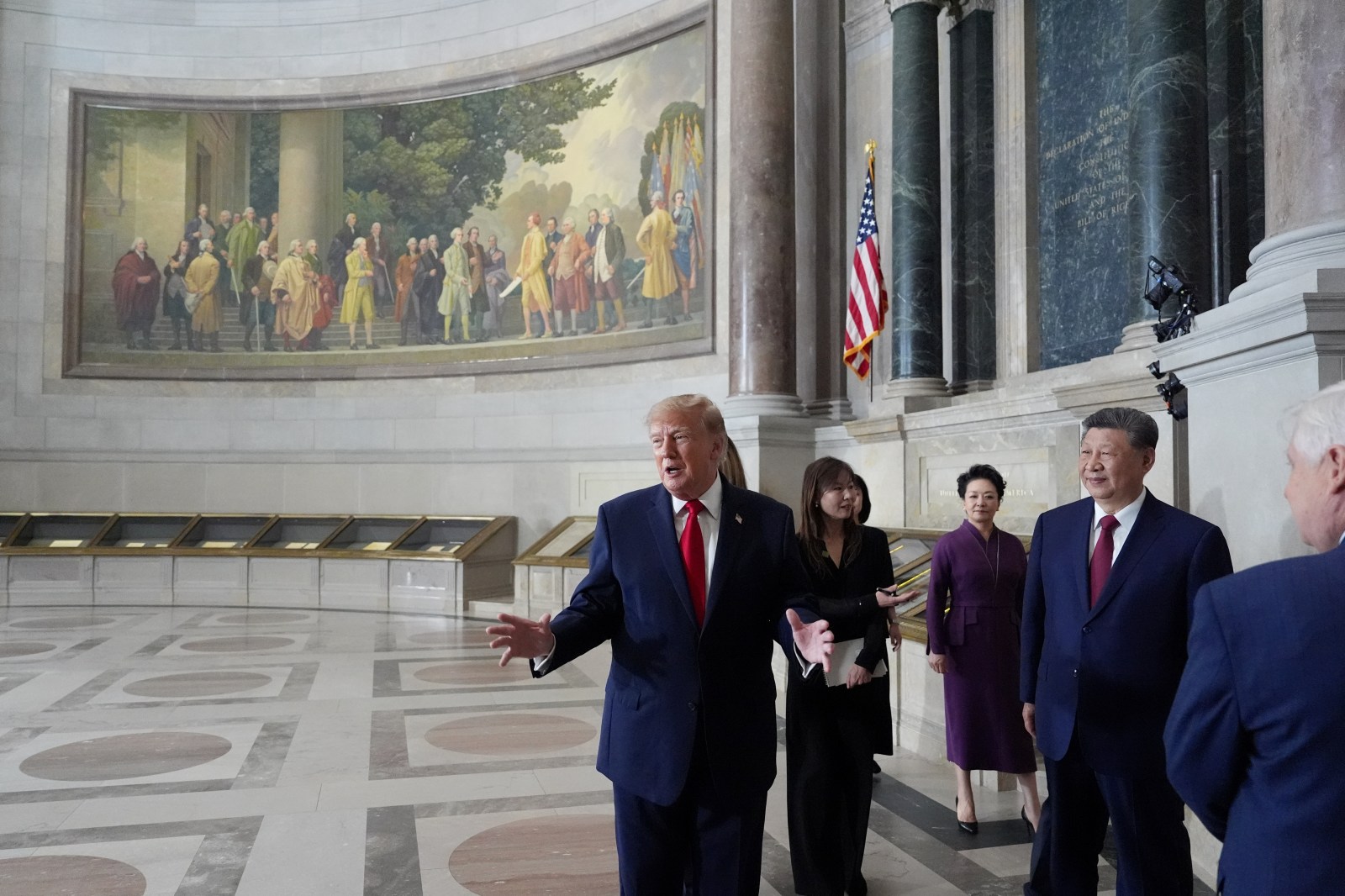
During this state visit in 2026, Xi was treated to a full state dinner and other ceremonial activities, departing from Trump’s earlier commentary. The banquet at the White House included dishes like yellow squash velouté and sesame-crusted sea bass. Trump and Xi also toured the National Archives, where Xi viewed America’s founding documents.
Throughout the visit, Trump emphasized the historical connections between the U.S. and China, drawing parallels to past trade and cultural exchanges. The tour of the National Archives was the summit’s final public event, capping off a meeting punctuated by formal ceremonies and discussions between two of the world’s largest economies.
On their private discussions, Xi spoke highly of the arrangements and described the visit as a success. Publicly, Trump and Xi refrained from detailed disclosures of their talks, though discussions reportedly covered a broad range of international issues, including Middle Eastern conflicts and relations in Asia.
The summit occurred alongside protests, with demonstrators near the White House voicing opposition to China’s policies. Pro-Xi supporters also gathered, advocating for stronger U.S.-China relations.
As Xi departed Washington, he extended an invitation to Trump for future visits, notably to the Asia-Pacific Economic Cooperation summit in Shenzhen. Trump and Xi are expected to meet again at the G20 summit at Trump’s property in Miami. Trump remarked positively on the summit’s outcomes, looking forward to continued diplomatic engagement in forthcoming meetings.