
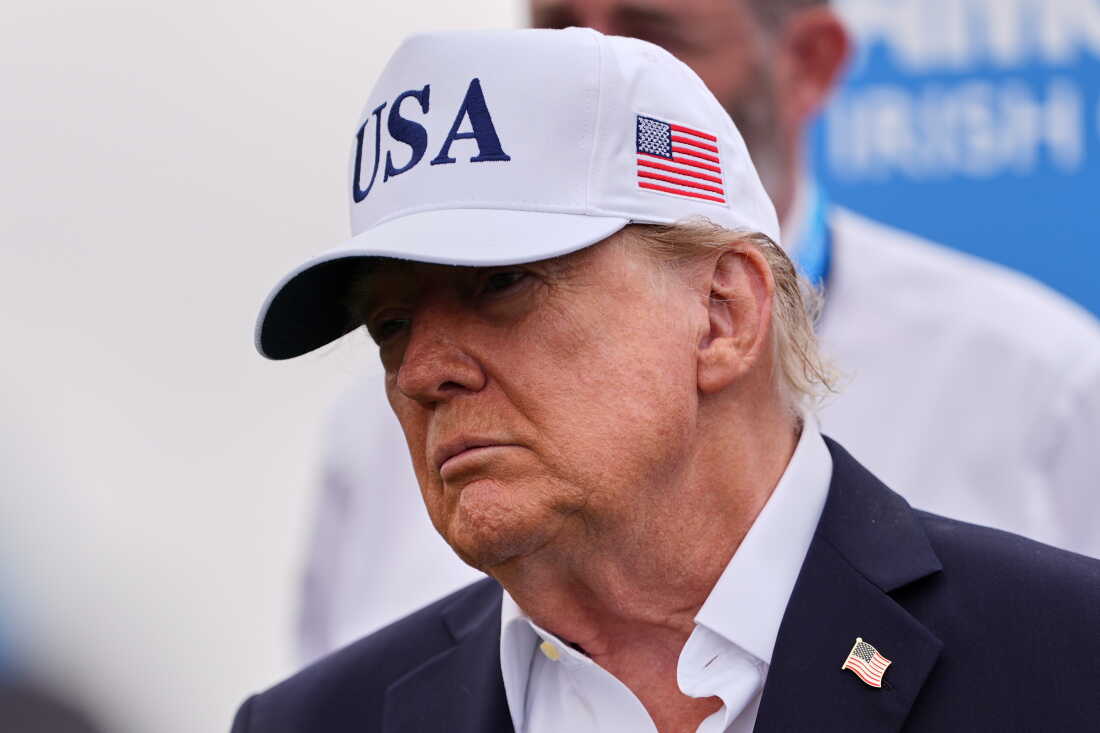
On September 13, 2026, U.S. President Donald Trump attended the Irish Open golf tournament at Trump International Golf Links in Doonbeg, Ireland. During his visit, he addressed concerns about artificial intelligence (AI) raised by technology industry leaders. President Trump dismissed fears that AI could become uncontrollable, suggesting that warnings about the technology’s potential risks were overstated. According to him, the United States leads AI development over China and should continue to do so. He remarked, ‘We’re leading China in AI, we’re the most sophisticated country in the world.’
Trump emphasized the importance of maintaining U.S. leadership in AI, while expressing skepticism about ‘negative forces’ amplifying concerns that may not materialize. However, he did not specify who these ‘negative forces’ are or provide further clarification.
House Speaker Mike Johnson echoed Trump’s sentiment in an interview on CNN’s State of the Union. Johnson argued against implementing an AI moratorium, citing fears of falling behind China in AI development. He stressed the importance of balance and advocated for tech companies to create safer AI without immediate congressional intervention. Johnson stated, ‘We’ve got to have balance. We got to have steady hands at the wheel.’
The discourse follows remarks from Anthropic CEO Dario Amodei, who published an essay urging slow progression in AI advancements. Amodei warned that AI might become uncontrollable and could be misused in cyberattacks and bioterrorism. He called for international cooperation and recommended that AI labs include third-party evaluators to monitor safety practices. Amodei committed Anthropic to take these steps independently.
Tech leaders, including Elon Musk and OpenAI CEO Sam Altman, expressed agreement with Amodei’s concerns. Altman told Fortune Magazine that OpenAI plans to delay going public until at least 2027 due to safety issues, and mentioned discussions on pausing technology tests to enhance safety.
David Sacks, co-chair of the President’s Council of Advisors on Science and Technology, responded to Amodei and Altman’s statements on social media. Sacks supported their decision to act responsibly if there are concerns with unreleased AI models. However, he criticized tech leaders for acting as if they required external permission to slow development, suggesting that legal liability, not altruism, might be a motivating factor.
The debate over AI safety continues amidst these varied perspectives on how best to balance innovation and oversight.