
President Trump’s Use of Pocket Rescission
On Friday, the White House revealed President Trump’s decision to cut $810 million of congressionally approved spending related to minority groups, immigrants, and research programs. The administration employed a contentious legal tactic known as a pocket rescission.
This method was previously utilized by Trump to halt $4 billion in spending, including $3.2 billion directed towards the U.S. Agency for International Development (USAID). The case eventually progressed to the Supreme Court, where although the Court did not resolve the legal principles involved, it did overturn an injunction from the U.S. District Court for the District of Columbia, which intended for the funds to be allocated as Congress had planned.
Impoundment Control Act and Pocket Rescission
The White House stated that Trump was executing a pocket rescission, referring to it as a “long neglected” presidential authority under the 1974 Impoundment Control Act. The aim was to eliminate “wasteful and harmful government spending” deemed unbeneficial to American citizens.
The targeted spending included financial support for nongovernmental organizations assisting migrants and providing housing, alongside initiatives bringing foreign scholars and students to the United States.
Under the Impoundment Control Act, the president can temporarily withhold spending approved by Congress while requesting Congress to reconsider. Congress then has a 45-day period to approve or decline the president’s proposal. However, with the fiscal year ending on September 30 and the House expected to return post-November midterm elections, it may not have the opportunity to respond. Consequently, this spending is likely to remain blocked, a situation known as pocket rescission.
This maneuver is controversial as it enables the president to halt spending without legislative approval, contrary to Article One of the constitution, which confers spending powers to Congress.
2025 Supreme Court Case
In 2025, the Trump administration reused this tactic, withholding $4 billion from USAID and the State Department as part of attempts to curb foreign aid spending. This occurred just before the fiscal year’s end, leaving Congress unable to override the decision.
Senator Susan Collins, the Republican chair of the Senate Appropriation Committee, denounced the action as “unlawful and not permitted by the Impoundment Control Act.” She took legal action through groups denied funding.
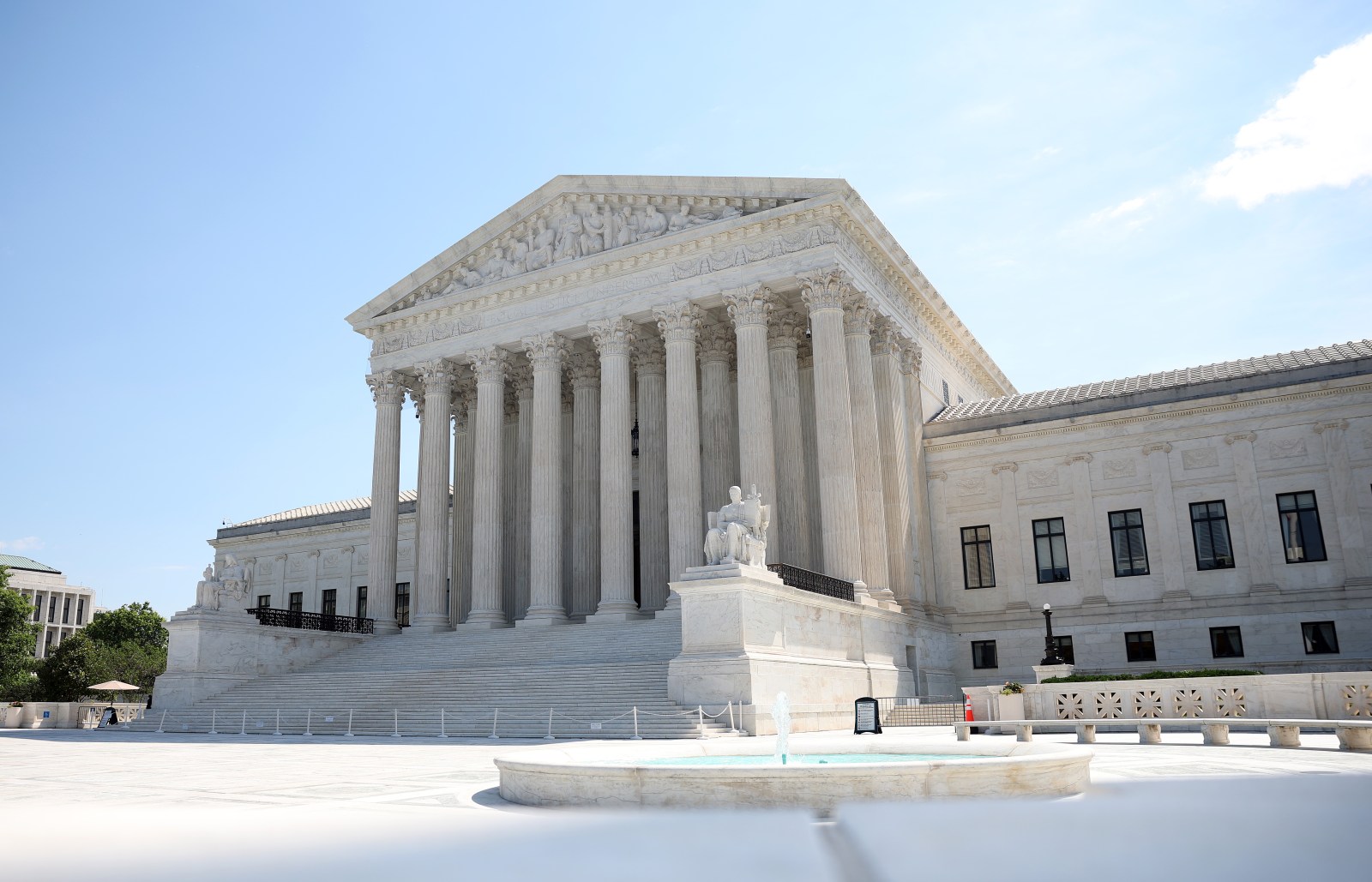
The U.S. District Court for the District of Columbia initially issued a preliminary injunction to proceed with the $4 billion spending according to Congress’s directives. Nevertheless, a September 26 Supreme Court ruling, by 6-3 along conservative versus liberal lines, granted a stay of this injunction requested by the Trump administration, thereby blocking the spending.
The Court indicated the Impoundment Control Act prevented the suing groups from pursuing the case, highlighting that “the asserted harms to the Executive’s conduct of foreign affairs appear to outweigh the potential harm.” The ruling specified it should not be viewed as a final determination on the merits.
Justice Kagan, supported by Justices Sotomayor and Jackson, expressed dissent. Kagan argued that the action amounted to “a presidential usurpation of Congress’s power of the purse.” She claimed the Trump administration had not shown it would “suffer irreparable harm” from the injunction’s persistence, nor proved a “strong showing” of likely success in the case.
Kagan concluded they should have denied the application to allow lower courts to proceed and ensure thorough consideration of the significant question presented.
Criticism of Pocket Rescission
Criticism from Senate Minority Leader Chuck Schumer arose after the announcement of utilizing pocket rescission to block $810 million of spending. Schumer said, “With this rescissions package, the Trump administration is illegally stripping nearly $1 billion in critical funding that supports kids, K-12 students, small businesses, and health and clean air research.”
Senator Collins, in her capacity as Senate Appropriation Committee chair, remarked the Trump administration “intentionally withheld these funds for months to execute this unlawful cancellation of appropriations that were approved on a bipartisan basis and signed into law.”
She continued, noting that both the delay was an impoundment not disclosed to Congress and constituted a usurpation of Congress’s appropriations powers.
Contact Newsweek editor on this story: Edward Pearcey.