
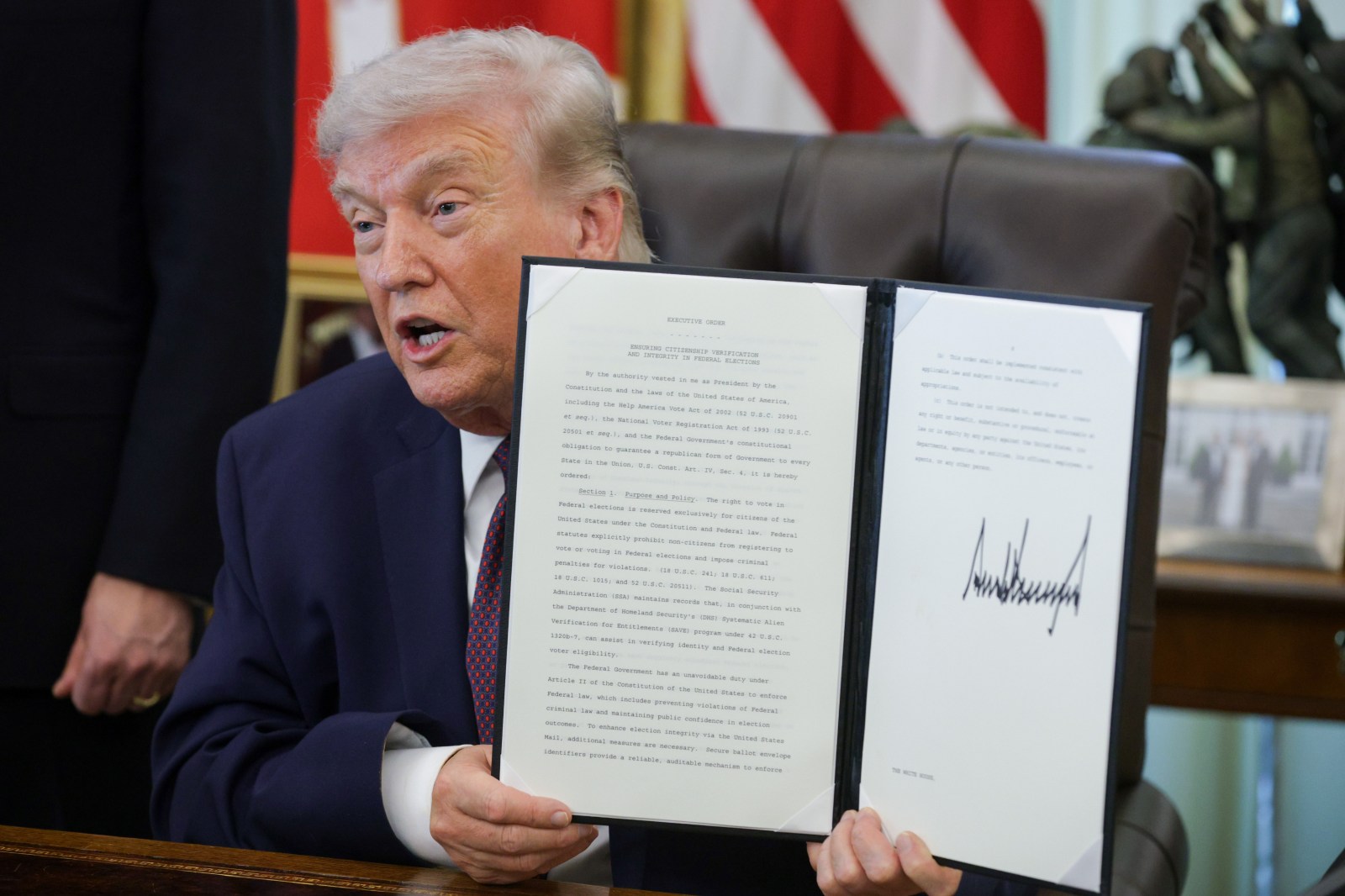
The Trump administration approached the U.S. Supreme Court recently, seeking emergency intervention in an ongoing legal battle regarding mail-in voting. The administration has requested that contested U.S. Postal Service ballot restrictions take immediate effect, following a federal judge’s decision to block the plan while lower-court litigation proceeds.
High-Stakes Legal Dispute
This dispute has become one of the most critical legal battles in the current election cycle. It revolves around how millions of Americans will cast their ballots, as control of Congress is on the line. According to federal data, nearly one-third of U.S. voters used mail-in voting during the 2020 presidential election. This is significant for election administrators, political parties, and voters, as several key battleground states rely heavily on mail voting.
Newsweek reached out to the White House for comment on this matter.
A Race Against the Calendar
Solicitor General D. John Sauer submitted an emergency application to the high court, requesting the removal of a block imposed by U.S. District Judge Indira Talwani. Judge Talwani, appointed during the Obama administration, found that challengers—consisting of Democratic-led states and voting rights organizations—are likely to succeed in their argument that the Postal Service policy oversteps boundaries reserved for states and Congress under the Constitution.
The Trump administration insists that these rules are standard postal regulations intended to improve election integrity, denying any unlawful federal takeover of elections. A crucial question in this litigation is whether changes can be realistically implemented before Election Day, as some states have already begun mailing absentee ballots.
The administration warned that keeping the injunction in place increases confusion, as local election officials continue to operate under existing systems rather than proposed federal standards. Opponents argue that changing procedures so close to Election Day poses significant logistical challenges for offices that have been preparing for months.
High Stakes for the Midterms
The outcome of this legal fight carries substantial political implications for the November midterms, where control of Congress is at stake. Republicans aim to defend their legislative majorities, while Democrats seek to use political momentum against the administration to win seats in the House and Senate
A Democratic victory in either chamber would enable the party to control committee agendas and subpoena power, enhancing oversight and creating opportunities for investigation. Democratic Representative Jamie Raskin emphasized this partisan tension, underscoring possible changes to the administration’s final two years if Congress shifts control.
The administration defends the mail-ballot restrictions as necessary measures to boost public confidence in elections, while critics contend they create unnecessary obstacles to voting and represent an unconstitutional extension of executive power into state-managed domains.
The Supreme Court is under pressure to act swiftly as ballots are distributed nationwide. The court’s decision will impact not only mail ballot handling in the campaign’s final weeks but also the fate of one of the administration’s significant election-security initiatives.