
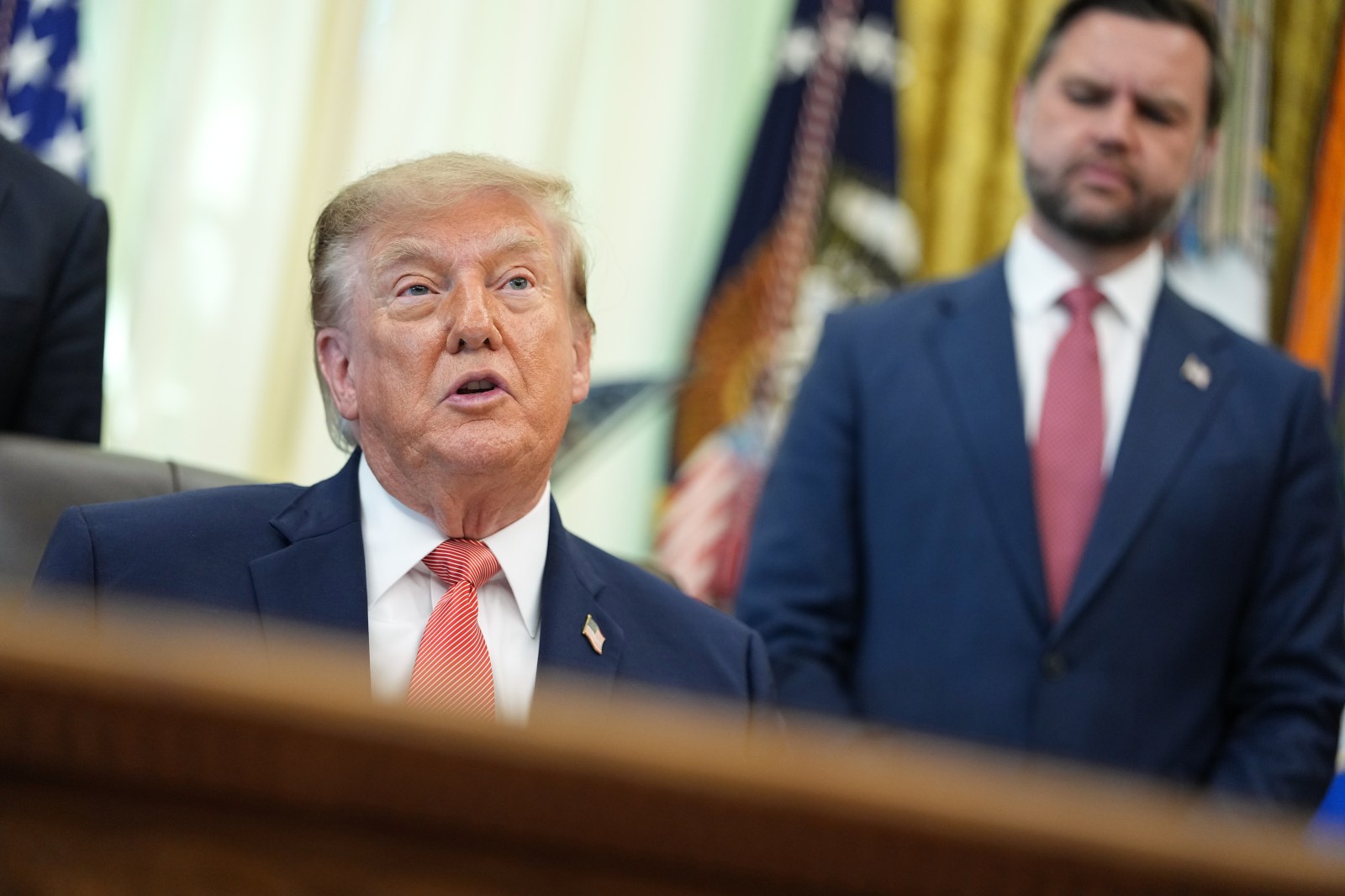
President Donald Trump and Vice President JD Vance revealed a $25 million whistleblower program aimed at encouraging the public to report suspected fraud connected to federal programs. The initiative offers rewards of up to $30,000 to eligible tipsters.
The program, administered by the Justice Department’s National Fraud Enforcement Division, seeks to uncover criminal activities involving taxpayer-funded benefits. Rewards will be given for information leading to criminal charges and successful legal actions against fraud.
Known as the Whistleblower Rewards Program, this effort is part of the Trump administration’s wider push to fight fraud and improper payments within the federal government. To receive a reward, the provided tips must be original, truthful, completely voluntary, and meet specific eligibility criteria.
How the Whistleblower Program Operates
According to the Justice Department’s guidelines, eligible whistleblowers can receive rewards ranging from $10,000 to $30,000. President Trump indicated that the commission would amount to one percent of the reported fraud, even if the value of the fraud is substantial.
To qualify for rewards, individuals must offer written information on specific fraud categories and collaborate fully with investigators. The provided data must be original and lead to criminal charges in specific covered areas.
The program focuses on federal health care and related offenses, as well as fraud in government programs managed by several departments, including Agriculture, Labor, Health and Human Services, Housing and Urban Development, Education, Veterans Affairs, Department of War, and the Small Business Administration. Highlights include hospice services, home health care, daycare, and special services fraud.
The program distinguishes between whistleblowers who report fraud voluntarily and individuals who participated in the fraud. Active participants in fraudulent activities are generally ineligible under the program’s criteria.
This approach aims to reward useful information early in investigations without requiring the case to result in heavy fines or forfeitures.
Expansion of Fraud Prevention Efforts
This initiative is an extension of the administration’s campaign to identify fraud linked to federal funds. In March, Trump launched the Task Force to Eliminate Fraud, with Vance as chairman. The task force coordinates federal agencies to detect fraud, strengthen eligibility checks, and prevent improper payments.
The whistleblower program adds incentive for the public to aid in detecting suspected criminal activities. Tips can be submitted through the fraud reporting website, fraud.gov.
Award Announced for Independent Journalist
The White House also announces a $10,000 award to journalist Nick Shirley for reporting on suspected fraud in Minnesota child care centers. His video spotlighted potentially empty facilities and included interviews suggesting lack of operational legitimacy.
One facility, Future Leaders Early Learning Center, was involved in fraud, with its former chief executive, Fahima Egeh Mahamud, pleading guilty to wire fraud and conspiracy, involving over $4.6 million.
The award to Shirley highlights the administration’s goal of encouraging non-law enforcement entities to help pinpoint fraud.
Handling Fraud Tips
Whistleblowers must provide information voluntarily and with complete cooperation to be eligible for awards. The information must lead to charges in a specified offense area.
Not all reports qualify for payment. Eligibility depends on the information’s originality, timeliness, and alignment with program requirements. This initiative helps identify fraud earlier to limit losses to taxpayer programs while providing a clear reward path to whistleblowers.
Further details on eligibility and submission processes are available in the Justice Department’s Whistleblower Rewards Program guidance.