
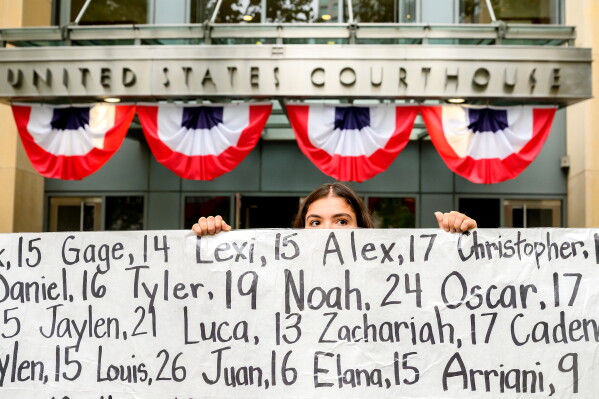
Opening statements began on a Tuesday in a trial against Meta Platforms in Oakland, California. Advocates and parents of social media victims gathered outside the federal courthouse. They held a banner featuring names of children and young adults who died due to social media-related harms, such as cyberbullying and sextortion. Among the names were Giovanni, 11, Bubba, 13, and Englyn, 14. These names represent a fraction of the issue, according to the parents.
“Behind us, justice is going to be served,” said Lennon Torres from the Heat Initiative. “The courtroom doors are open, and it is time that the public see what the executives at Meta have known all along: that their products are designed to addict and to harm children.” Many parents present have attended similar trials and hearings related to online child safety. They view this trial, involving attorneys general from four states seeking billions in damages, as critical. The case marks a culmination of efforts to push social media firms to better protect children online.
Social media companies face increasing lawsuits over young users’ safety. Meta has already lost two significant cases regarding harms to children this year, which it is appealing. The trial underscores a shift in public perception against these companies, said Amy Neville. Her son, Alexander Neville, died at 14 from fentanyl poisoning after encountering a dealer on Snapchat. Neville emphasizes ongoing accountability to make products inherently safe.
This lawsuit centers on broader claims, not individual cases. It alleges Meta’s design choices for Instagram and Facebook expose young users to risks. The states argue Meta knew their dangers and misrepresented them. Meta denies the accusations, asserting the trial will highlight its efforts to enhance platform safety. The trial’s verdict could impact Meta financially and influence platform design decisions.
Parents are eager for trial evidence, especially internal documents from Meta. John DeMay, whose son Jordan died by suicide at 17 due to a sextortion scheme on Instagram, looks forward to the evidence becoming public. “As this information starts to unfold, American parents will see and realize what is really happening,” he said.
Some parents outside the courthouse are from the plaintiff states in the trial: California, Colorado, Kentucky, and New Jersey. They expressed gratitude to their attorneys general. Lori Schott from Colorado shared that Attorney General Phil Weiser reviewed content from her daughter Annalee’s social media feeds and journals after Annalee died by suicide at 18.
Schott had a message for Meta, its CEO Mark Zuckerberg, and Instagram’s Adam Mosseri: “You have built one of the most powerful companies in the world, but power does not excuse harm. Profits do not erase your responsibility. No company, no matter how powerful, should stand above the law, truth, and the well-being of our children.” Many parent advocates like Erin Popolo, whose daughter Emily Murillo died after being cyberbullied, expressed hope. Popolo anticipated the trial could lead to substantial change on social media. “I think that we’re going to make history here,” she said.