
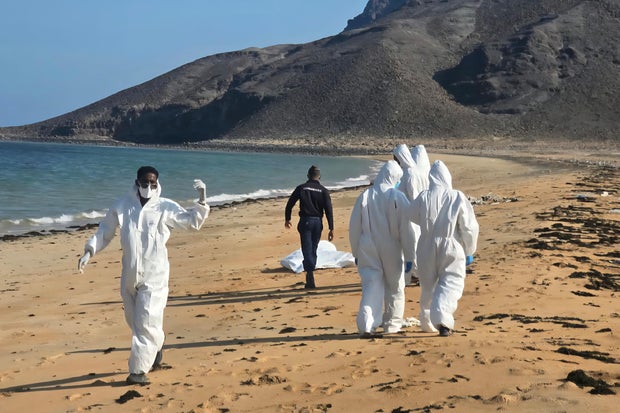
At least 139 people, including children, have tragically lost their lives after a boat carrying over 300 migrants capsized off the coast of Djibouti, East Africa. The International Organization for Migration (IOM) confirmed the incident on Sunday.
Alexandre Coissac, the IOM chief of mission in Djibouti, expressed sorrow over the loss in a statement. He emphasized the devastating impact on survivors and families who have lost loved ones or await news of missing relatives. Due to overcrowding, the vessel sank soon after departure on October 8, just close to the shore. The local authorities struggled to handle the overwhelming influx of bodies.
Coissac revealed that the official death toll only accounts for bodies buried by Djibouti authorities. Many had been buried by fellow migrants, pending verification for inclusion in the official count. “What is terrible is they were buried without names, in common graves, resembling war situations,” Coissac stated. “They all have families, and we may never know their circumstances.” Authorities are providing survivors with medical treatment and psychological support at the IOM rescue center in Obock.
Among the deceased, nine girls and six boys were identified. More than 80 survivors, all Ethiopian nationals, remain in shock, some aware of their family members’ death. The IOM shared video footage of the wreck and the aftermath, including personal belongings on the shore.
The ship attempted passage from Djibouti to Yemen, aiming for employment opportunities in the affluent Gulf nations. The Geneva-based U.N. migration agency reported ongoing rescue efforts and cautioned the rising death toll. The Missing Migrants Project reported over 900 deaths or missing persons along this route last year, with an 18% increase in attempts.
Coissac stated, “This tragedy is a stark reminder of the dangers faced by migrants along this migration corridor as they seek economic opportunities.” Despite escalating conflicts in Yemen, thousands persist in crossing the Bab el-Mandeb Strait. Recent tensions in Yemen saw at least 2,000 Yemenis seeking aid in Djibouti.
Amy Pope, IOM Director-General, urged governments and donors to establish safe and legal pathways to prevent future incidents. “No one gets into a boat like that unless they believe there is no other safe way,” Pope remarked. The goal remains to prevent treating these deaths as acceptable, advocating for active measures before another tragedy occurs.