
Learning Resources, a Vernon Hills-based toy manufacturer, has filed a lawsuit against the federal government, contesting recent global tariffs. The case, submitted on Friday at the U.S. Court of International Trade with co-plaintiff HMTX Industries from Connecticut, challenges the 10 to 12.5% tariffs imposed by the Trump administration due to alleged forced labor practices. The tariffs, enacted under Section 301 of the Trade Act of 1974, allow the president to apply tariffs to nations engaging in unfair trade practices.
The Office of the United States Trade Representative cited forced labor across the top 60 trading partners, encompassing 99.4% of U.S. imports as a reason for the tariffs. However, Elana Ruffman, chief marketing officer at Learning Resources, claims the real intent is tax hikes. Learning Resources previously filed a lawsuit against Trump’s tariffs in April 2025, ultimately winning in the Supreme Court and recovering billions for U.S. companies.
The new tariffs replace temporary 10% global tariffs imposed by Trump in February after the Supreme Court overturned prior tariffs enacted under the International Emergency Economic Powers Act, claiming they exceeded presidential authority without Congress. The recent lawsuit argues that the federal government attempts “to re-create materially the same global tariff regime” using different statutes but fails in its attempt.
Ruffman criticizes the government for relying on vague language and unsubstantiated claims regarding forced labor across targeted economies. In February, the Supreme Court required the government to reimburse $160 billion in illegitimately collected tariff revenue to businesses. Learning Resources received $10 million of the $12 million in extra expenses from tariffs.
Studies indicate consumers bore most of the tariff costs, with Illinois and other Midwest states affected the most. In 2025, tariffs increased expenses for average Midwest households by over $2,000, 55% higher than the national average, according to the Midwest Economic Policy Institute and the Project for Middle Class Renewal. The study revealed Illinois households spent $2,236 more annually, while Indiana and Michigan saw increases of $2,586 and $3,158 respectively. Midwest tariffs also shrank the regional economy by $18 billion, reduced manufacturing jobs by over 41,000, and disproportionately affected low-income families.
“The trade war initiated in 2025 significantly impeded the economy, with Midwest households suffering more than the nation overall,” said Frank Manzo, economist at the Illinois Economic Policy Institute.
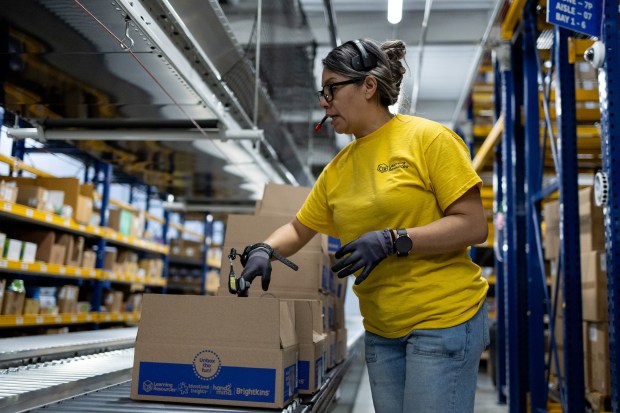
Learning Resources and its sister company, hand2mind, employ 500 global workers and maintain a 1.1 million-square-foot warehouse in Vernon Hills, outsourcing about half their manufacturing to China. Last year, the company raised product prices and reduced marketing expenses to offset tariff costs, avoiding layoffs. In 2026, Learning Resources chose not to adjust prices, aiming to benefit consumers directly from refunded tariff money.
In addition to avoiding layoffs or transferring new tariff costs to customers, Learning Resources committed to growth under an EDGE tax incentive agreement with Illinois. The company is constructing a new 700,000 square foot facility in Vernon Hills, serving as hand2mind’s primary distribution hub, and will hire 37 new full-time employees while retaining 288 existing Illinois positions. The Economic Development for a Growing Economy program offers annual tax credits to businesses generating jobs, investment, and training in Illinois. The facility is slated to open in 2028, according to Ruffman.