
The WNBA showcases talent like Caitlin Clark and Sophie Cunningham who bring energy and excitement. These players generate attention, drive rivalries, boost ratings, and create memorable moments. Despite these positives, the league sometimes appears uneasy with its rising stars.
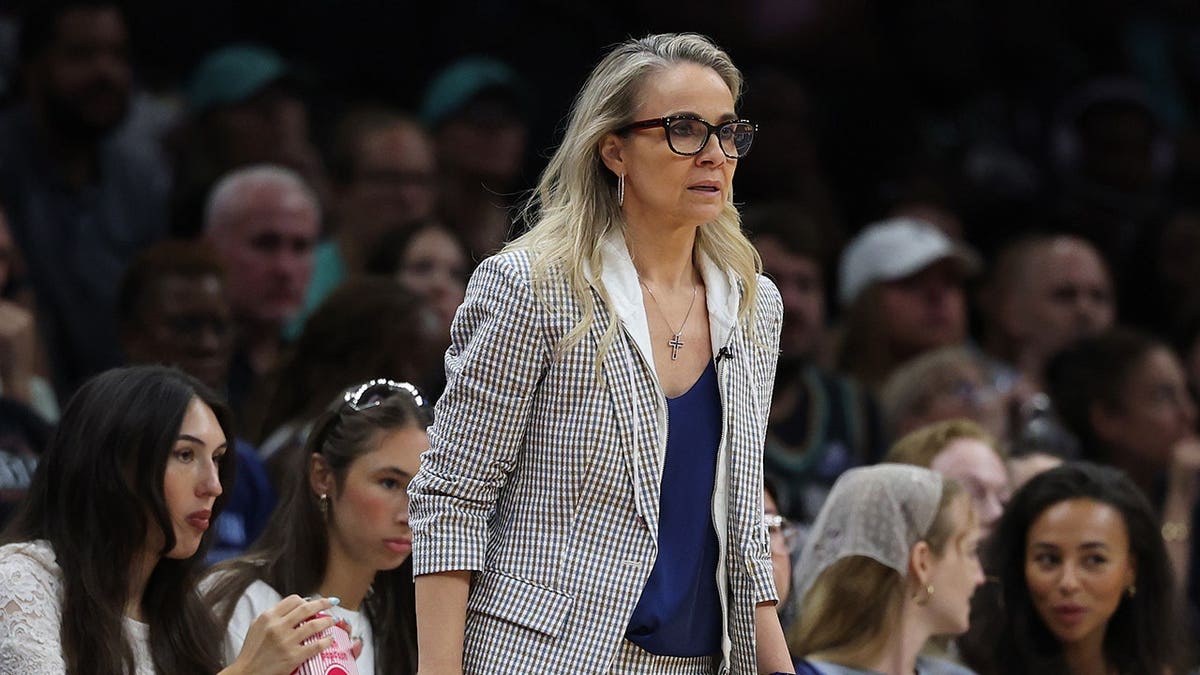
Recently, a notable incident occurred during a matchup between the Las Vegas Aces and New York Liberty. This game drew attention as both teams aim for the championship. However, Aces head coach Becky Hammon made a surprising decision. She did not start the game with her usual star players, A’ja Wilson, Chelsea Gray, and Jackie Young. Instead, players Jewell Loyd, Dana Evans, and Brianna Turner took to the court.
Hammon’s decision was not a random choice. It reflected her concerns over playing back-to-back games with little rest, especially when traveling. The Las Vegas Aces faced the Minnesota Lynx before the game against Liberty, where Wilson, Young, and Gray played significant minutes. Hammon defended her decision, emphasizing player health and safety.
“The health and safety of players comes first,” Hammon noted. “Whenever we end up, we’ll manage it, but this was a scenario focusing on the bigger picture,”reported Yahoo Sports.
The WNBA collective bargaining agreement requires scheduling with at least 20 hours between games of a back-to-back series. The league generally provides a 22-hour window when there is no more than a one-time zone travel difference. However, this weekend’s schedule saw the Aces playing two games in quick succession, with the last game kicking off at 12:30 p.m. ET on Sunday.
Jonquel Jones of the Liberty commented on the scheduling, understanding Hammon’s cautious approach. “They have to do what’s right for their team and their bodies,” she said.
The WNBA plans to expand its schedule with a 50-game season. This change aims to support the growing popularity of the league. Hammon’s decision might also suggest a message to the WNBA about the sustainability of current scheduling practices. As the league undertakes these expansions, balancing player well-being and fan expectations remains crucial.
As the WNBA strives for growth, it must navigate these challenges carefully. The decisions made today will shape the future landscape of the game’s competitive and entertainment value.