
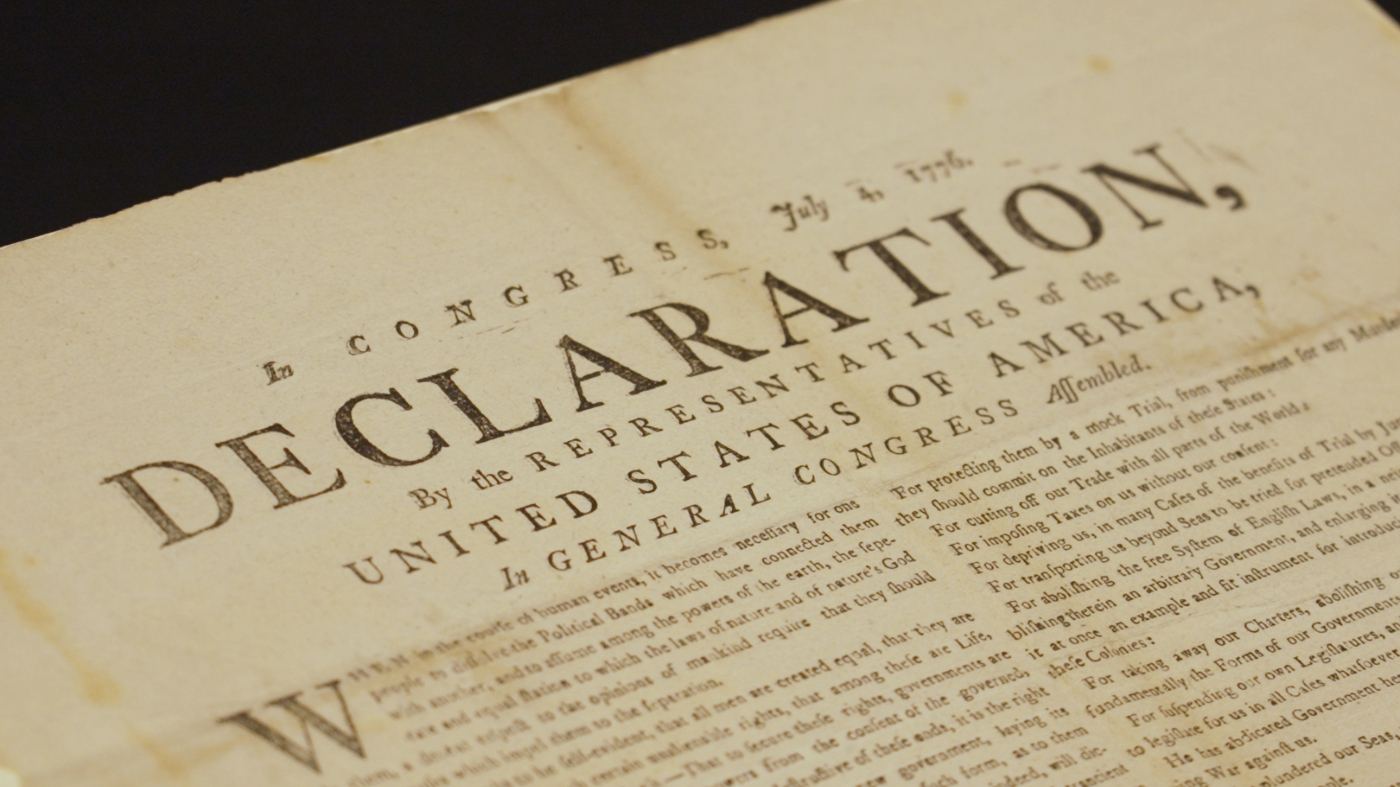
A newly discovered historical document, a print of the U.S. Declaration of Independence from July 1776, is currently on display at The National Archives in London. This copy, known as the Exeter Print, is one of four original versions housed in the United Kingdom. The presence of these copies, largely unknown to the American public, raises questions about their origins and future.
Twelve years ago, during a visit to the British National Archives, I was offered the rare opportunity to hold an original copy of the Declaration dated July 4, 1776. This was during a private tour connected to my fellowship with the British House of Lords. The experience unveiled an intriguing fact: the UK holds four original copies of the Declaration, three of which did not reach British shores through official channels.
The Journey of the Declaration Copies
Among these documents, three are known as the Dunlap Broadsides Copies. The fourth is the newly identified Exeter Print. Discovered last month, the Exeter Print was intercepted on December 24, 1776, by the Royal Navy. It was concealed within a collection of letters aboard the American privateer vessel, Dalton.
The copy I held, a Dunlap Broadsides Copy, made its way to London through legitimate colonial networks, possibly arriving in mid-August 1776. Once in London, the document was delivered to King George III by Lord Germain. The other copies arrived under different circumstances, one via interception and another through military action.
The Significance of These Documents
To the British, the Declaration might have seemed a distant farewell from a former colony. However, to Americans, these documents are critical pieces of national history. Despite the passage of 250 years since America declared its independence, no official initiative has been launched by the U.S. to reclaim these documents. The topic is especially poignant following the recent 250th celebration of American independence.
Currently, one of the Dunlap Broadsides copies is on temporary loan from the UK for an exhibition at the Philadelphia Museum of the American Revolution. This particular copy has an intriguing history, having been intercepted from Jonas Phillips and accompanied by a letter in Yiddish.
The Call for Repatriation
Given the historical and national value of these documents, it might be time for federal leaders and the U.S. State Department to formally request the return of these vital pieces of American heritage. While the UK plans to display the Exeter Print soon, initiating dialogue about the repatriation of these documents could be a significant step in preserving and honoring America’s historical legacy.
James Finney-Conlon, MPP, a policy professional and writer based in Los Angeles, highlights the urgency in addressing the location of these American historical artifacts.