
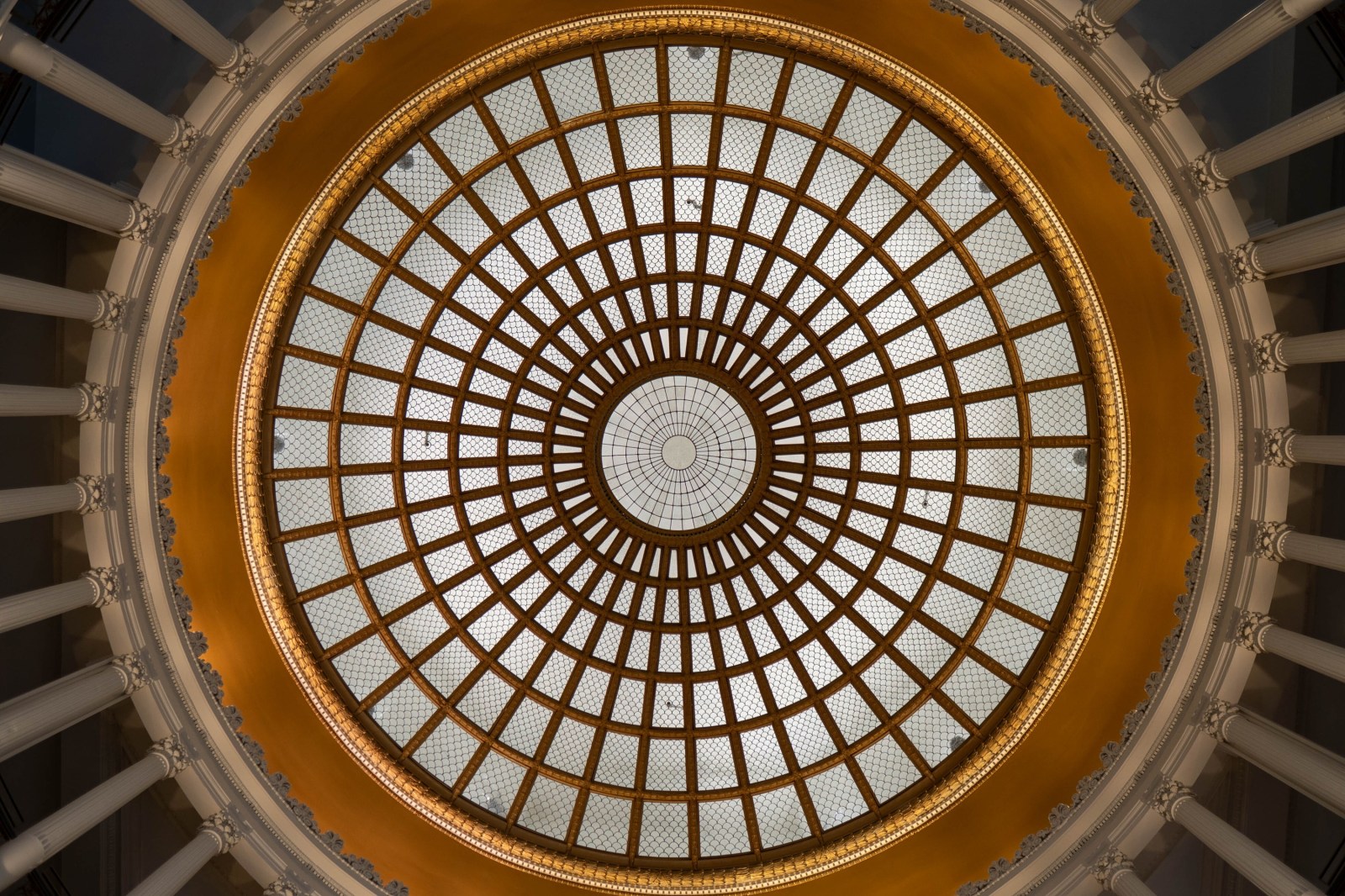
The First Bank of the United States, a key financial landmark in American history, has reopened as a museum after a $43 million restoration effort. Located in Philadelphia, this building welcomed visitors anew on July 1. It had been closed since about 2002, and its reopening marks a fresh chapter for a site that helped form the nation’s early economic framework.
Managed by the Independence Historical Trust and the Independence National Historical Park, part of the National Park Service (NPS), the restored site now includes exhibitions crafted in partnership with the U.S. Department of State and Drexel University. These exhibitions showcase art, artifacts, and commemorative objects that narrate the story of American history and diplomacy.
Across the nation, there is a growing trend to restore and repurpose historic buildings instead of demolishing them. Nearly half of America’s 125 million buildings are at least 50 years old, according to the American Institute of Architects (AIA). Adaptive reuse projects have seen significant growth. RentCafe highlighted that nearly 25,000 apartments emerged from converted buildings in 2024, marking a 50 percent hike from the previous year.
Reusing existing structures can avoid 50 to 75 percent of the carbon emissions tied to new construction, as noted by the AIA. It prevents the release of embodied carbon produced through the manufacture, transport, and assembly of new building materials. Gordon Gill, the architect behind the world’s tallest skyscraper, emphasized the importance of maintaining the longevity of current buildings to prevent obsolescence.
Preserving a National Landmark
The NPS aimed to strike a balance between modernization and preservation during the restoration. Rong Chen, a registered landscape architect at the Independence National Historical Park, discussed the challenge of addressing unexpected conditions found during construction while ensuring the building’s historic essence remained untouched.
The restoration incorporated accessibility improvements along with new electrical, plumbing, heating, ventilation, and air conditioning systems. Chen explained these upgrades were executed in ways that preserved the building’s historic nature and complied with modern building codes and safety standards.
Visitors can now explore significant areas such as the rotunda and glass dome, which Chen described as “among the building’s most impressive architectural features.” Park officials are eager for the public to engage with the new exhibitions located within the landmark.
The exhibits underscore the role of art and artifacts in American history and diplomacy. As per the NPS, the collection includes items from U.S. embassies and Philadelphia’s Atwater Kent Collection at Drexel University, along with commemorative items tied to the city’s celebrations of the 1876 Centennial, the 1926 Sesquicentennial, and the 1976 Bicentennial.
More Restoration Projects Underway
The reopening of the First Bank is part of a broader series of projects led by Independence National Historical Park and the Independence Historical Trust in anticipation of the country’s 250th anniversary. The NPS stated that repairs and improvements have been completed on historic structures around Independence Square, including Independence Hall, Congress Hall, and Old City Hall. Additional upcoming initiatives include the Join or Die sculpture project and the installation of an America 250 time capsule.
Chen remarked that the latest restoration goes beyond preserving a building. The project’s goal is for visitors to gain an appreciation for the site’s extraordinary architectural beauty and its historical significance to America. Chen highlighted the project’s emphasis on historic preservation and the NPS’s dedication to maintaining key landmarks for future generations to experience and learn from.