
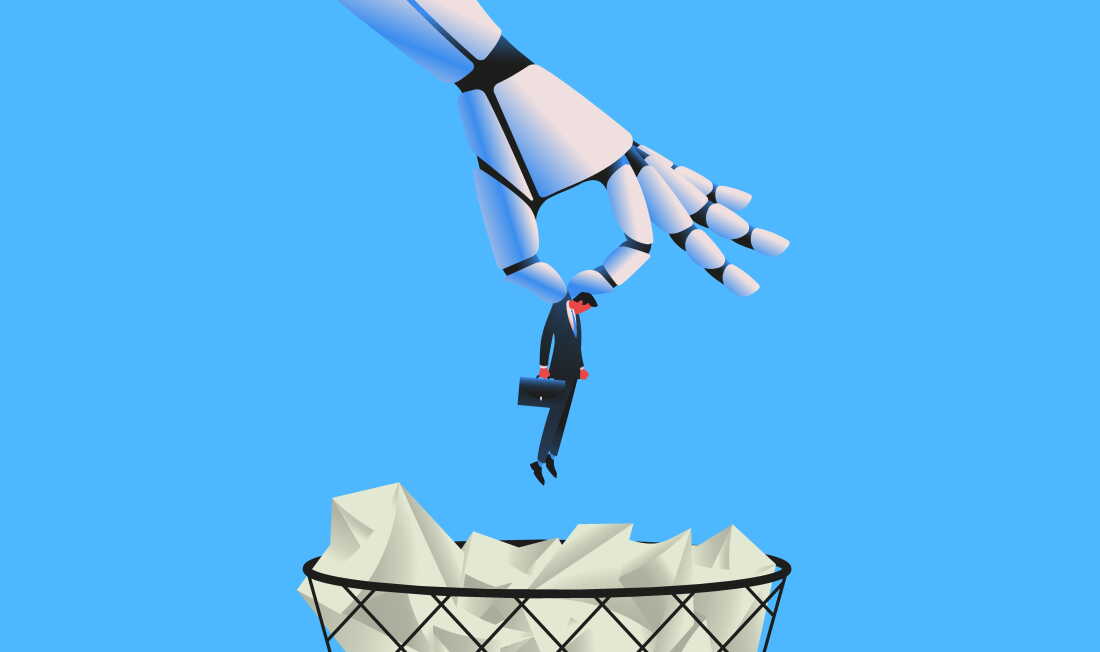
The article from the Planet Money newsletter raises concerns about the potential effects of an AI bubble burst. It discusses how such an event could lead to a recession and accelerate the replacement of workers with AI technology. The author expresses skepticism regarding broad claims about AI’s transformative power but acknowledges that advancing technology prompts concerns about employment.
Two key areas of economic research provide context for these worries. One is the historical pattern of financial bubbles and their consequences. The second is the link between recessions and increased automation, where businesses use technology to fulfill tasks traditionally performed by humans.
Understanding Financial Bubbles
Charles Kindleberger, in his book “Manias, Panics, and Crashes,” outlines how bubbles often begin with a significant economic change, such as a new technology promising wealth creation. Initially, investors pour money into this promise, building up debt in the process. However, if expectations exceed reality, asset prices decline, debts remain, and the situation may spiral into a crisis.
The railroad industry serves as a historical example of a revolutionary technology that led to a financial bubble. Such bubbles can impact societal trends and polices as seen with the immigration crackdown following the Panic of 1873.
Currently, AI is driving stock market gains. An analysis by J.P. Morgan revealed that AI-related companies have significantly impacted the S&P 500’s stock performance. These companies are also incurring substantial debt to finance essential infrastructure, raising questions about financial sustainability.
While not all bubbles result in financial crises, some, like the dot-com bubble, lead to recessions without a systemic crisis. The article questions whether AI firms will generate profits matching their expenses. Technology analyst Benedict Evans warns of potential profit challenges due to intense competition driving prices down.
Automation and Recessions
Research reveals that recessions can prompt businesses to adopt new technologies to replace workers. Economists Nir Jaimovich and Henry Siu found that job losses in areas susceptible to automation are concentrated around recessions. From 1990 to 2017, a significant portion of job declines happened during these economic downturns.
Price competition among AI companies might increase the affordability of their technologies for other businesses, potentially accelerating job automation during a recession. A market downturn could damage investor profits, while workers face job insecurity.
While the extent to which AI will affect economic patterns remains speculative, policies are available for mitigating job losses. Ideas include taxation on AI and robots, as suggested by Bill Gates, which could make it financially viable to retain human workers.
Despite uncertainties about AI’s impact, the need for preparedness and policy frameworks is apparent.
Virtual Event Announcement
A virtual event will feature discussions on AI and employment, featuring MIT’s Daron Acemoglu and Duke’s Ronnie Chatterji. This event is available to NPR+ supporters and provides an opportunity to engage with experts on this evolving topic.
Note: Charles Kindleberger had an intriguing life, contributing to the CIA’s precursor and designing the Marshall Plan, suggesting potential for a film adaptation.