
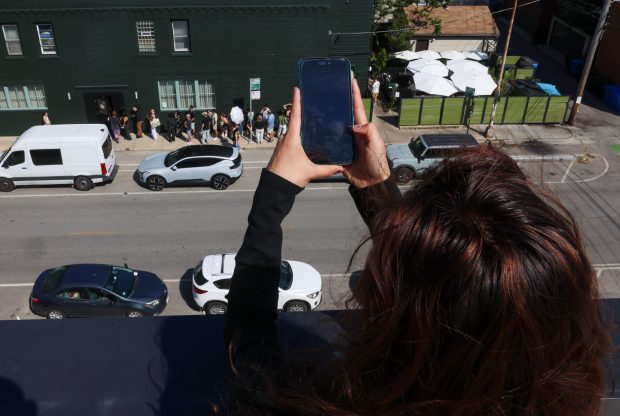
Every day, Sophie Frere observes an unusual spectacle from the roof of her apartment in Chicago. This unique view reveals a constant, long line outside the Filipino restaurant Kasama, situated in Wicker Park. This isn’t a brief curiosity. The line stretches along Augusta Boulevard and winds around the block.
Frere moved to Chicago two months ago and was intrigued by the sight. Confused by the everyday occurrence, she asked her neighbor about the line, receiving a reply that Kasama holds a Michelin star. Despite Chicago’s rich culinary landscape, this daily queue seemed excessive. Frere shared her observations with friends across the globe. Their reactions ranged from disbelief to urgency to try Kasama.
Determined to explore this phenomenon further, Frere started a TikTok account, @kasamahowwefeelin, documenting the daily queue. Her videos gained traction quickly, with her second video exceeding 200,000 views. Despite the apparent lack of activity in these videos, Frere continues to attract a substantial audience.
In one instance, Frere joked about hiring DJs for the waiting crowd. The suggestion prompted 300 messages from DJs willing to perform. She went ahead with hiring some, providing entertainment for those in line.
Until recently, Frere, a Stanford graduate, lived in California, working in the tech sector. After becoming disenchanted with corporate culture, she moved to Chicago, considering studies in law or psychology at Northwestern.
The diversity in the line fascinates Frere. From tourists to locals, each person carries a unique story. The waiting individuals sometimes share tales of relationships or simple complaints about the line itself.
Casual conversations often reveal their satisfaction with Kasama’s offerings, describing the experience as ‘amazing.’ Frere questions whether this response reflects an honest opinion or an attempt to justify the long wait.
Frere compares the American penchant for unique experiences to European prioritization, noting the cultural differences in value perceptions. She considers the historical aspect of queuing, dating back to 14th-century England, and the social implications of this practice today.
The ritual of lining up at Kasama deviates from the typical annoyance of waiting—it has become a form of social currency in Chicago. This phenomenon is not isolated to Kasama, with social media driving similar trends at other establishments.
Frere herself participates in the Kasama line occasionally, aware of her contribution to its popularity. Her daily videos inadvertently promote the queue culture further.
Amused by the interactions occurring within the line, she observes occasional mishaps involving commuters and line standers. On days when Kasama is closed, people mistakenly form lines nonetheless.
Despite initially aiming to deter line formation for her convenience, Frere’s documentation continues to draw attention. She frequently receives inquiries about the line’s status, obliging with updates.
Embracing the interest in Kasama’s queue, Frere humorously labels her efforts as community service, capturing the uniqueness of this Chicago tradition.