
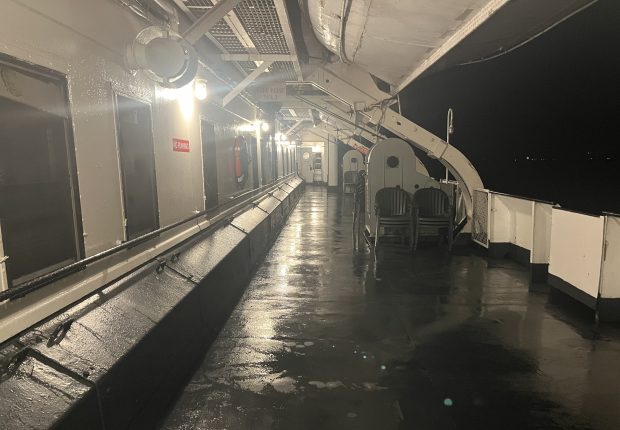
Labor Day marks the end of summer for many, signifying a shift from sunny days to cooler autumn nights. While the calendar might suggest otherwise, the cultural shift is palpable, especially on the Great Lakes where the SS Badger ferries its last overnight journey of the season.
This steam-powered passenger ferry offers a unique experience, taking travelers from Manitowoc, Wisconsin, across Lake Michigan to Ludington, Michigan, under the cover of darkness. Operating since 1953, the Badger stands as the last vessel of its kind on the Great Lakes, proudly maintaining traditions even as the world around it changes.
“Passenger ferries rarely operate overnight,” explains one crew member. “It’s a rare, almost surreal opportunity to be completely surrounded by darkness.”
The overnight sail requires passengers to embrace the void, as the lake stretches both protection and mystery. Aboard this 400-foot-long ferry, built to carry hundreds yet hosting only a handful of travelers, the scene is akin to a ghost town afloat.
Despite the eerie tranquility, overnight travelers include meteorite hunters, freight hauliers, and visitors avoiding costly lodging. It’s a notable spot for observing a pristine, starry sky. The ferry’s story traces back to early 20th-century rail congestion, created to tackle shipping delays by ferrying freight across Lake Michigan. As rail traffic eased, the ferry faced decline until Charles Conrad’s revival efforts in the early 1990s.
Today, the Badger is more than transportation; it’s a National Historic Landmark, recognized for its substantial size and history. However, questions linger about who seeks such a journey today, as not even families exploring the amenities, such as its onboard cafes or playroom, venture during this twilight voyage.
Taken recently by our correspondent, on a trip with merely 30 passengers, interactions were sparse but zestful. Employees like Timothy Merrick find comfort in its silence, much preferring it over busy daytime shifts.
The ferry also preserves remnants of its past, including a mini-museum and cafes that serve as brief social hubs. Despite environmental controversies, including a past EPA dispute concerning coal ash disposal, the ferry has adapted, maintaining its place as the largest running U.S. car ferry.
As dawn approaches Ludington, the ferry breathes anew. Passengers yawn and gather their belongings, while the lake sways lightly. Docking operations unfold like a practiced dance, passerby veiled in morning mist reflecting on their peculiar adventure.