
Your favorite jeans likely traveled far, from cotton farms to factories, before reaching your closet. While they may look worn, they might never have been. Processes like stonewashing and chemical fading create that effect, requiring substantial water, energy, and chemicals. This makes denim a target in fashion’s sustainability efforts.
Brands now market their jeans as ‘sustainable,’ using regenerative cotton, recycled fibers, and low-water techniques. Yet, verifying these claims is complex. Sustainability lacks a universal definition and standards.
Understanding Denim Making
Many jeans begin with cotton, needing significant water, fertilizer, and pesticides. Beth Jensen from Textile Exchange notes that brands often don’t know the origins of their cotton. Denim production spans countries, complicating labor condition checks.
Climate differences mean what’s possible on a Californian farm may not work in India or Australia. Regenerative cotton aims to improve soil health, biodiversity, and reduce synthetic chemicals.
Labor and Energy Demands in Denim
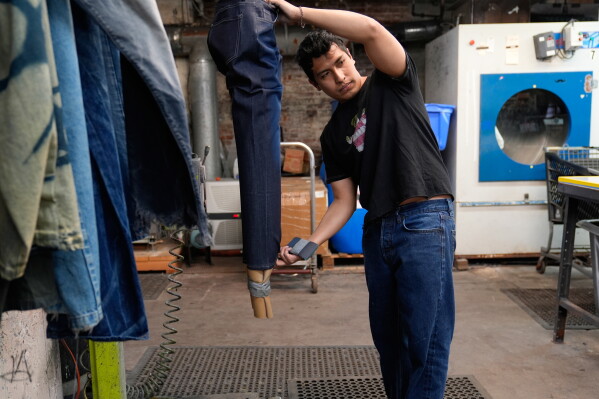
Once cotton is harvested, it becomes yarn, dyed with indigo, a water-intensive process. The denim fabric is woven, cut, and sewn. Finishing treatments create different looks. Bill Curtin from BPD Washhouse explains processes divided into ‘wet’ and ‘dry.’
The wet process uses water, chemicals, and treatments for tinting. Pumice stones traditionally helped achieve stonewashed effects, but enzyme alternatives and ozone technologies now use less water. The dry process uses hand techniques or lasers, which are more efficient.
Many jeans include synthetic fabrics, like polyester, which shed microplastics over time.
The Challenge of Sustainable Denim
Maria McManus faced challenges aligning denim with her eco-friendly brand due to its invasive washing process. She sourced raw denim from Japan, skipping washes to avoid typical commercial fades. Her collaboration with Agolde, known for regenerative cotton, offered new opportunities.
Working with Agolde provided access to regenerative farming, verified dyeing processes, and supply chain tracking, though not without challenges. Organic crops can fail, and verifying supply chains is complex. McManus shares that honesty about crop failures builds trust.
Her jeans, nearly $700, reflect small production runs. She emphasizes sustainability efforts require scale.
Choosing Sustainable Jeans
Experts urge caution with vague sustainability claims. Dana Davis recommends researching brands’ practices beyond individual products. A sincere approach indicates authenticity. However, ‘greenwashing’ complicates authenticity checks.
Certifications, like B Corp, assess social and environmental efforts, though none guarantee sustainability. Some lyocell fibers gain backing from the Forest Stewardship Council, ensuring sustainable sourcing.
Consider buying fewer jeans, wearing them longer, washing less, and shopping secondhand. Levi Strauss & Co.’s assessment shows significant carbon reduction if 34.2 million people buy secondhand jeans this year, avoiding emissions equivalent to 150,000 gasoline cars.
“The most sustainable action is using what’s already made,” Jensen states.