
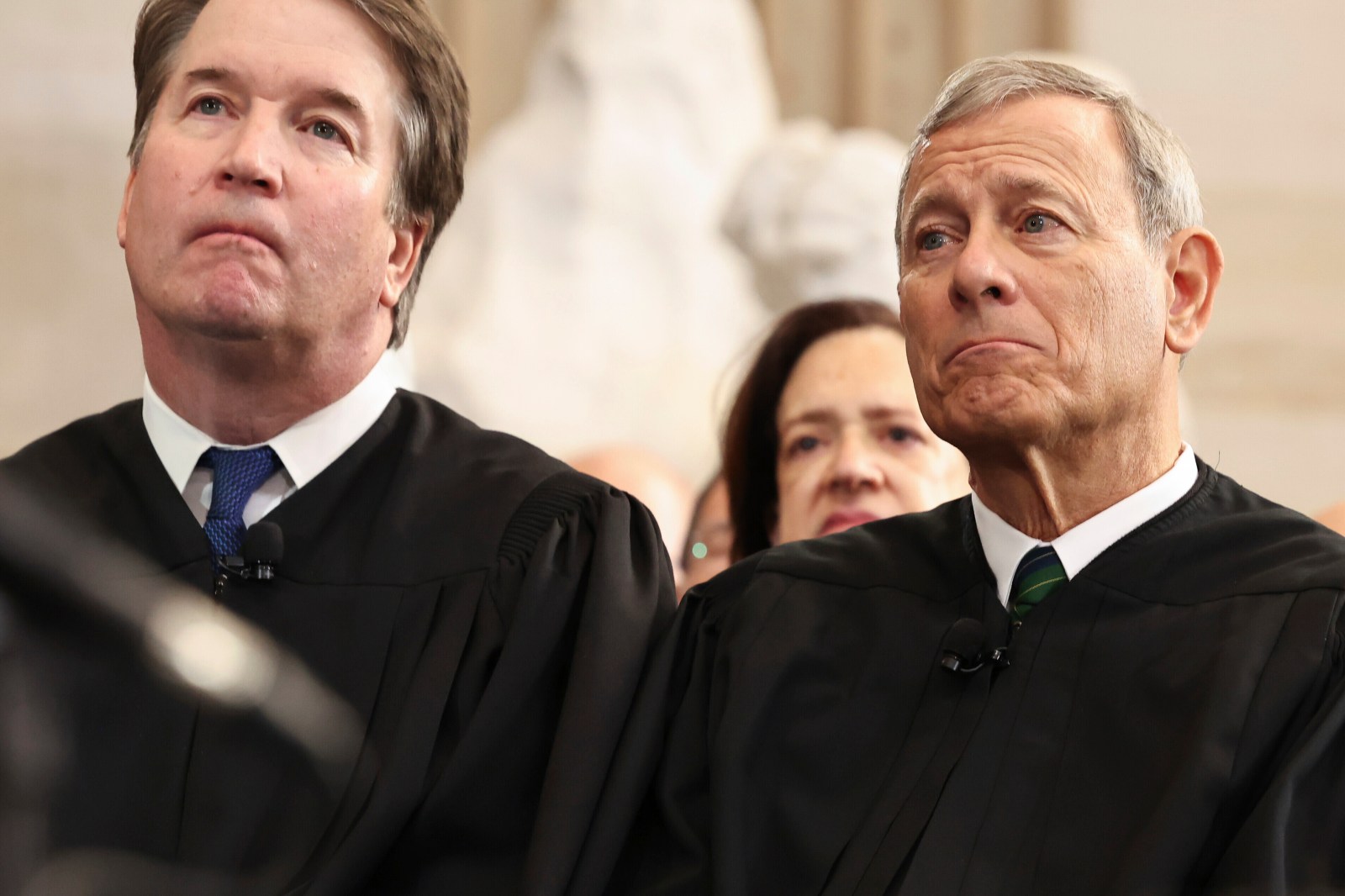
The Supreme Court recently ruled in favor of Terry Pitchford, a Black Mississippi death row inmate. This decision allows him to pursue renewed challenges to his conviction. Chief Justice John Roberts and Justice Brett Kavanaugh joined the court’s liberal justices in a 5-4 verdict. The ruling highlights differences within the conservative-majority court regarding claims of racial bias in jury selection. It also reinforces the importance of barring discrimination against Black jurors.
The case is now reopened, sending Pitchford’s legal battle back to lower courts where his conviction and death sentence might be reconsidered. Joseph Perkovich, representing Pitchford, stated, “Mr. Pitchford is now entitled to a fair trial in the state court.”
A Fractured Conservative Block Over Racial Bias
The core issue involved whether prosecutors improperly removed Black prospective jurors during Pitchford’s 2006 trial. He was sentenced to death for his part in the robbery and murder of Reuben Britt in northern Mississippi. During the trial, prosecutors struck four out of five eligible Black jurors. This left a jury with a single Black member, leading to objections from the defense, who claimed racial motivations behind the strikes.
The legal foundation for the case is the 1986 decision in Batson v. Kentucky. This ruling prohibits excluding jurors based on race and requires an examination of prosecutors’ reasons for dismissing jurors. Pitchford’s attorneys argued they lacked the chance to contest the race-neutral reasons provided by the prosecution. In 2023, a federal district judge supported this by overturning his conviction. However, the 5th U.S. Circuit Court of Appeals later reversed that decision.
The Supreme Court’s ruling dismisses the 5th Circuit’s reasoning and paves the way for revisiting Pitchford’s claims. Justice Kavanaugh, writing for the majority, noted, “The trial court did not afford Pitchford’s counsel a sufficient opportunity to rebut the prosecutor’s proffered race-neutral reasons.” He added that procedural issues during the trial needed addressing.
“Whether due to confusion, oversight, an overly hurried jury selection process, or some other cause, things broke down, and the ordinary trial-court procedure for resolving Batson claims at step three never occurred,” he said.
Conversely, in dissent, Justice Neil Gorsuch contended that the prosecution offered valid, race-neutral reasons for striking jurors. He argued the majority underestimated these explanations.
Gorsuch highlighted specific jurors, mentioning issues like tardiness and connections to criminal convictions as legitimate reasons for dismissals.
The Impact of Doug Evans and the Shadow of Flowers v. Mississippi
This case bears resemblance to the 2019 Flowers v. Mississippi ruling where a conviction was overturned due to efforts by prosecutor Doug Evans to exclude Black jurors. Evans, also involved in Pitchford’s trial, faced similar criticisms. The trial judge, Joseph Loper, presided over both Pitchford’s and Flowers’s cases.
Who is Terry Pitchford?
Terry Pitchford, currently 40, was 18 at the time of the 2004 robbery leading to Britt’s death. His accomplice, disqualified from the death penalty due to age, fired the fatal shots. Consequently, Pitchford faced capital charges. A jury found him guilty and sentenced him to death in 2006, sparking ongoing appeals over potential racial bias during jury selection.
Pitchford has spent nearly two decades on death row at the Mississippi State Penitentiary at Parchman. His legal arguments concentrate on whether racial bias was present and if the courts adequately assessed it. Defense claimed the court limited their ability to challenge the prosecution’s statements, preventing a full examination of any racial intents.
This is a breaking news article, and updates will follow.
This article includes reporting by the Associated Press.