
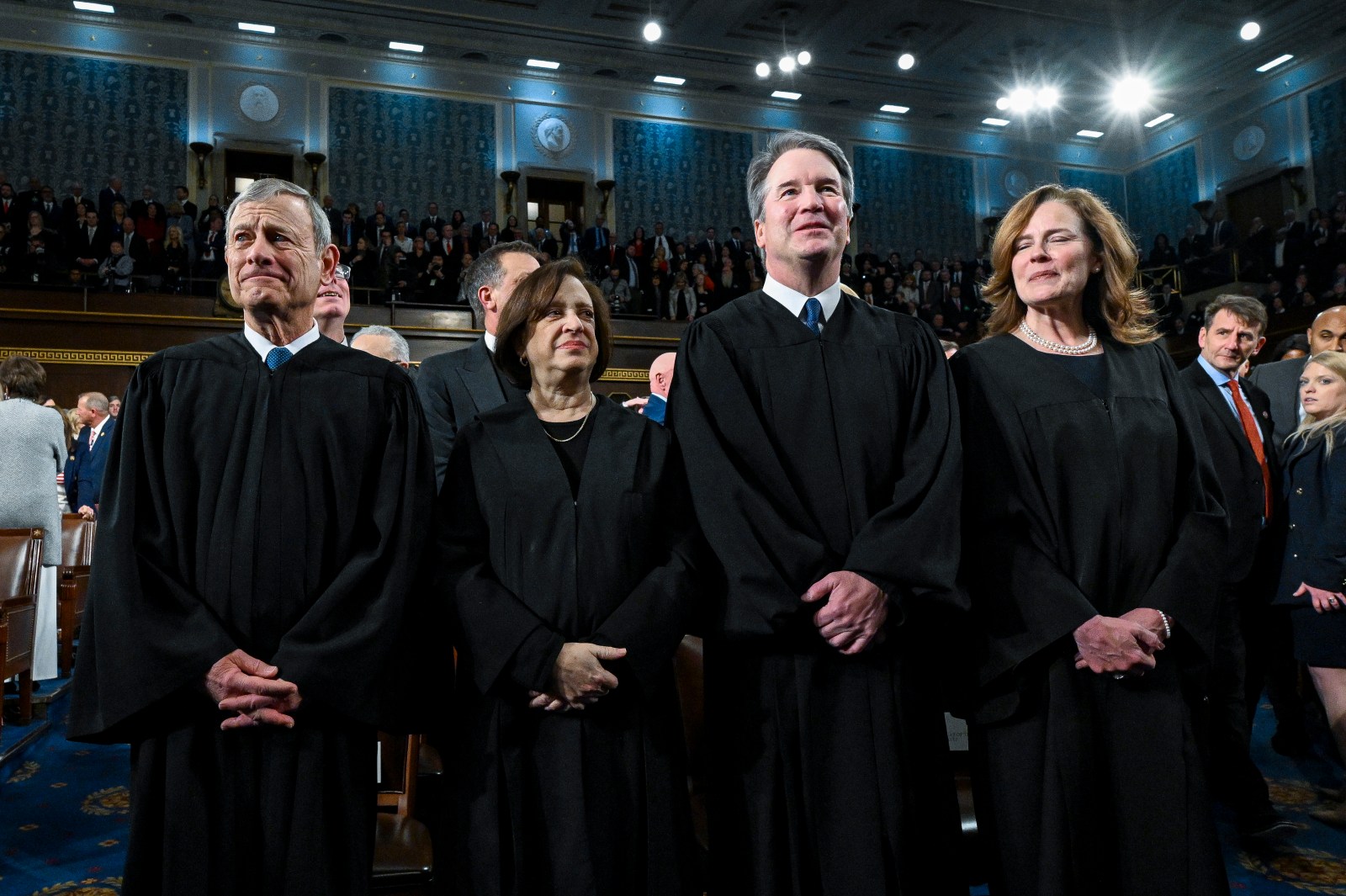
The Supreme Court recently halted Alabama’s attempt to execute Jeffery Lee using nitrogen gas. This decision, made on Thursday night, was a setback for Governor Kay Ivey. Lower courts had previously found this execution method likely unconstitutional.
Alabama had planned to carry out Lee’s execution at 6 p.m. local time. However, the Supreme Court, in a brief order, denied the state’s emergency request. The justices left existing lower court rulings intact, which argued that the method contravenes the Eighth Amendment’s ban on cruel and unusual punishment.
This ruling stopped one of the latest potential executions using nitrogen gas. Alabama pioneered this method in 2024. The technique involves replacing oxygen with pure nitrogen, causing death by suffocation. Three conservative justices dissented, wishing to allow the execution.
Despite expressing frustration, Governor Ivey stated her commitment to justice for the victims. The decision does not reverse Lee’s death sentence, allowing Alabama to consider other execution methods in the future.
Division Among Conservative Justices
The Supreme Court’s decision revealed a split among its conservative members. Justices Clarence Thomas, Samuel Alito, and Neil Gorsuch sided with Alabama, suggesting they would have supported the execution. The majority, however, upheld the lower court’s injunction.
This back and forth highlights the contentious nature of nitrogen gas executions. A federal judge had deemed the method constitutional earlier in the week, but the 11th U.S. Circuit Court of Appeals overruled it. They cited a substantial risk of serious harm, sending the case for further review.
Nitrogen hypoxia’s legitimacy as a humane alternative to lethal injection remains debated. In 2025, the Supreme Court allowed a nitrogen gas execution amid criticism of unnecessary suffering. Alabama insists the method doesn’t cause severe pain. Lee initially chose nitrogen gas but later requested a firing squad, which isn’t legal in Alabama.
Lee argued that nitrogen gas would cause unconstitutional suffering. The process involves strapping the inmate and placing a mask for nitrogen inhalation until oxygen depletion occurs.
Background on Jeffery Lee
Jeffery Lee has been on Alabama’s death row for over 20 years following a 1998 double murder during a robbery. A jury initially recommended life imprisonment without parole, voting 7-5 against the death penalty. However, a since-abolished judicial practice allowed the judge to impose a death sentence.
In 2017, Alabama ended judicial override, but it wasn’t retroactive, leaving Lee sentenced under the old law. His execution, planned for early 2026, was stopped by the Supreme Court’s decision.
Lee was convicted of a robbery that resulted in two deaths and one injury at a pawnshop in Orrville, Alabama. The crime’s severity elevated charges to capital murder under state law.
Proponents argue that he should not face execution, pointing to the jury’s recommendation. State officials continue to press for justice, citing the crime’s gravity and lengthy legal process.
Future of the Execution
The ruling temporarily delays Lee’s execution, but Alabama can still pursue it. The Supreme Court left his death sentence intact, with state officials contemplating alternative methods.
Governor Ivey clarified that the ruling did not close the case, and Alabama could reschedule the execution. The timeline and method remain uncertain, with firing squads deemed impractical by Alabama. Lee’s legal team advocates for this option.
The case also questions nitrogen gas’s future as an execution method. Alabama, a pioneer since 2024, faces legal scrutiny that could influence other states. The Supreme Court’s involvement provides a temporary reprieve for method opponents, yet the debate over execution practices continues unresolved.