
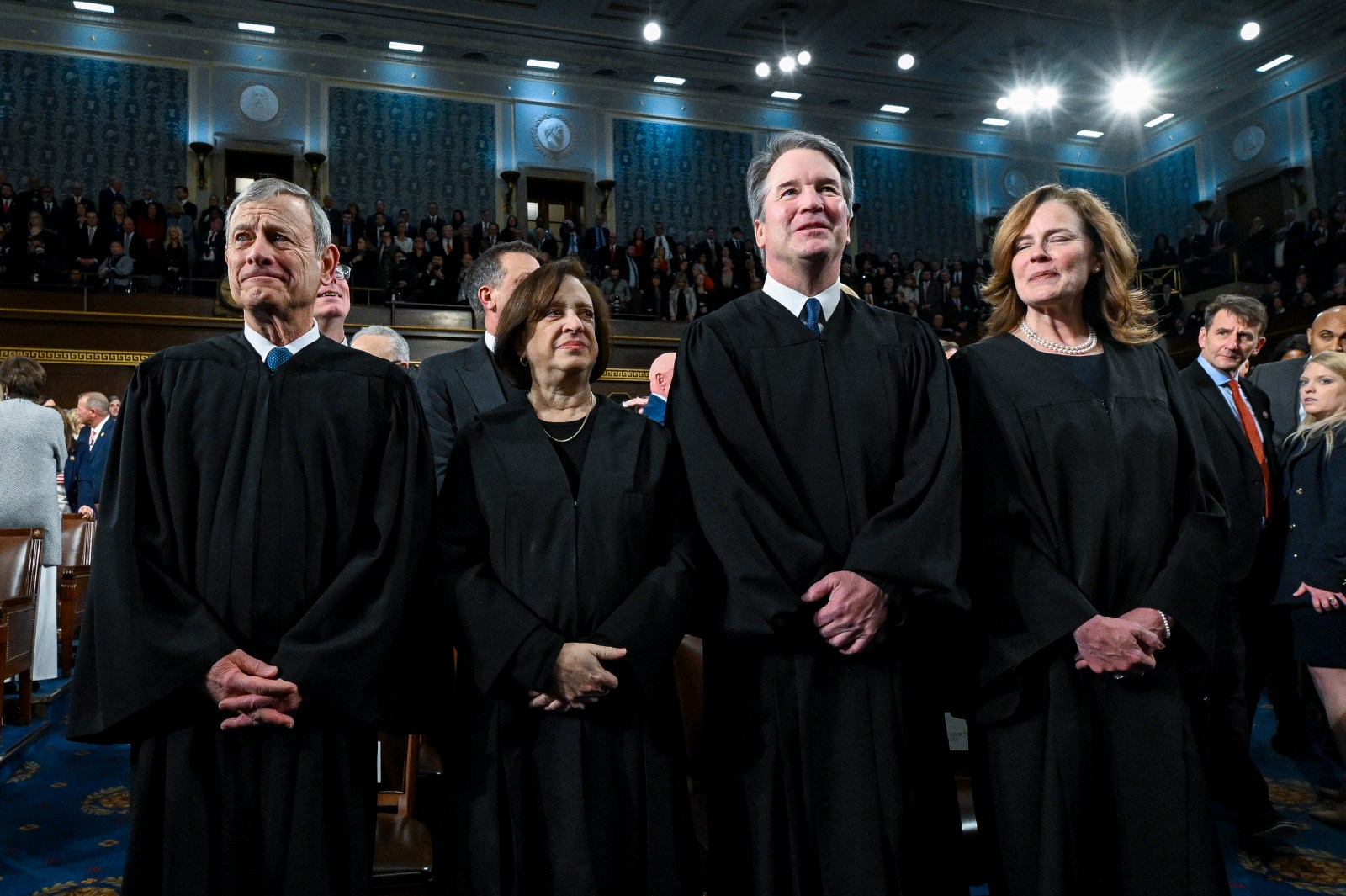
The Supreme Court is approaching the culmination of its term, with crucial rulings anticipated in several significant cases concerning presidential power during Donald Trump’s administration. These decisions are expected by early July and will address debates related to immigration policy, independent federal agencies, and election rules. The outcomes of these cases may significantly impact the political scene ahead of this year’s midterm elections.
Exercising Presidential Authority
Central to the remaining cases is the question of the extent of presidential executive authority. Among the cases are controversies surrounding Trump’s attempts to dismiss officials at the Federal Reserve and Federal Trade Commission (FTC). These cases challenge the enduring rules requiring presidents to demonstrate valid reasons before removing heads of independent agencies. The court’s conservative majority has shown willingness to expand presidential control in specific areas. If a ruling favors Trump, it might weaken existing protections and increase future presidents’ influence over independent agencies. Conversely, a decision against the administration would maintain existing restrictions on presidential power.
Birthright Citizenship Debate
Another vital case focuses on Trump’s efforts to curtail birthright citizenship. This case revolves around the 14th Amendment, which guarantees citizenship to most individuals born on U.S. soil. Lower courts have halted this policy, deeming it likely unconstitutional. If the Supreme Court allows the order, it could reverse more than a century of legal precedence. Rejecting it would significantly undermine a core aspect of Trump’s immigration agenda. Trump has indicated skepticism about winning this case. The issue has illuminated divisions within the Republican Party regarding birthright citizenship, with polling showing 44% of Republicans in support.
This decision follows notable immigration rulings, such as permitting the administration to end Temporary Protected Status (TPS) for migrants from certain countries. Some Republicans warn that this move might have economic repercussions in states with substantial migrant workforces.
Impact on Election Rules
The court is also assessing rulings influencing American voting procedures. One major case looks at whether mail-in ballots must be received by Election Day or if those postmarked on time but received later can be counted. Conservative justices have expressed doubts regarding grace periods, suggesting tighter regulations nationwide. Another case addresses restrictions on political party campaign spending, related to Vice President JD Vance and supported by Trump allies. The ruling could redefine campaign funding methods and the application of free speech protections to political spending.
These rulings can alter voting processes and campaign strategies for upcoming election cycles.
Transgender Athletic Participation
A high-profile case questions whether states can prohibit transgender athletes from participating in girls’ school sports teams. The court’s conservative majority seems inclined to uphold such limitations based on oral arguments. A favorable ruling for states might encourage similar legislation nationwide. Conversely, a decision against these restrictions could enhance federal protections for transgender students and redefine civil rights within education policy.
Legal experts suggest the implications of this ruling might reach beyond athletics, potentially influencing other anti-discrimination policies.
Surveillance and Privacy
The court is also evaluating a case regarding ‘geofence’ warrants. These warrants allow authorities to collect location data from phones near a crime scene, attempting to identify potential suspects present nearby during the crime. Critics contend this approach constitutes a broad, unconstitutional search. Yet, proponents argue it aids in solving major criminal cases. The ruling may establish new limits for digital privacy as law enforcement increasingly uses location data in investigations.
Mixed Decisions Trends
This term has shown mixed outcomes for Trump, with the court supporting some immigration-related policies and emergency rulings, while rejecting others, such as a significant tariffs case. This inconsistency has complicated predictions for the final decisions.
Legal experts believe forthcoming rulings may clarify the court’s direction regarding expanded or maintained presidential authority in key areas.
Upcoming Decisions
The court will issue additional opinions in the coming days, concluding the term by early July. These decisions will impact not only the immediate status of Trump-era policies but also the institutional boundaries of executive power for future administrations. With many significant cases unresolved, the concluding days of the term are poised to outline a notable chapter in the court’s recent history.