
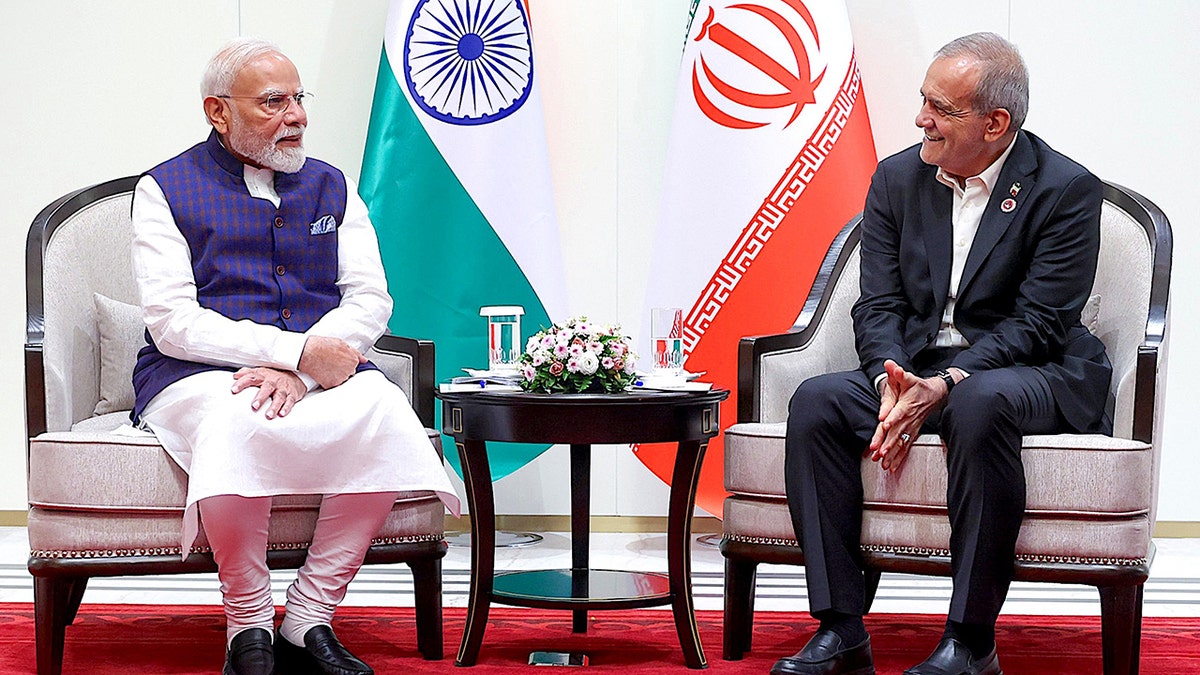
New Delhi hosts a significant gathering this weekend. Presidents of Iran, Russia, and China, among others, will attend the 18th BRICS summit. This meeting occurs amidst escalating tensions in the Middle East and Europe, challenging the bloc’s unity since its inception two decades ago.
The summit, scheduled for September 12-13, follows more than six months after the outbreak of conflict between the U.S. and Iran. Regional tensions are climbing again, coming on the heels of earlier discussions at the Shanghai Cooperation Organization (SCO) summit. Many of the same leaders attended both events.
BRICS Expansion and Strategic Discussions
BRICS began in 2006 with Brazil, Russia, India, and China as founding members. The alliance has since grown to include Iran, Egypt, Ethiopia, Saudi Arabia, and the United Arab Emirates. A key topic at this summit is the evolving relationship between Iran and India. Iranian President Masoud Pezeshkian and Indian Prime Minister Narendra Modi will likely discuss trade, energy cooperation, and regional developments. Their meeting comes shortly after reaffirming their strategic partnership.
Facing economic pressure from the U.S., Iran is strengthening ties with Moscow and Beijing. Iran seeks membership in the BRICS New Development Bank, viewing it as an essential economic lifeline. This summit presents an opportunity for Iran to engage several major trading partners, such as China, India, Russia, and the UAE, all under one roof.
China’s Diplomatic Moves
Chinese President Xi Jinping will visit India for the first time in seven years. His visit represents a significant step in easing relations after the 2020 military clash along the disputed Himalayan border. Modi and Xi plan a bilateral meeting focused on sustaining normalization efforts while expanding economic ties.
Russia’s Energy and Defense Focus
Russia is also a focus of this summit. President Vladimir Putin met with Modi before the summit in his first trip to India since the Ukraine conflict began. Discussions will likely center on energy and defense. Russia’s energy ties with India have been strengthening, with monthly imports reaching new records. Moscow appreciates India’s position on the Ukraine war, aligning closely with Russia’s own views, and encourages India to promote peaceful resolutions.
Middle East Dynamics
The summit follows closely after Putin acknowledged the UAE’s diplomatic role in the Ukraine discussions. Saudi Arabia’s role is notable, especially with the rise of Iranian-backed Houthi attacks on its cities. As the region navigates its own conflicts, both the UAE and Saudi Arabia are prominent in India’s Gulf strategy. India faces pressures from the UAE cutting commercial ties with Iran, which affects Indian exporters reliant on Dubai as a trade hub.
India’s Leadership Challenges
The BRICS summit tests India’s diplomatic ability to balance competing interests from global powers like the U.S., Moscow, Beijing, Tehran, and the Gulf. A priority for India is steering BRICS toward Global South priorities rather than serving as a ground for great-power rivalries. Harsh V. Pant of the Observer Research Foundation noted India’s strategic focus on practical cooperation areas, such as energy security and development.
Creating a unified stance among BRICS remains complex, given geopolitical tensions among key players. Modi faces the task of advocating for the summit’s priorities while maintaining a balanced foreign policy. India emphasizes resilience, sustainability, and dialogue while avoiding taking sides in conflicts, reinforcing its position as a facilitator of diplomatic solutions.
The Broader Implications of BRICS
The absence of major Western powers does not diminish the influence of the BRICS grouping. The forum has historically played a role in mediating ceasefires in conflicts involving its members or partners. Despite challenges, India’s hosting of the summit signifies its commitment to multi-alignment in a polarized global political landscape. By engaging with both BRICS members and Western partners, India refuses to be confined by binary political choices.
The summit’s outcome could impact developing nations disproportionately affected by global disruptions. As a leading oil importer, India is already dealing with energy and inflation issues related to ongoing wars. India’s success in the summit will be judged by its ability to maintain an inclusive BRICS that addresses the Global South’s needs while avoiding divisions that could hinder the group’s functionality.
Kyra Colah serves as a Writer and Associate Producer for Fox News.