
The Trump administration’s newest imposition of tariffs has prompted legal actions from twenty-five states. They argue that the recent tariffs serve as a guise to replace import taxes invalidated by the Supreme Court in February.
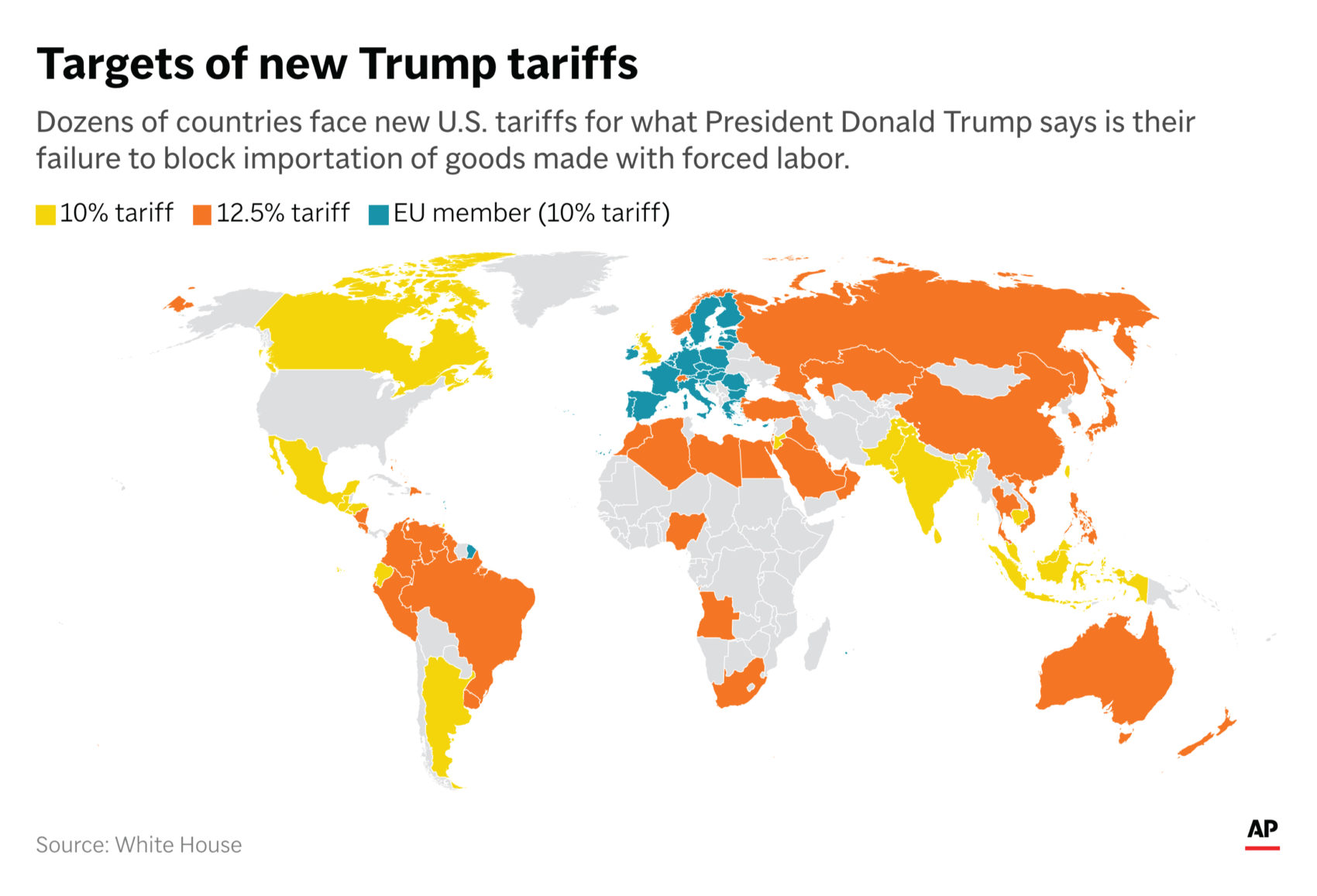
In the previous month, the U.S. enforced double-digit tariffs on 59 countries and the European Union. The administration claims these actions address inadequate efforts to restrict imports produced by forced labor.
These tariffs were introduced concurrently with the expiration of temporary tariffs. Those tariffs were instituted by President Trump following a Supreme Court setback. New York Attorney General Letitia James criticized this maneuver, asserting that the administration is unlawfully increasing taxes on families and businesses.
President Trump defends high tariffs as instrumental in rejuvenating American manufacturing. This stance marks a significant departure from decades of U.S. policy emphasizing lower tariffs and freer trade.
By invoking the International Emergency Economic Powers Act (IEEPA) of 1977, Trump previously imposed tariffs, citing the U.S. trade deficit as a national emergency. However, the Supreme Court ruled against this use of IEEPA for tariffs, necessitating refunds to importers. Consequently, Trump resorted to temporary 10% tariffs worldwide, which expired on July 24.
The administration has now leveraged Section 301 of the Trade Act of 1974. This provision permits the president to impose import taxes and sanctions on countries engaged in unfair trade practices. Under Section 301, the forced-labor tariffs range from 10% to 12.5% and target nations supplying 99% of U.S. imports.
“The United States is using its lawful authority to obtain the elimination of unreasonable acts, policies, and practices that burden U.S. commerce,” said White House spokesman Kush Desai.
Desai underscored the necessity of addressing foreign nations’ failure to effectively enforce prohibitions on goods produced with forced labor. Section 301 tariffs have withstood legal scrutiny since Trump’s first term, which further reinforces their usage.
A photograph shows President Trump speaking at a White House event in 2025 where he announced new tariffs.