
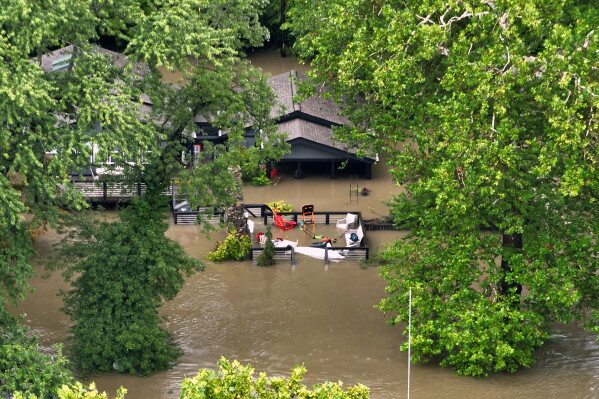
Severe storms and flooding in Indiana have resulted in the deaths of at least six people, as the White River in Indianapolis reached peak levels. Rainfall is expected to decrease in the Indianapolis area and other parts of the state, offering some relief.
Liz Woods, spokesperson for the state Department of Homeland Security, confirmed that a 4-year-old boy, two men, and three women have died since the storms began on August 11. The city Department of Public Works reported that floodwaters from the White River reached their highest point early Sunday morning. Although water levels have started to gradually recede, many remain affected.
Evacuations took place as hundreds of homes along the river and its canals were cleared. First responders utilized boats to rescue people trapped by the fast-rising waters. Despite a reduction in rain, central Indiana, including Indianapolis, remained on alert for further heavy rain and flash flooding. The National Weather Service advised people to monitor weather forecasts and avoid swift, dangerous waters as flooding persisted along many of the state’s rivers and creeks.
The storms have seriously damaged or completely washed out roads and bridges throughout the state. As of midday Sunday, 130,000 utility customers were still without power, down from an earlier count of around 300,000, according to Woods and PowerOutage.us, an online utility tracker.
The extreme weather has pushed Indiana’s rivers to record-breaking levels. In the towns of Anderson and Noblesville, the White River surged over 24 feet (7.32 meters), breaking records set in 1913. Indianapolis Mayor Joe Hogsett stated that the flooding is the most severe the city has faced in more than three decades.
Governor Mike Braun’s office reported over 350 evacuations and numerous rescue operations throughout Indiana, including interventions in a senior mobile home community north of Indianapolis. On Saturday, President Donald Trump approved Governor Braun’s request for federal disaster assistance to support the state’s response and recovery efforts.
The severe storms and floods have been part of a series of widespread weather disruptions affecting the Midwest and beyond. From Illinois to western Pennsylvania, communities have experienced substantial damage due to tornadoes, heavy rains, and flash floods.