
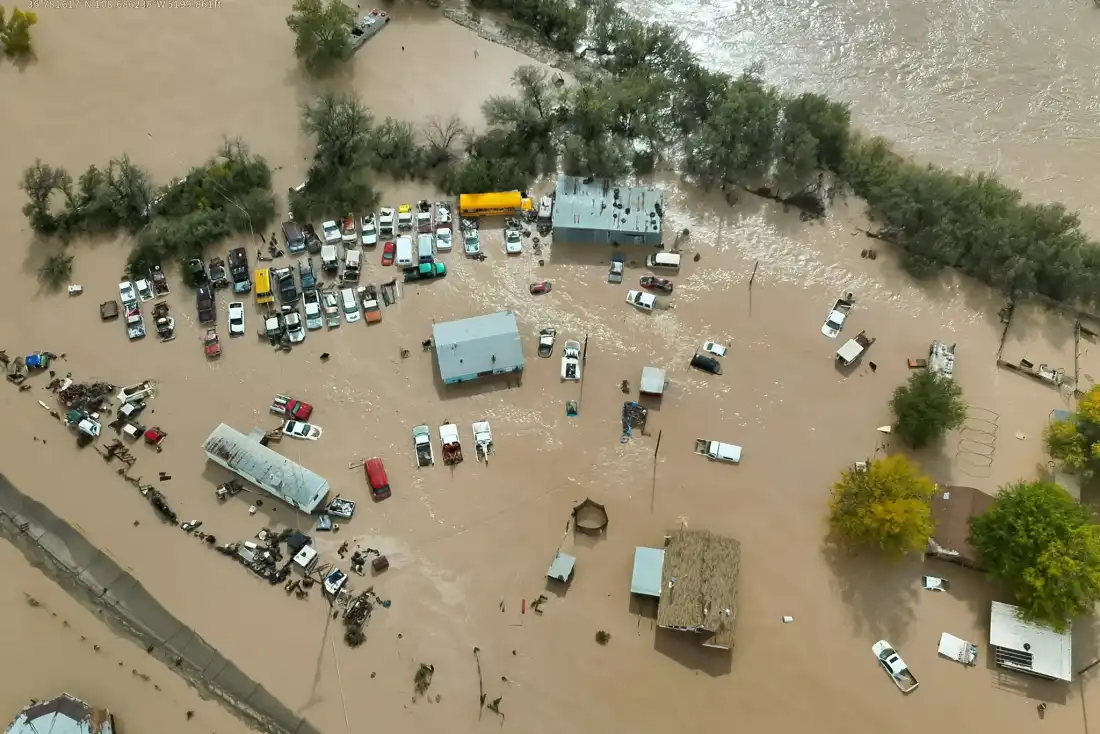
Intense rainstorms linked to an active El Niño-driven Pacific hurricane season have severely impacted the Four Corners states, leaving thousands displaced or facing extensive cleanup efforts. Colorado, New Mexico, Utah, and Arizona experienced significant flooding last week. Damage assessments are slowly being collected from cities, towns, and some of the most remote areas in the continental U.S.
Farmington Hit Hard by Flooding
The city of Farmington in northern New Mexico was severely affected after heavy rains in Colorado’s San Juan mountains sent floodwaters down the San Juan River. The river, which passes through Farmington en route to Lake Powell on the Utah-Arizona border, experienced substantial surges. Small towns from Pagosa Springs, Colorado, to Bloomfield, New Mexico, and Bluff, Utah, saw historical flooding and are now evaluating recovery challenges.
Farmington, home to about 46,000 people, is a center for coal, oil, and natural gas production and serves the northeast side of the Navajo reservation, which spans three states. Residents began receiving evacuation notices as early as Wednesday night.
Connie Gooch, a Farmington resident for over 65 years, shared her sister’s experience. Gooch’s sister was notified Thursday to evacuate her suburban neighborhood near the San Juan River. Despite annual preparations with sandbags, this year’s flood came too quickly. “Every year she goes through this,” Gooch said.
Historic River Surges Recorded
Data from the National Weather Service indicates the San Juan River expanded 13 times over 36 hours last week. Early Thursday, the river was 3.5 feet high; by Friday, it reached 14 feet, flooding neighborhoods and potentially setting a record for Farmington. Despite water containment efforts by the Navajo Reservoir upstream, flood surges inundated the city from Gobernador Canyon and Cañon Largo, normally dry tributaries.
“This is a catastrophic flood of historic proportions,” said Devon Neeley, San Juan County’s public information officer. “This river got wider than we have ever seen it in our lifetimes.”
Reports from Colorado and Arizona
Reports from Colorado’s San Juan mountains echo severe flooding. Tyler Schmidt, captain of South Fork’s fire and rescue team, commented on unprecedented water levels. “We had several neighborhoods that were under two to three feet of water,” Schmidt said.
Colorado Public Radio’s Dan Boyce reported priorities focus on lifting final evacuation orders as waters recede. Infrastructure such as bridges needs assessment. Well water along the Rio Grande’s path in the San Luis Valley requires testing. Sewage spills from flooded treatment plants in Sedona, Arizona, highlight further drinking water concerns.
KNAU reports extensive damage on the Hopi reservation, surrounded by the Navajo reservation, where rescues, washed-out roads, and historical flooding have been documented. San Juan County’s Neeley noted between 200 and 300 rescues involving fire crews, police officers, National Guard troops, and swift water teams from out-of-state. “We’ve pulled people out of vehicles stuck in washes, and off rooftops by helicopter,” Neeley said.
Some Relief but Continued Caution
By Sunday, the rain had subsided, river levels dropped, and residents began returning to assess damage. Connie Gooch delivered materials to her sister’s flood-damaged home. Residents worked to remove furniture and debris, with trucks transporting damaged sheetrock.
Thousands of evacuated residents are advised against returning immediately. “The public is anxious to get back in; we recognize that, we’re sympathetic to that,” said San Juan County Fire Chief David Vega during a briefing. “But now, potential hazards remain.
Officials warn of dangers including raw sewage, damaged gas lines, live power lines, and contaminated floodwater. “The water is not healthy,” Vega said. “Stay out of the water. Gas, diesel, pesticides, fertilizer—these are not things you want on your clothes.”
Governor’s Response and Funding Plans
New Mexico Governor Michelle Lujan Grisham visited San Juan County on Monday, estimating infrastructure damage costs in the hundreds of millions. “I hope we’re only spending 30 to 40 million dollars,” Grisham said, reacting to an estimate by San Juan County manager Mike Stark suggesting costs closer to 200-300 million dollars. “Environmental and infrastructure issues alone are really expensive.”
Governor Lujan Grisham announced Monday night the federal government has “partially granted” New Mexico’s emergency declaration request for regional flooding. She signed executive orders releasing $8.25 million in state funds for flood response.