
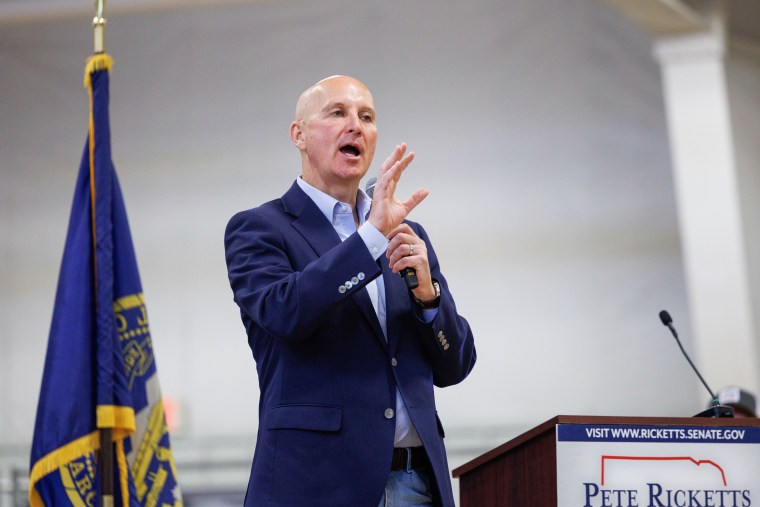
Senator Pete Ricketts, representing the Republican side from Nebraska, has launched a vigorous attack on his independent rival Dan Osborn during a debate held at the Nebraska State Fair. Throughout their exchange, Ricketts repeatedly labeled Osborn as “Democrat Dan,” aiming to associate him with democratic socialists.
This debate is set against the backdrop of numerous similar events across the nation as both parties vie for control of the Senate. Despite Nebraska’s status as a deeply Republican state, the close contest between Ricketts and Osborn draws significant interest, marking a departure from usual partisan races.
Osborn, throughout the debate, tried to detach himself from both major parties. He emphasized his independent stance while being careful not to sever ties entirely. He stated, “I don’t need to caucus with either party. Nobody’s got a monopoly on a good idea. I will work with Republicans to get things passed, but it’s about delivering for Nebraska. That’s what I intend to do, is to work for the people of Nebraska, not a party boss.”
The Democratic contender in the Senate race, Cindy Burbank, withdrew earlier in the summer, with the state Democratic Party chair now endorsing Osborn. His previous run in 2024 resulted in a narrow defeat to GOP Sen. Deb Fischer, losing by less than 7 points despite Trump winning the state by 20 points.
Ricketts highlighted his perceived differences with Osborn, questioning his support for “Medicare for all.” He argued that Osborn would have opposed the tax cuts included in President Trump’s legislative efforts. Osborn countered, mentioning a hypothetical scenario where he would have leveraged his independent status in Washington, D.C. to benefit Nebraska.
Campaign finance and donor spending played a central role in the debate. Both candidates addressed the role of Political Action Committee (PAC) spending and the impact of “dark money” from anonymous donors. Ricketts criticized Osborn’s campaign financing, pointing out contributions from top Democrats and various out-of-state interests. Osborn acknowledged the issue of secret donors influencing election ads but stressed his lack of control over these sources.
The debate unfolded in three focused segments: tariffs and the cost of living, issues concerning the U.S. Immigration and Customs Enforcement agency and the war in Iran, and discussions on campaign financing and artificial intelligence.