
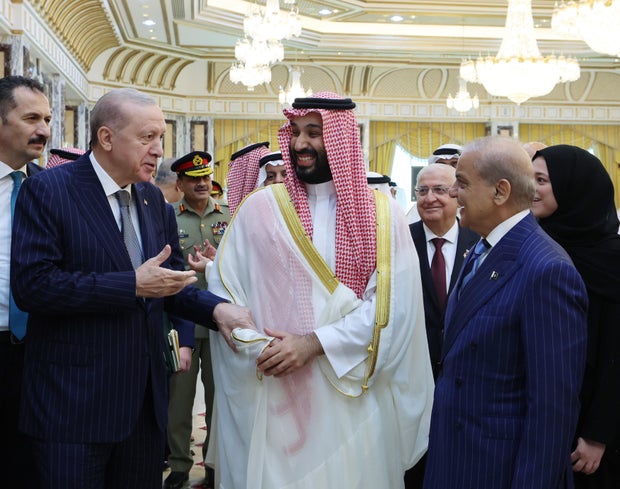
On August 7, 2026, Saudi Arabia, Turkey, and Pakistan finalized a defense agreement aimed at enhancing their collective security. The signing of this agreement took place in Mecca and was attended by Saudi Crown Prince Mohammed bin Salman, Turkish President Recep Tayyip Erdogan, and Pakistani Prime Minister Shehbaz Sharif.
This pact is called the “Mecca Joint Defense Agreement” and is designed to reinforce mutual deterrence against aggression. According to statements from the Pakistani Foreign Ministry and Turkey’s presidential communications directorate, any armed attack on one of the countries will be seen as an attack on all three. The agreement also outlines the deepening of defense cooperation among the three nations.
The agreement highlights the significant military capabilities of these Sunni Muslim-majority countries. Saudi Arabia is known for its oil wealth, Pakistan is a nuclear power, and Turkey possesses NATO’s second-largest army alongside a rapidly expanding defense industry.
Turkish media reports suggest the possibility of joint military exercises, training sessions, technology transfers, and intelligence sharing under the agreement. A Turkish government official clarified that the pact is strictly defensive and not aimed at any specific nation. It remains open for other regional states interested in joining.
Rayed Krimly, Saudi Arabia’s Deputy Minister for Public Diplomacy, emphasized that the agreement does not create a military bloc or sectarian alliance. It focuses on developing sustainable defense capabilities, without associating with nuclear aspirations or an arms race.
Notably, this new agreement does not alter or repeal any current bilateral or multilateral accords between these countries or with other states and entities.
Just last September, Pakistan and Saudi Arabia signed a mutual defense agreement, which also categorizes an attack on one as an attack on both nations.
Defense analyst Abdullah Khan from Islamabad considers the trilateral pact a logical step in formalizing the longstanding strategic relations among Pakistan, Saudi Arabia, and Turkey. According to Khan, the evolving security landscape in the region and the changing nature of warfare have necessitated enhanced collaboration.