
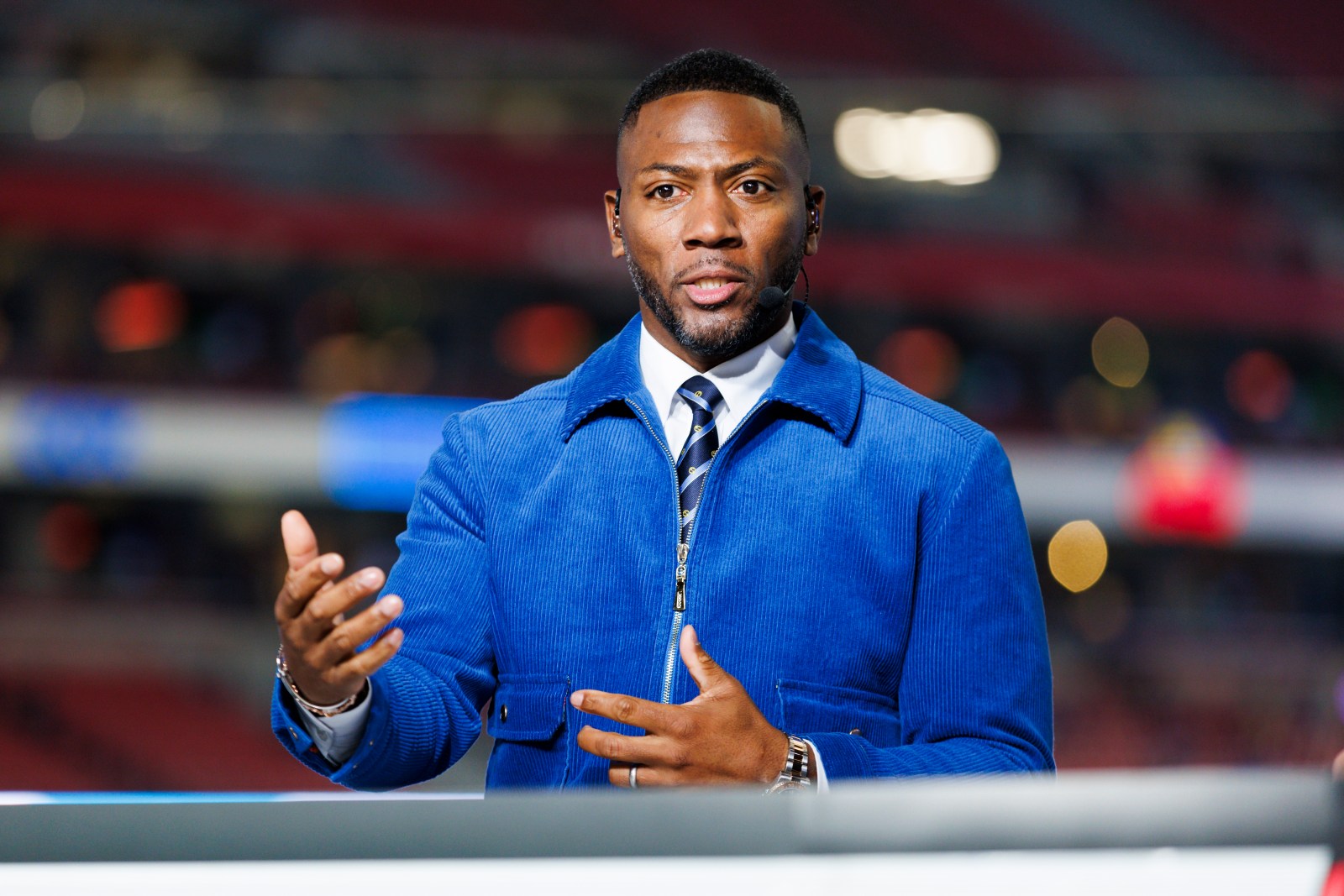
This week, ESPN executed another significant round of layoffs. The notable name among those affected was Ryan Clark. While on air for ‘NFL Live’ on Monday, July 20, Clark learned of his termination.
Clark, a former NFL defensive back and Super Bowl champion with the Pittsburgh Steelers, joined ESPN after retiring in February 2015. Over time, he became a regular presence on ‘NFL Live,’ ‘Get Up,’ ‘First Take,’ and ‘Monday Night Countdown.’ As a Sports Emmy winner, Clark was influential in these programs.
During an episode of ‘The Pivot Podcast,’ which Clark co-hosts with ex-NFL players Fred Taylor and Channing Crowder, he candidly addressed his firing. Clark emotionally stated, “I wasn’t laid off; I was fired.” He noted that there had been signs of the company’s intentions to sever ties with him despite his pivotal role in ESPN’s upcoming ‘Year of the Super Bowl’ coverage.
Clark had sensed something was amiss for months. He was absent from promotional materials for ESPN’s Super Bowl programming and was excluded from Pat McAfee’s ‘Family Feud’ event. Last summer, Stephen A. Smith informed Clark that an executive had disliked him, something Clark had heard before.
“They’re using ‘layoffs’ as a cover and camouflage for what they already intended on doing,” Clark said. “There was no cause for it, so you couldn’t just fire me; you had to wait ’til the layoffs.”
Andrew Marchand of The Athletic reported that ESPN executives had concerns due to Clark’s ‘choices.’ A notable incident involved an on-air disagreement with Peter Schrager on ‘Get Up’ last September. Clark clarified that neither Schrager nor McAfee influenced his firing. Instead, he pointed to a subset of ESPN executives who were uncomfortable with his advocacy for racial justice.
Clark emphasized that this was not a sentiment shared by his colleagues but rather a decision by a few key individuals. When Taylor inquired about any regrets, Clark became emotional.
“When I see people in public, like OGs and aunties, proud of the way I represent the community, I wouldn’t change anything,” Clark said through tears. “Being accepted in New Orleans, that’s invaluable to me. I always wanted acceptance.”
Clark reflected on possibly wanting to fit the company’s expectations. “On the first Monday of football, seeing my friends do what we loved, maybe I’d change something. Maybe I’d build relationships differently because it seems like a relationship game.”
Clark expressed that he didn’t want to conform and lose authenticity. He remarked, “I feel like I let them win by devaluing my voice, but without being authentic, my platform isn’t as impactful.” He acknowledged not knowing if conforming would have changed his fate at ESPN.
Clark concluded by expressing his deep affection for his job and sympathy for fellow colleagues who were also laid off. He stressed the meaningfulness of being true to himself.