
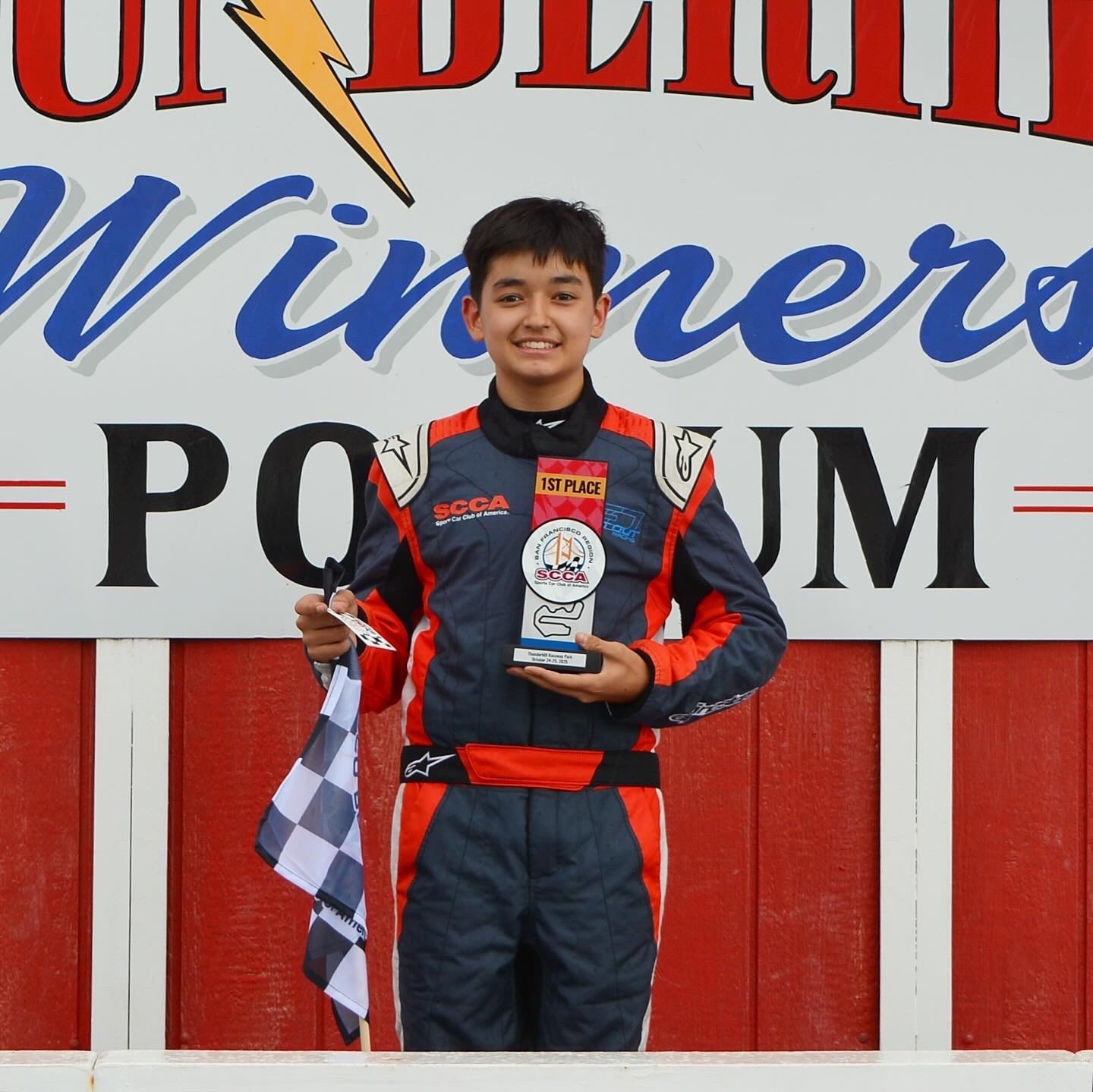
Becoming a top-tier racing driver involves more than mastering technical skills. It also demands significant financial investment, which transforms many young drivers into savvy marketers. At 15, Asad Nikadambaev, who already boasts substantial racing achievements, is learning that to become a professional racer, building a personal brand is essential. His strategy includes cultivating a strong social media presence to attract necessary sponsors.
The financial burden of competing at higher levels is immense. Asad’s father, Odil Nikadambaev, estimates the 2027 season could cost up to $350,000. This figure excludes travel expenses, accommodation, and potential repair costs. By comparison, renting a go-kart for $25-$50 when Asad was 10 seems trivial.
“Most families can’t afford that. Neither can we. At that point we need to look for partners, brands, and companies to collaborate with so that we can make it through USF Juniors,” Nikadambaev shared via email, referencing a critical competition tier for aspiring professional racers.
Asad’s situation exemplifies the intersection of sports and business, highlighting the marketing skills athletes often need to secure funding. However, concerns arise when young athletes, especially minors, seek online exposure. Studies show high rates of online abuse and predatory behavior directed at them.
Since launching his social media presence in January, Asad has attracted over 60,000 YouTube subscribers. One of his most popular videos has amassed over ten million views. Asad hopes such exposure will draw sponsors to fund essential expenses like cars, maintenance, a team, engineers, testing, tires, and travel.
The Leap from Aspiring Driver to Pro Racer
Asad’s breakthrough arrived this year at the Hoosier Racing Tire SCCA Super Tour at Buttonwillow Raceway Park in California. Competing in a Spec Racer Ford Gen3, a high-speed vehicle, Asad astounded the audience by finishing ahead of national champions to claim first place.
The Sports Car Club of America (SCCA), which supervises the Spec Racer Ford series, offers drivers a pathway to higher rankings. Asad’s next target is the USF Juniors, utilizing the more potent Tatuus JR-23, an open-wheel car providing entry into Formula One or IndyCar, his ultimate ambitions.
“This honestly means so much. Me, my dad, my entire family, we’ve been sacrificing so much to get to this point already, and we’re already planning to sacrifice so much more just to get to the top of motorsport,” Asad expressed in written comments.
Asad’s strategy reflects a shift in sports marketing where sponsorship now involves genuine stories and community connections. According to Tom Potter, CEO of Rush Group, raising sponsorship for USF2000 levels and above is demanding. For talented drivers, the commercial challenge can match the competitive one.
“In today’s environment, building a personal brand is becoming an increasingly important part of a young driver’s career development, and Asad’s approach reflects that reality,” Potter explained. A driver with superior fan reach and marketing prowess often has an edge.
Athletes entering the online environment encounter risks, including harassment, especially concerning minors. Professor Andrea Geurin at NYU’s SPS Tisch Institute for Global Sport has researched online abuse affecting athletes, including a large study of Olympic athletes. Her work shows few U.S. sports governing bodies educate young athletes about these issues.
“I conducted a research study on U.S. sport national governing bodies to understand if they were educating their younger athletes aged approximately 13-18 about these issues and found that very few were doing so,” Geurin noted via email.
Currently, Asad’s father manages his social media accounts and employs tools to eliminate unwanted activity. This allows Asad to focus on racing and increasingly, content creation and marketing.