
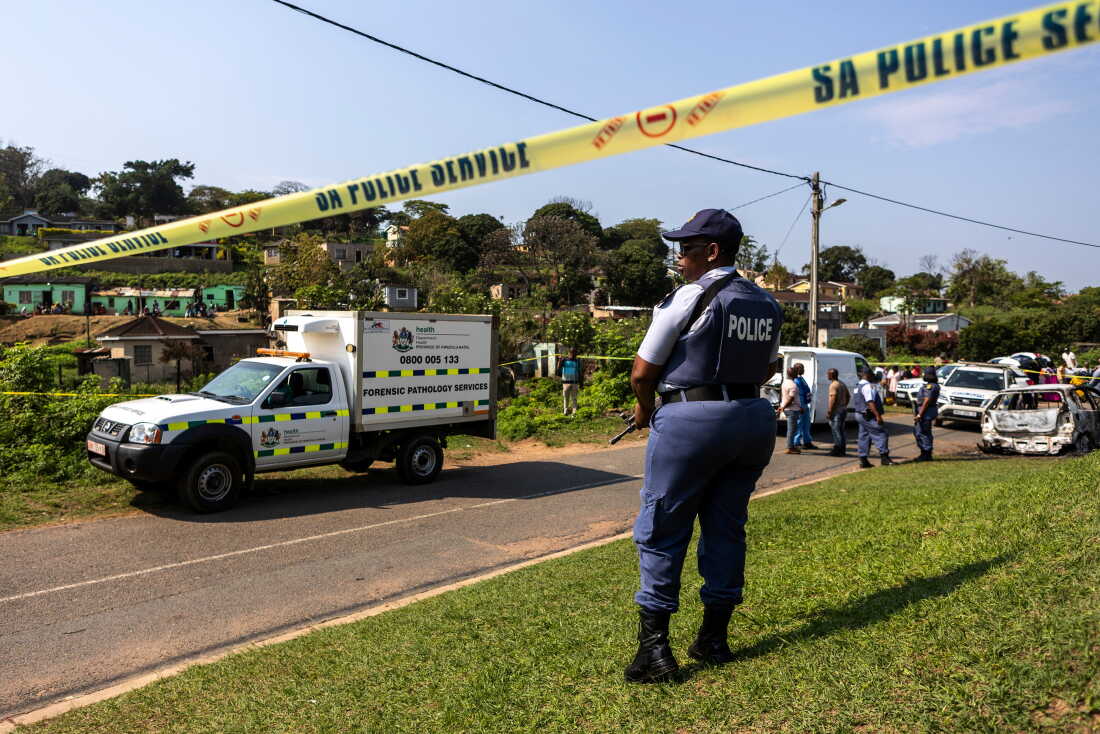
A police officer was observed at the scene of a mass shooting during a house party in KwaMakhutha township, located south of Durban, South Africa, on Wednesday, September 23, 2026.
This week in South Africa, mass shootings in three prominent cities have claimed the lives of nearly 40 individuals, underscoring a troubling increase in such incidents in a nation already plagued by high crime rates. On Saturday night, authorities reported that at least 10 people were fatally shot at a shisanyama near Cape Town, and 11 more sustained injuries.
The same night near Johannesburg, 17 people lost their lives when assailants armed with AK-47s entered a township tavern, opening fire on patrons. Police reported that the attackers allegedly searched some patrons and seized their cell phones before departing in two unidentified vehicles. Additionally, two vehicles were set ablaze during the attack. Authorities have yet to declare a motive for these recent shootings.
Earlier in the week, another mass shooting occurred in Durban. On Tuesday, multiple gunmen attacked a house party, resulting in the deaths of 11 people, one of whom was a pregnant woman. Though the motive remains unclear, several individuals at the gathering were under investigation for criminal activities.
Illegal firearms are prevalent in South Africa, with mass shootings often linked to gang and organized crime activities, sometimes involving illegal gold miners known as “zama-zamas.” In June, a mass shooting in Johannesburg saw 12 people killed when gunmen targeted an informal settlement characterized by tin shacks lacking water and electricity. That incident was attributed to turf wars between zama-zamas.
At the scene, NPR reported witnessing pools of blood near a snooker table in a makeshift bar, marked off with police tape, while traumatized residents shared their terror upon hearing gunshots. Angela Mopayi, aged 54, recalled, “I hid under my bed; I couldn’t breathe, I couldn’t do anything, I thought I was dying.”
Despite South Africa’s average of 60 murders per day, mass shootings are now considered a national crisis. President Cyril Ramaphosa has described organized crime as “the most immediate threat to our democracy, our society, and our economic development,” leading to military deployments in severely impacted regions.
President Trump has also commented on crime in South Africa since assuming office, emphasizing the killing of white farm residents. While such incidents occur, data indicates the majority of crime victims are impoverished Black individuals, often women. Amid growing concerns over gender-based violence, protests have erupted over brutal femicides in Johannesburg. Police discovered a tenth woman’s body this month, despite pledges to address gender violence.
As South Africans prepare for local elections in November, crime remains a pivotal issue in the political discourse.