
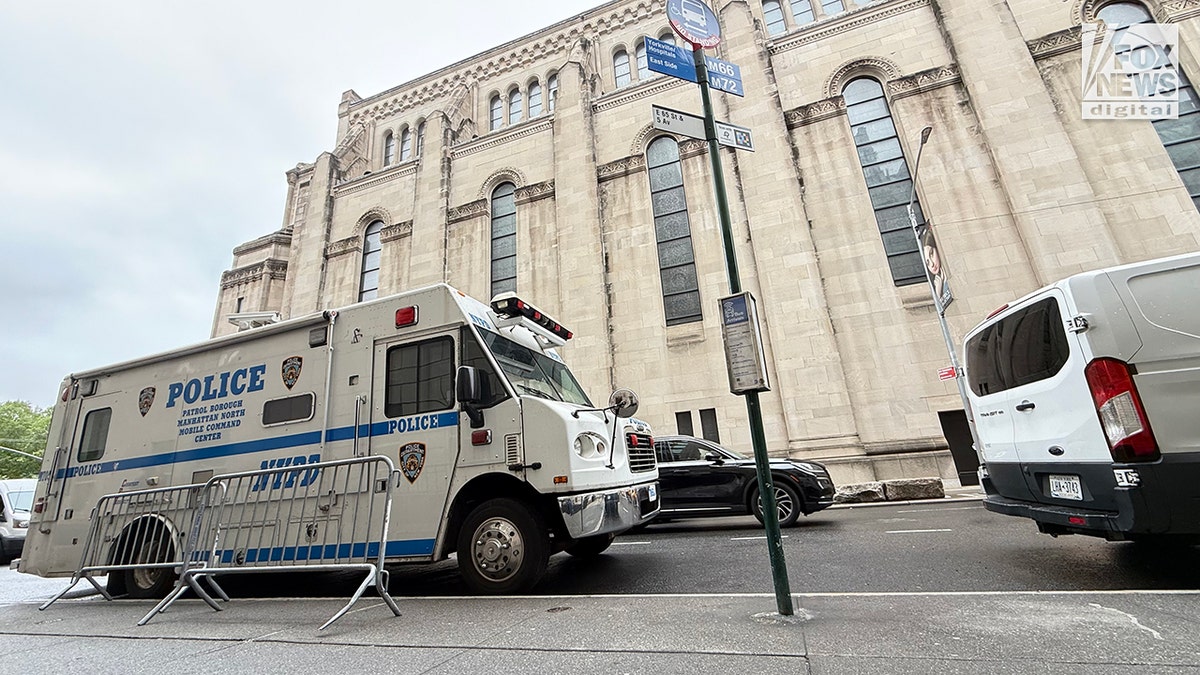
Rabbi Ari Berman, President of Yeshiva University, discussed the increasing threat of antisemitism in New York City with ‘America’s Newsroom.’ Concerns have grown following an attack on a Manhattan synagogue. Berman highlighted the substantial preparations made by campuses to secure the environment as classes commence. Recent data points to 860 antisemitic incidents in the city and nearly 1,200 across the state.
As Rosh Hashanah approaches, coinciding with the 25th anniversary of the September 11 attacks, Jewish families will enter synagogues amid tight security. This includes armed guards, cameras, and bag checks, reflecting how security in synagogues evolved post-9/11.
The period following September 11 marked a significant shift in the security mindset of Jewish communities, observed Eric Fingerhut, CEO of Jewish Federations of North America. Before the attacks, synagogues had minimal security measures. The tragic events made apparent the need for heightened vigilance.
Jewish institutions now allocate around $1 billion annually towards security. With more than 4,500 institutions surveyed, this cost exceeds $2.8 million daily to maintain safety. Communities across the United States have adopted new protocols to ensure safe worship environments.
Rabbi Chaim Steinmetz of Congregation Kehilath Jeshurun shared the stark contrast in security measures compared to other religious institutions on the same block. Synagogues typically have advanced security systems and personnel for protection.
Training and preparedness have become widespread. The Community Security Service trained over 20,000 individuals in 2025, deploying volunteers as security in numerous synagogues and events. The Secure Community Network documented 4,400 incident reports in the same year while increasing collaboration with law enforcement.
Antisemitic hate crimes continue to be a concern. FBI data showed 1,528 hate crime incidents targeting Jews in 2025, accounting for a significant portion of religiously motivated incidents.
Recent violence accentuates the necessity of stringent security measures. Jewish communities remain vigilant, particularly during high-attendance periods such as the High Holidays. In New Jersey, collaborative efforts with law enforcement aim to maintain safe environments for worship.
Rabbi Aaron Starr from suburban Detroit spoke about the emotional weight Jewish communities face. Remembering both September 11 and recent attacks, they aim to balance vigilance with optimism for improved safety.
The financial burden of security is significant. Employing a full-time security guard costs upwards of $90,000 annually. Advocacy for federal support seeks to alleviate this burden through initiatives like the Jewish American Security Act.
For Jewish communities, the focus remains on ensuring participation in Jewish life without fear. Leaders like Fingerhut emphasize the importance of security that allows families to engage confidently in their faith activities. The objective is to maintain a welcoming and protected environment, supporting the continuity of Jewish traditions.