
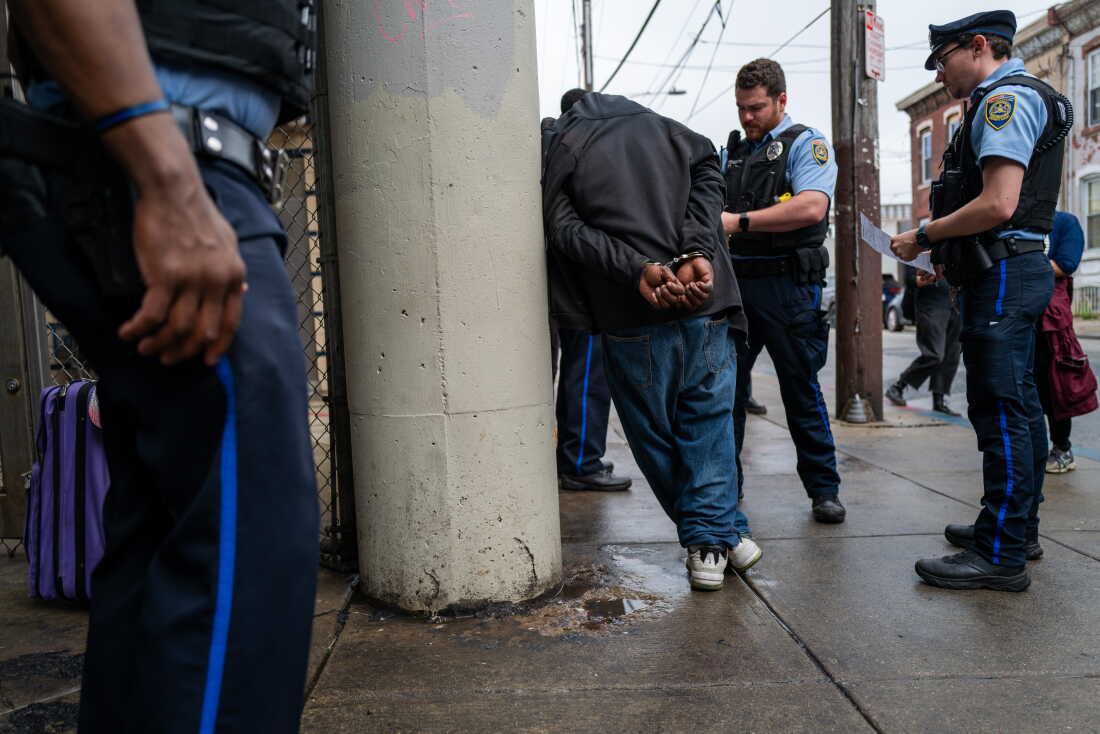
Police arrested a man during a clearance operation of a drug encampment in Kensington, Philadelphia, on May 8, 2024. During this period, the U.S. saw a rise in arrests for low-level crimes while violent crime rates, including homicide, declined to national lows. This development is highlighted in a report by FWD.us, an advocacy group focusing on criminal justice and immigration reforms.
Zoë Towns, executive director of FWD.us, expressed concerns over this trend resembling the hardline policies of the 1980s and 1990s, which led to the extensive rise in U.S. incarceration. While the report analyzed FBI and immigration data on arrests, it did not indicate if charges proceeded or if jail time ensued. Towns noted that an arrest could severely impact a person’s life, possibly resulting in jail time, unemployment, housing insecurity, and family separation.
Findings of the Report
Four states—California, Hawaii, Nevada, and Arizona—were responsible for over half of the increase in vagrancy arrests. Legally, vagrancy is defined as wandering without steady employment, home, or resources, often targeting the homeless. Arrests for vagrancy climbed 44%, from 22,769 in 2024 to 32,728 in 2025. In Hawaii, the report shows a disproportionate number of arrests of Asian Americans and Pacific Islanders, representing 17% of the rise despite being only 7% of the U.S. population.
Arrests for marijuana possession rose by 6%, mainly in Southern states where the drug remains illegal. Arrest numbers rose from 190,182 in 2024 to 201,273 in 2025. Notably, Black individuals accounted for 83% of the increase in marijuana arrests, with nearly half of all such arrests being of Black people.
Other drug possession arrests showed a slight national increase of 3%, with numbers rising from 508,087 in 2024 to 523,520 in 2025. The repeal of certain decriminalization policies contributed to this trend. In California, voters opted to revert drug possession from a misdemeanor to a felony, bumping arrests by over 14,000. Oregon also reinstated criminal penalties for simple drug possession, resulting in a 39% uptick in arrests.
Immigration violation arrests surged by 188%, from 109,936 in 2024 to 316,304 in 2025. NPR covered the federal contributions to this increase, including funding to local law enforcement for immigration arrests and expanded enforcement during Trump’s second presidency.
Federal Policy Influence
FWD.us linked these arrest trends to federal policies, noting widespread arrests under Trump’s presidency and substantial investment in law enforcement via the 287(g) program. By 2025, Trump’s administration labeled various cities as undergoing a “crime emergency,” increasing federal deployments in these areas, which coincided with arrest increases.
Additionally, a Supreme Court ruling allowed cities to ban public sleeping and camping, enabling states like Oregon to enforce restrictions on those residing in encampments.
“There are still incredibly positive trends showing crime across the board is down,” declared Insha Rahman, president of the Vera Institute.
Rahman points out that adult arrests for drug crimes have been declining since their peak in 2006, reflecting the positive impact of state and local efforts. These include investment in treatment and diversion programs, violence intervention initiatives, and alternative responses to conventional policing.