
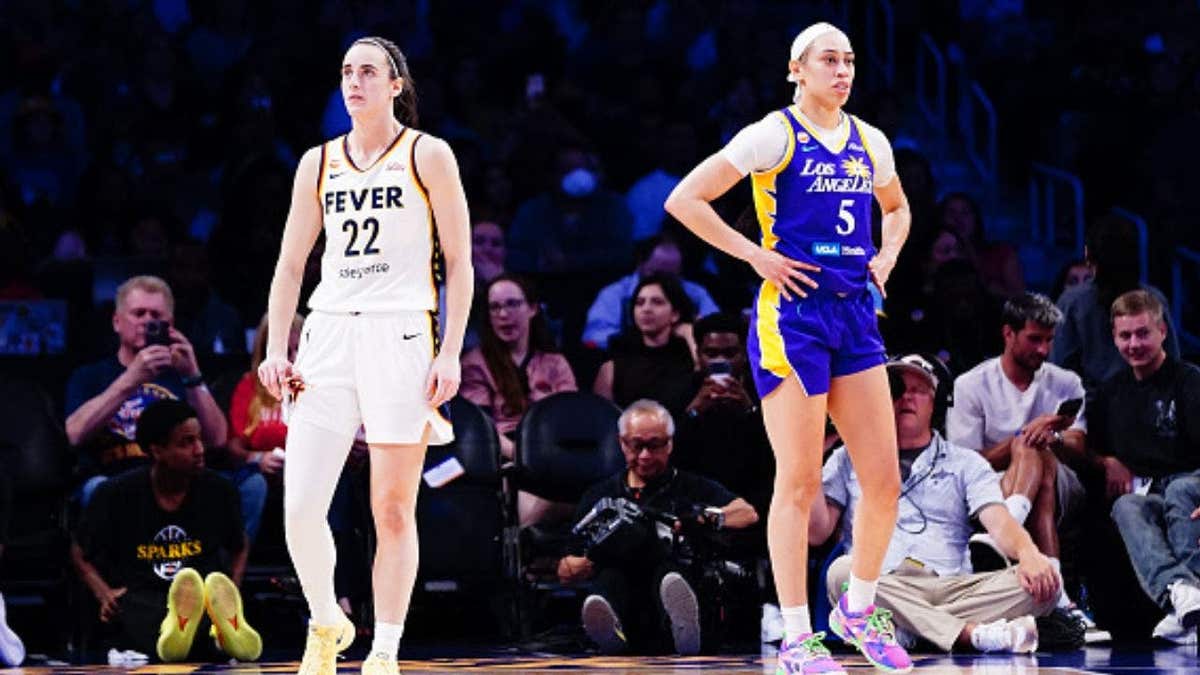
Riley Gaines recently commented on the controversy surrounding WNBA star Caitlin Clark. Gaines asserts that the attention Clark receives is due to her outstanding talent, not her race or sexuality. She believes that jealousy from other players fuels the on-court abuse Clark experiences, alongside the league’s internal challenges. Gaines also questions the perceived double standards applied to athletes.
The WNBA has been celebrating remarkable television numbers, largely due to Caitlin Clark’s influence. A recent game between the Indiana Fever and the Los Angeles Sparks garnered an average audience of 1.04 million viewers, according to USA Sports PR. This represents a significant moment in cable viewership for the WNBA.
Despite the Fever losing 106-92, with Clark playing only 16 minutes due to a back injury, the attention surrounding her presence was notable. The game was aired on USA Network and CNBC at 10 p.m. ET on a Wednesday night. This timing is not typically favorable for high viewership, yet the game topped one million viewers.
USA Sports PR, referencing data from Nielsen Big Data + Panel, reported a 149% increase compared to the 2025 cable average. This marked the first time a WNBA game with a 10 p.m. ET start time reached such numbers.
Clark’s impact on viewership is evident. Another significant event was the Fever’s season opener against the Dallas Wings, which averaged 2.49 million viewers on ABC. This ranked as the fourth-largest WNBA audience since 2000.
Clark and the Fever also brought in 2.56 million viewers for a CBS game against the New York Liberty, ranking it third in overall WNBA viewership since 2000. Such numbers underscore Clark’s popularity within the league.
The Fever-Sparks viewership reflects Caitlin Clark’s ability to bolster WNBA ratings, even in less ideal viewing situations. Pre-Clark, the WNBA saw no games reaching a million viewers since 2008.
Even when Clark isn’t playing, the Fever continue to draw sizable audiences. A July 5 game against the Las Vegas Aces averaged 1.55 million viewers, highlighting the team’s growing influence.
The increased interest in the Fever is directly linked to Clark’s presence, suggesting she has made the team a significant television brand. The Fever’s games are consistently more watched than other non-Fever games, evidencing her role in boosting WNBA viewership.
The WNBA itself sees growth, with more games now drawing substantial audiences compared to the pre-Clark era. However, most historic ratings consistently trace back to Caitlin Clark.
Dan Zaksheske, a reporter at OutKick, underscores Clark’s pivotal role in elevating WNBA popularity through significant viewership milestones.