
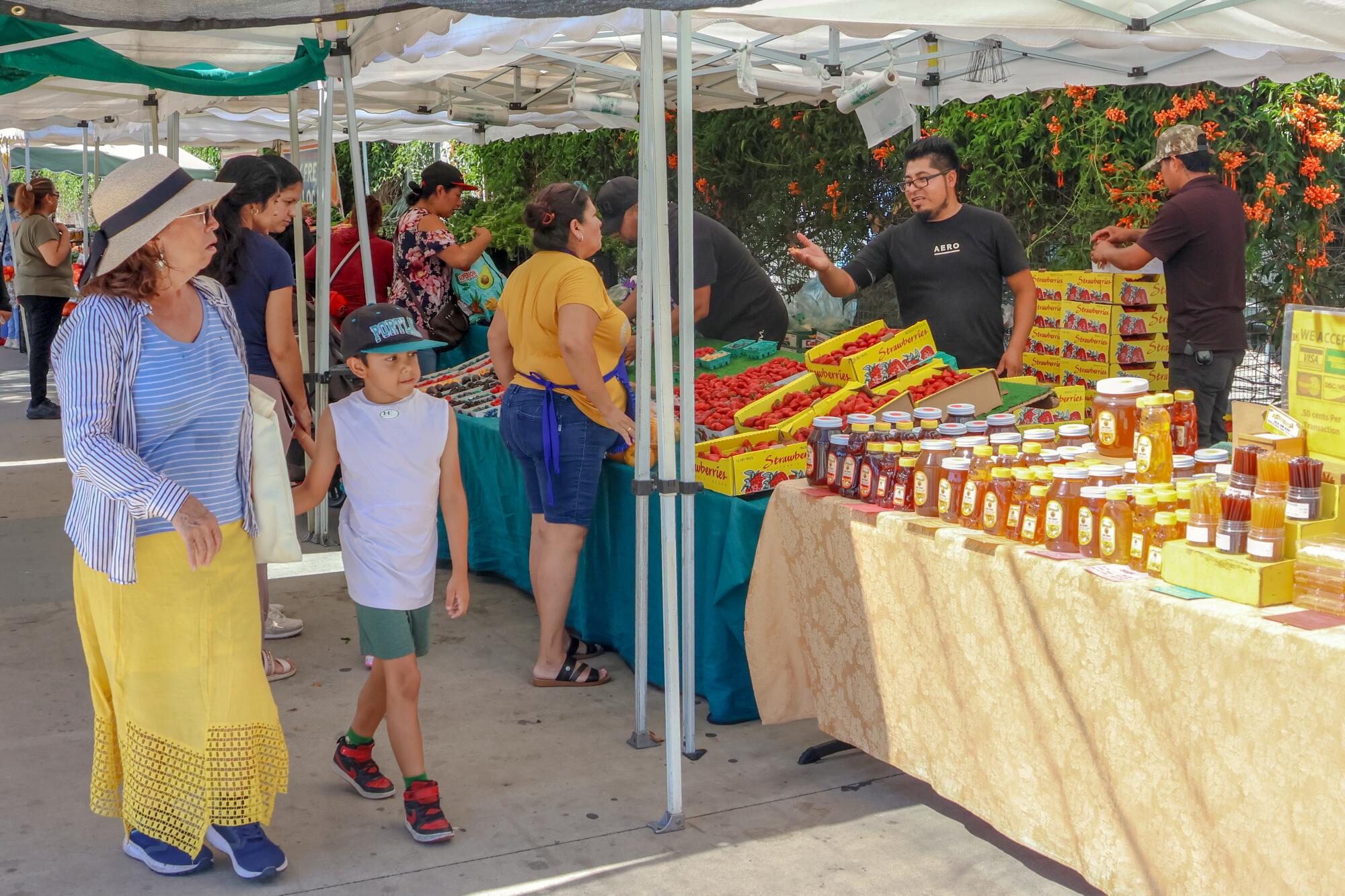
On a Thursday morning, Central Avenue Farmers Market buzzes with life despite the intense heat. Children chase each other playfully among vendor booths, while some rest in strollers as their parents shop. Conversations flow in both Spanish and English, creating a lively atmosphere.
About a year ago, the community faced disruption when ICE raids led market organizers to move the market to a more concealed, enclosed courtyard. Alejandro Corona, the market manager, recalls the momentous incident. ‘A lady just got off the bus, and they took her,’ he remembers. This prompted changes to ensure safety.
Now the market has a new, open location. Bilingual signs highlight EBT services, agricultural programs, and social resources. ‘Today we’re celebrating,’ says Corona, offering refreshments to vendors as gratitude for their support. Customers browse stalls, finding a sense of community and support.
Although ICE raids have decreased, South Central faces new challenges. Since HR 1 passed in July 2025, EBT, known locally as CalFresh, has seen historic funding cuts. The ICE budget increased by $85 billion, making it the most funded federal law enforcement agency.
In Los Angeles County, roughly 25% of residents depend on CalFresh. New federal cuts removed benefits for certain immigrant groups, affecting refugees and trafficking survivors. CIELO, supporting Indigenous communities, highlights a rise in food insecurity, with over 80% struggling to afford basics post-pandemic.
Janet Martinez, from CIELO, notes more people queueing for weekly food box distributions, limited to just 150 boxes. Yoana Luvian, a vendor at the market, shares how essential the Market Match program is. It doubles EBT funds, helping families like hers make ends meet.
Blanca, an undocumented mother, relies on market resources. Though she can’t receive CalFresh benefits, her children with disabilities do. Navigating this support is challenging, adding to her anxiety. Market organizers assist with resources and paperwork, easing some of these burdens.
Jennifer Grissom from Food Access Los Angeles describes application complexities. Certification involves proving residency and income, plus a real-time interview. These steps present hurdles for many.
FALA, organizing markets in L.A., struggles to maintain food distribution amid federal cuts. Michael Flood of the L.A. Regional Food Bank notes unprecedented demand due to wildfire-related hardships and increasing need.
Work requirements for CalFresh have tightened since June 1, affecting those working under 30 hours without dependents. This complicates job-seeking in a harsh market, causing further strain on recipients.
Farmers like Brian Griffith report profit drops over 50% since cuts began. With fewer resources, vendors offer bartering and deals to support loyal customers, displaying intrinsic community resilience.
Amin Muhammad from the Crenshaw Food Hub explains that he now offers bartering and volunteer work in exchange for produce. ‘We work with those who need more,’ he asserts.
As LaTonia Beason shares resources with her friends, community bonds grow stronger. Visiting food assistance programs weekly, she highlights the shared struggle and collective effort to meet basic needs.
By October 2026, further cuts will reduce federal contributions to CalFresh, pushing more cost burdens onto state and local organizations. Grissom warns of the impact on communities and organizations, as they adjust to ever-evolving challenges.