
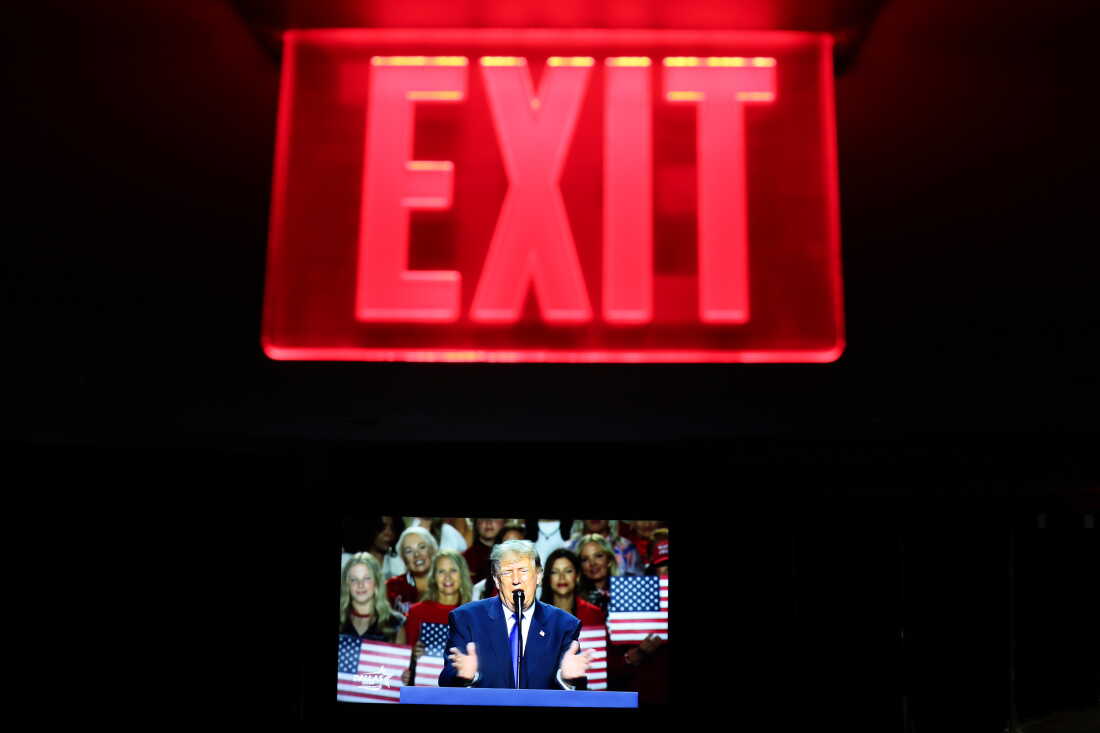
President Trump Speaks and Faces Dissent:
During the first day of the 2026 Republican convention in Dallas, President Trump addressed the crowd. However, within his party, there is a rare occurrence: dissent.
In recent weeks, several Republican candidates and officials have criticized Trump’s agenda. These rebukes include calls to end the U.S. war with Iran, as well as commentary on high prices and immigration policies.
Challenges Facing the GOP:
The dissent comes at a pivotal time for the Republican Party. With less than 40 days until the end of voting, the GOP is working to retain a narrow majority in Congress. Both the Senate and the House of Representatives are in play, with several races still considered toss-ups.
Trump’s influence in the midterms is significant. Despite low approval ratings, he tells voters to act as if he is on the ballot. This approach may lead to complications, as shown by a recent NPR/PBS News/Marist poll. The poll indicates that 45% of registered voters and a majority of independents are voting against Trump.
Sarah Longwell, a GOP strategist, notes that Trump’s strength is derived from his relationship with voters. Historically, Republicans have avoided opposing him due to this stronghold. However, as public opinion shifts, lawmakers feel more comfortable rejecting Trump’s leadership.
Senator Curtis’ Move:
Utah Republican Sen. John Curtis, not up for reelection until 2030, urges the Senate Judiciary Committee to investigate Donald Trump Jr. Curtis’ call follows reports indicating that a Russian oligarch funded much of Trump Jr.’s wedding festivities.
Although past Trump critics have left Congress or the party, Curtis’ move may signal fragility within Trump’s coalition.
GOP Divisions on the Campaign Trail:
Recent polls indicate Americans’ top concern is the cost of living, with the conflict exacerbating financial strain. GOP Senate candidates Ashley Hinson from Iowa and Mike Rogers from Michigan oppose the war, advocating for financial relief for Americans.
Hinson, who formerly voted against ending the war, states that Iowans should not bear the financial burden at the pump or checkout line due to the conflict. Her comments reflect a departure from previous stances.
Rogers also emphasizes the economic impact of the war, noting that Michigan families struggle with everyday costs. He insists energy costs will drop once the conflict ends.
The statements from both candidates represent a clear break from Trump’s policies, as he has defended his decision to engage in the war, downplaying its economic impact.
Shifting Sentiments on Capitol Hill:
On Capitol Hill, impatience with the war grows. House Republicans joined Democrats in supporting a resolution to withdraw U.S. forces from Iran.
GOP strategist Ron Bonjean mentions that by breaking with Trump late in the election cycle, Republicans highlight the high stakes involved. They aim to show voters their independence, distancing from total agreement with Trump.
Importance of Independence for Republicans:
This independence is crucial for Republicans facing elections influenced by key voting demographics, such as Hispanic voters who have distanced from Trump. In states like Texas and Florida, support has dwindled in districts with large Hispanic communities.
Rep. María Elvira Salazar from Florida released an ad criticizing Trump’s immigration policies. Despite this, in an interview, she confirmed her positive communication with Trump, portraying her actions as advisory rather than antagonistic.