
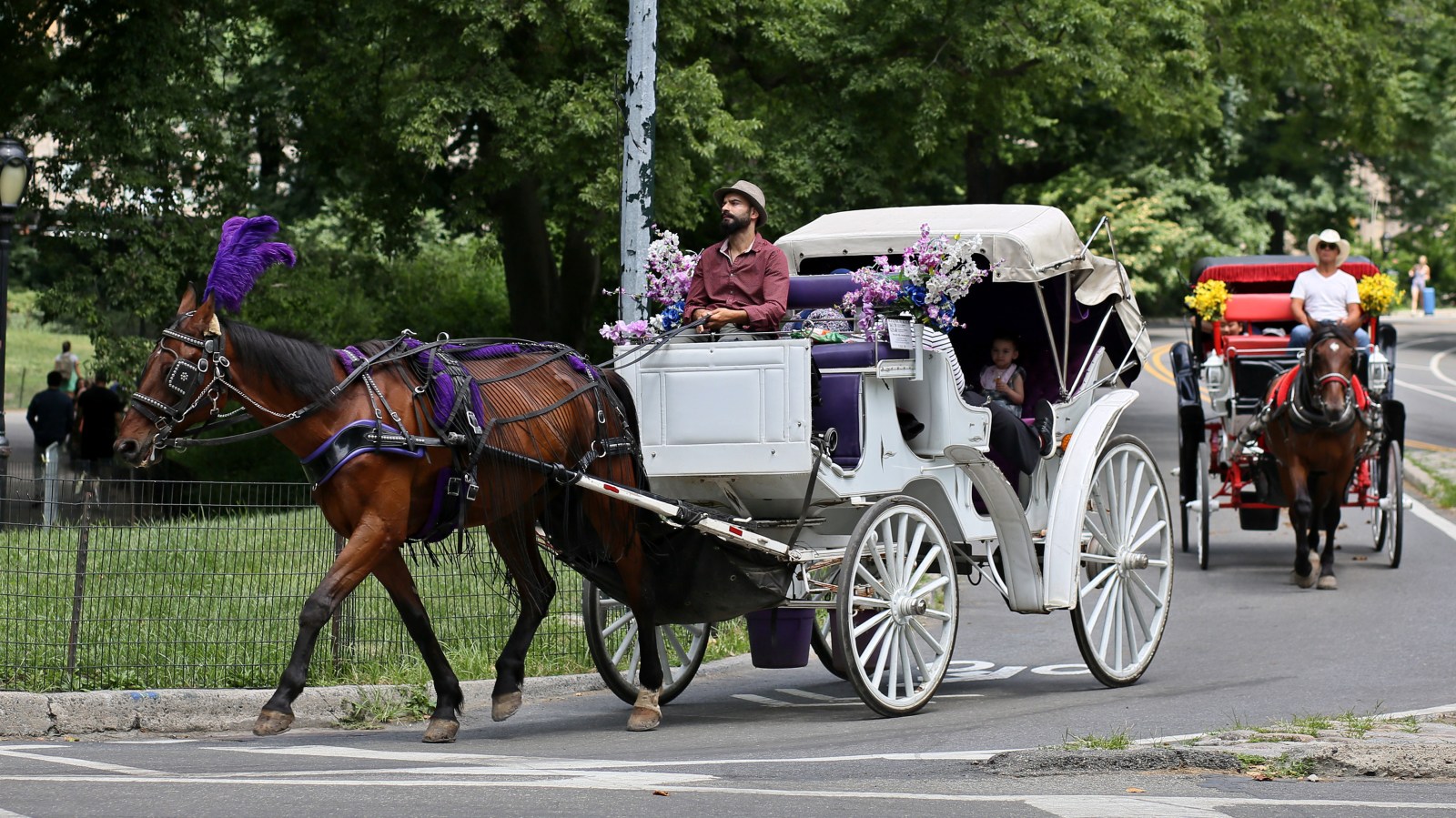
Horse-drawn carriage rides through Central Park have been a nostalgic part of New York City since the mid-1800s. Recent tragic events, including the death of an 18-year-old tourist, have stirred renewed debate on banning these rides. Advocates for Ryder’s Law argue that current regulations fall short in ensuring the safety of horses and passengers.
What Is Ryder’s Law?
Ryder’s Law, introduced in 2024, aims to phase out New York City’s horse-drawn carriage industry, replacing them with electric carriages. The legislation gets its name from Ryder, a carriage horse that collapsed and died in Manhattan in 2022. His death ignited widespread outrage and pushed for a carriage ban. City lawmakers initially proposed the legislation to stop new carriage licenses, establish a closure timeline, and ensure horses find safe retirements rather than face slaughter. Despite support from animal welfare groups and some officials, it stalled in the City Council last year.
After recent incidents, efforts revived, and the law may soon be known as Romanch’s Law, in memory of 18-year-old Romanch Mahajan, who died in a carriage accident. Mayor Zohran Mamdani supports phasing out horse-drawn carriages.
Recent Horse-Drawn Carriage Incidents
The controversy escalated following several incidents. On June 9, a carriage horse named Deniz died after ingesting a toxic plant. Disputes emerged between carriage operators and the Central Park Conservancy over safety measures. Then, on June 17, Mahajan died after a horse became startled and caused an accident. Advocates argue these events reveal broader risks beyond isolated incidents.
Over the past year, multiple incidents were reported, including horses spooked and causing carriage accidents, running into traffic, and injuring drivers.
History of Horse-Drawn Carriages in Central Park
Horse-drawn carriage rides have been part of Central Park’s legacy since its creation in the 1850s. Initially serving as transportation, they evolved into tourist attractions. Recognizable throughout history, carriage rides face criticism despite their longstanding cultural presence.
Suspension of rides occurred for additional driver training, initiated by the drivers’ union.
Existing Rules for Carriage Horses
The industry operates under scrutiny and regulations, governing horse work duration and vacation requirements:
- Carriage horses work no more than nine continuous hours within 24 hours.
- They receive a minimum of five weeks off annually.
- Mandatory veterinary exams set at intervals of 4 to 8 months.
Following Mahajan’s death, union officials stressed that drivers must not leave horses unattended with passengers. Critics contend even with regulations, the inherent risks of urban horse operations cannot be fully mitigated.