
As the United States marks its 250th anniversary, celebrations abound with discussions of freedom, pluralism, and religious liberty. Few statements illustrate these values better than George Washington’s 1790 letter to the Hebrew Congregation in Newport, Rhode Island. In it, he assured that America would “give to bigotry no sanction, to persecution no assistance.” Over two centuries later, evaluating our commitment to this ideal is crucial.
On the fourth Friday following the deadly attack on the Islamic Center of San Diego, I attended prayers at a Los Angeles mosque. Five armed guards monitored over a thousand worshippers. Families arrived with their children, friends greeted one another, and volunteers managed traffic. The security presence felt routine.
Three weeks earlier, while visiting from Canada, my daughter accompanied me to Friday prayer. She paused to photograph a security guard wearing a bulletproof vest, armed with a rifle. “Is this normal?” she asked. The honest answer is yes, and that may be the most concerning aspect.
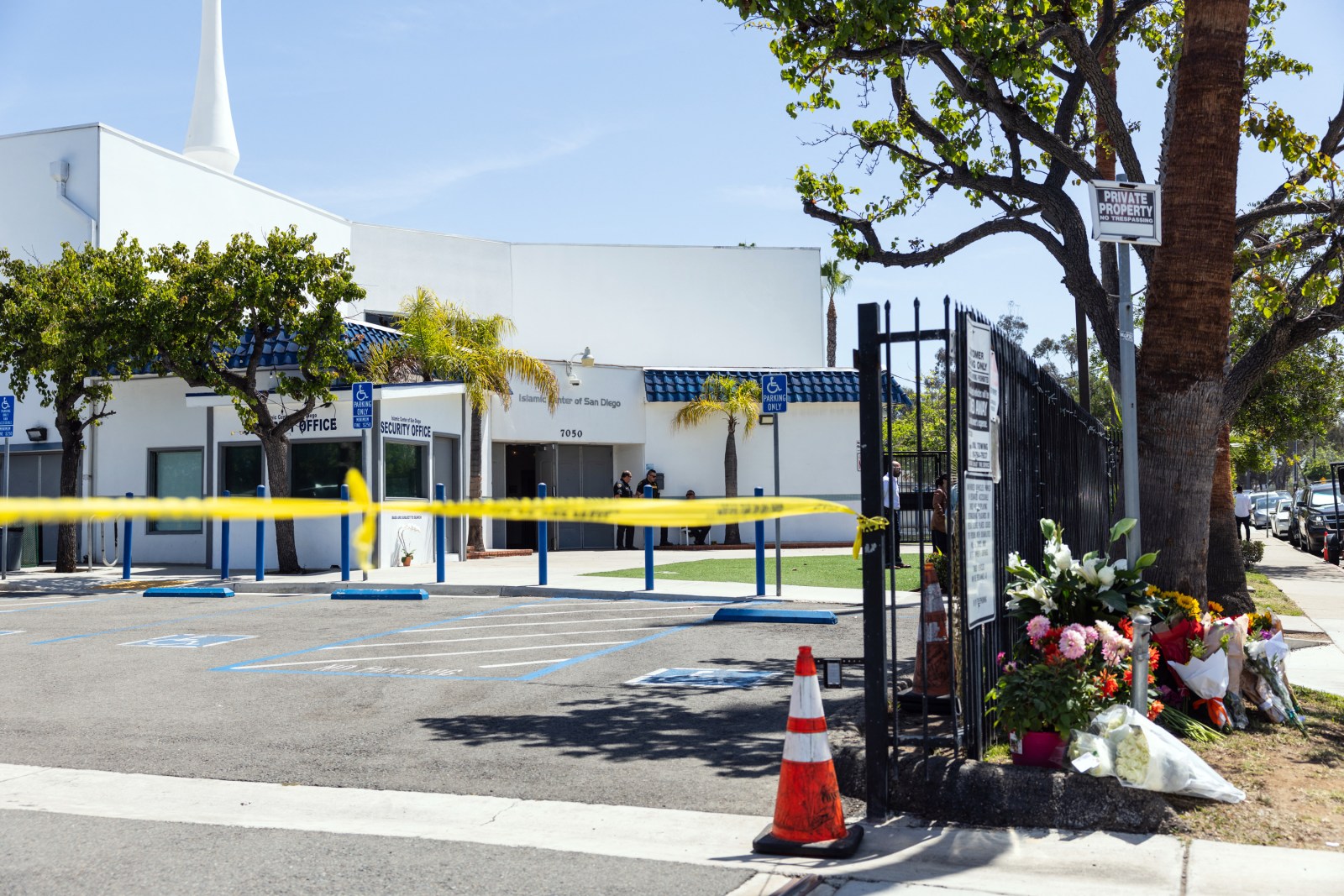
The San Diego attack resulted in three deaths, including a security guard who reportedly died protecting worshippers. Over 130 children were present that day. According to the Center for Strategic and International Studies, this may be the first ideologically motivated lethal attack on a U.S. mosque this century—a grim milestone comparable to attacks in Christchurch, New Zealand, and Quebec City, Canada.
The Islamic Center in San Diego was not unprepared. They had federal and state funding for security, surveillance cameras, fencing, bullet-resistant glass, trained personnel, and emergency protocols. Yet tragedy struck. These measures possibly prevented a larger catastrophe, but the incident highlights how routine extensive security measures have become at American places of worship.
This issue is not exclusive to Muslims. Jewish, Christian, Sikh, Hindu, and other religious communities have experienced deadly attacks, threats, and vandalism. Across faiths, a central question remains: how to keep houses of worship open and welcoming yet secure?
Security costs are high. Money spent on guards, cameras, and threat assessments reduces funds available for education, charity, and community programs. After prayers, I increased my donation to help cover additional security expenses. It is revealing that places of worship now often fundraise for protection instead of services.
Attacks targeting Muslims have increased elevenfold, according to the Muslim Public Affairs Council. UC Berkeley’s Othering and Belonging Institute estimates that over 80 percent of anti-Muslim hate-bias incidents go unreported, indicating the problem is more significant than statistics suggest.
Fear may not appear in government data but becomes evident in everyday decisions: parents questioning the safety of sending their children to classes, worshippers scanning for dangers, and leaders debating security budgets. Security funding is important. The California chapter of the Council on American-Islamic Relations questions whether Muslim-serving institutions receive sufficient security grants amid rising threats. Yet, the broader issue is why there’s an increased need for such grants.
Since the events of 9/11, Muslims in America face heightened scrutiny. Mosques are surveilled, vandalized, and threatened, with anti-Muslim rhetoric migrating from fringe to mainstream discourse. While most exposed to such rhetoric may never commit violence, this climate defines who is viewed with suspicion and who belongs. Violence doesn’t emerge in isolation—it thrives where fear and dehumanization become normalized.
The attack in San Diego and the necessity for armed guards did not arise spontaneously. As America celebrates its 250th anniversary, we should reflect on both achievements and areas for improvement. San Diego highlights not only the challenge of mosque protection but the broader question of safeguarding religious freedom in the nation.
The issues facing mosques today impact houses of worship throughout America. As religious communities increasingly fortify themselves, we stray from George Washington’s assurance of “no sanction to bigotry, no assistance to persecution.” A quarter millennium after the nation’s founding, the focus should be on underlying fear and distrust—not merely the number of guards or cameras needed.
Faisal Kutty is a professor of law at Southwestern Law School, affiliate faculty at the Rutgers Center for Security, Race and Rights, and contributing editor for the Washington Report on Middle East Affairs. The views expressed in this article are the writer’s own.