
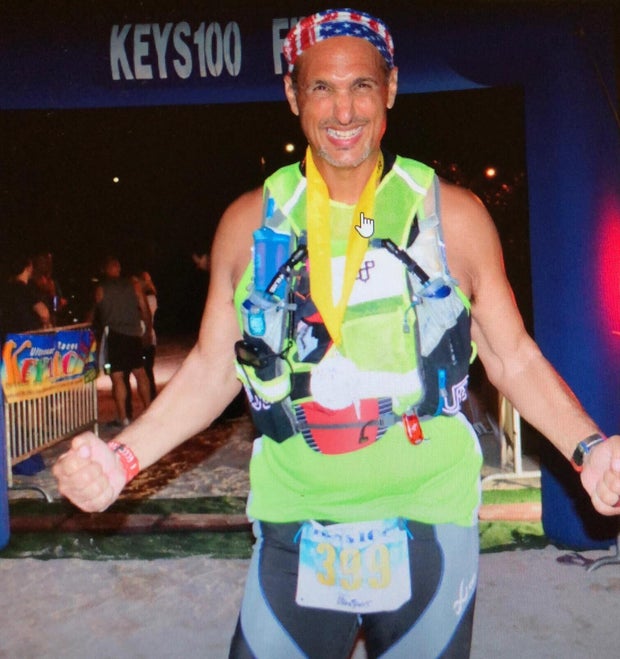
Todd Meiklejohn’s typical day on August 8, 2025 quickly turned into a chaotic event. The adult education teacher started his routine early, having risen by 6 a.m. for a morning meeting. His wife, a nurse, had left for the gym. Suddenly, Meiklejohn experienced severe pain. His memory of the event is hazy—he struggled to see out of one eye and lost movement on his right side. Despite being conscious, he didn’t understand what was happening.
Meiklejohn recounted exiting the bathroom only to collapse against the wall, feeling paralyzed on his right side. An accomplished athlete and biker, he struggled with the weakness. “I just kept falling,” he reflected. “I didn’t have enough strength.”
Swift Action Saved His Life
Approximately 45 minutes after Meiklejohn fell, his wife returned home, found him on the ground, and dialed 911 immediately. Paramedics rushed him to Miami Neuroscience Institute at Baptist Health, where doctors diagnosed a massive stroke.
Dr. Guilherme Dabus, who treated Meiklejohn, stressed the importance of timing in stroke cases. “Time is brain,” Dabus explained. A stroke halts or disrupts blood flow to the brain, causing brain tissue to begin dying from lack of oxygen. Prompt restoration of blood flow minimizes permanent damage.
After assessing Meiklejohn, doctors opted for a mechanical thrombectomy. The surgery involves using a catheter to remove the clot, enabling normal blood flow and effectively saving brain function.
Meiklejohn underwent the procedure within 38 minutes of his wife’s emergency call. This timely intervention meant he suffered minimal lasting damage, allowing recovery of movement and speech soon after surgery. He left the hospital less than two days following his stroke, with Dabus describing his recovery as remarkable.
“You’re a miracle,” Meiklejohn remembered Dabus saying. “I’m one of the lucky patients to walk out and tell this story.”
Uncovering the Cause—A Heart Defect
Post-recovery investigations began to determine the stroke’s cause. In his mid-fifties and in excellent health, Meiklejohn rarely fell ill. Initial hypotheses of a blood clot traveling from his leg were dismissed after tests and health history reviews. Focus turned to his heart, revealing a defect known as patent foramen ovale (PFO).
PFO is a small gap in the heart that typically closes shortly after birth. In Meiklejohn’s case, it remained open. Dr. Eihab Ghantous, from NYU Langone’s Adult Congenital Heart Disease Program, explained that while PFO occurs in 20-30% of adults without harmful effects, it can occasionally allow clots to travel to the brain.
In rare scenarios, such as Meiklejohn’s, a clot destined for the lungs could escape through this gap and cause a stroke. Dabus confirmed a clot was indeed ejected from Meiklejohn’s heart to his brain, leading to the stroke.
Preventing Future Risks
Once diagnosed, Meiklejohn underwent minor surgery to close the PFO. Dabus assured that the procedure significantly reduced future stroke risks.
A year later, Meiklejohn focuses on rebuilding strength and endurance. He returned to work within four weeks, and completed a 100-mile bike race two months post-stroke. Monitoring his vitals remains critical, but he acknowledges how fortunate he was timing-wise.
“Thank God, she came back.” Meiklejohn stated regarding his wife’s timely return.
The experience drove Meiklejohn to advocate for rapid-response stroke treatment, emphasizing the life-saving impact.
“Many people or their relatives are affected,” Meiklejohn said. “Until it happens to you, you have no idea.”