
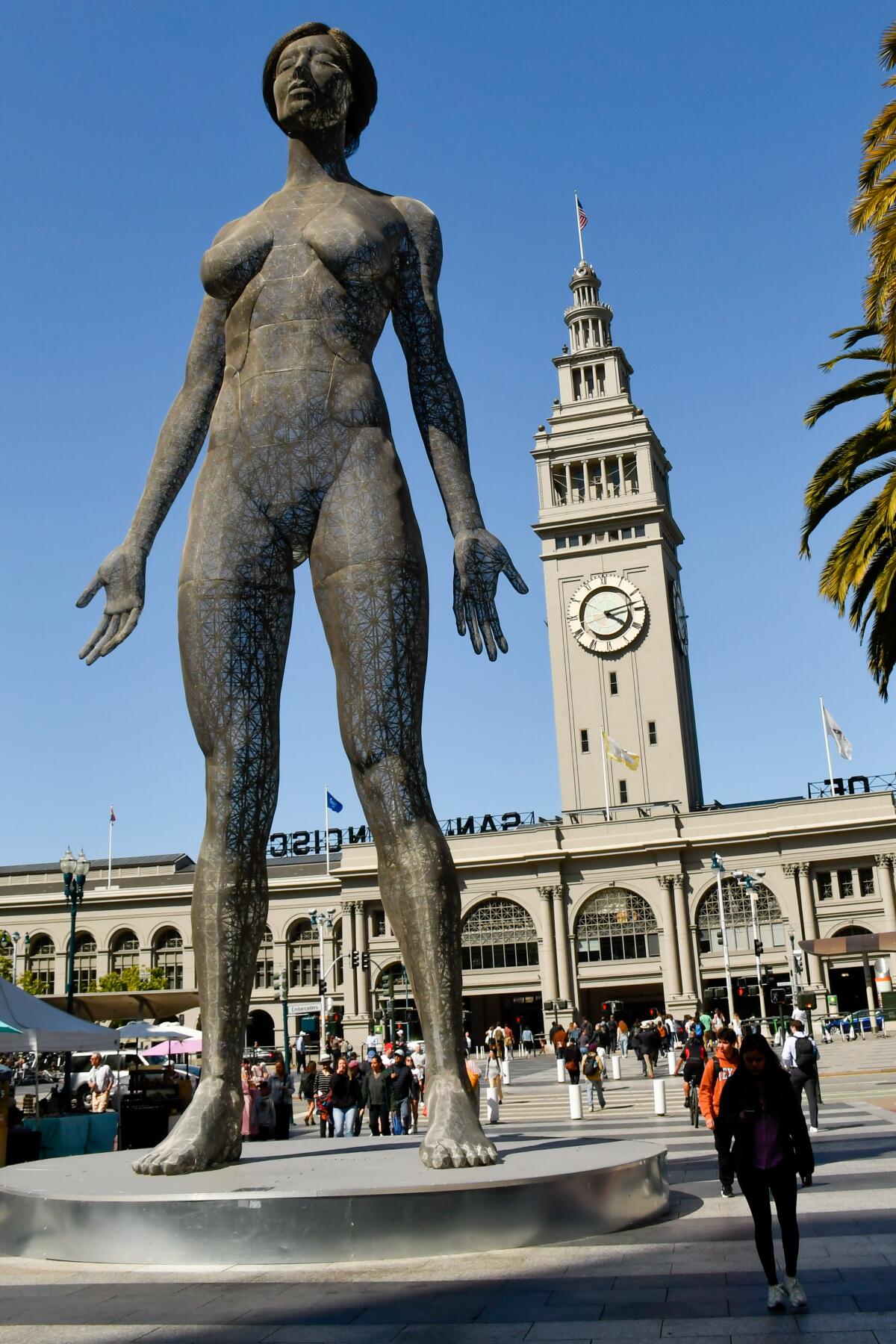
For a limited time, a 45-foot-tall metal sculpture of a nude woman stands in San Francisco’s Embarcadero Plaza. Known as R-Evolution, the piece is notable for its mechanized chest that mimics breathing. Weighing 13,000 pounds, the sculpture will remain across from the historic Ferry Building until October before going up for sale.
The artist, Marco Cochrane, says the sculpture can be moved anywhere, but requires significant equipment for relocation. Cochrane first introduced this giant work of art in April 2025. It is modeled after Deja Solis, a performer from California.
The installation has generated discussion about the nature of public art, questioning whether privately funded pieces can be deemed ‘public art’. The sculpture’s display raises questions about its portrayal of femininity in a city known for liberal values and public nudity acceptance, or if it acts as a provocative statement from a male artist.
R-Evolution is a part of the Big Art Loop. This project seeks to temporarily host large-scale sculptures in public spaces along a 34-mile path in San Francisco. The initiative, funded by the Sijbrandij Foundation, involves partnerships between art curators and the local government.
The project’s supporters, including Mayor Daniel Lurie, view it as a means to restore arts and culture in San Francisco, particularly in the business district hit hard by high office vacancy rates.
R-Evolution originally appeared at Burning Man in 2015. Some critics argue that such artworks have bypassed community input and lacked rigorous evaluation by the San Francisco Arts Commission. Instead, they are considered by some as remnants of Burning Man, not genuine public art.
Max Blue, an art critic, expressed concerns that these pieces reshape public spaces without adequate public involvement, reflecting the preferences of private entities.
Concerns also emerged about the appropriateness of a male-created, nude female statue in a public setting. Some vendors questioned its suitability, especially for children.
Marco Cochrane has defended his work, saying it challenges traditional narratives of women in art, aiming to present a strong and fearless image.
Despite initial plans for April removal, positive feedback led to an extension of R-Evolution’s stay through October. Local businesses and tourists reported favorable experiences, contributing to this decision.
The vibrant discourse surrounding the artwork reflects its success in capturing public attention, achieving its intended purpose of stimulating dialogue.