
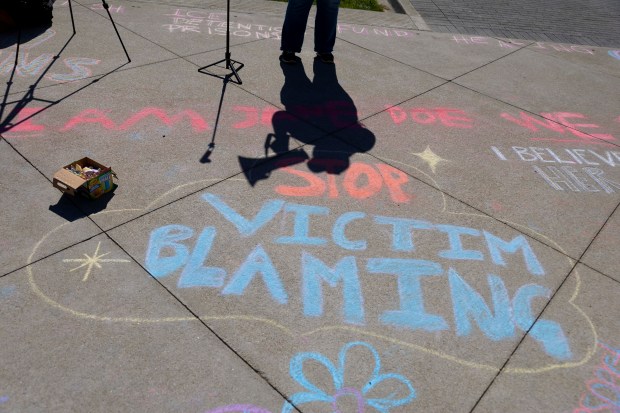
By midday Thursday, a usually calm area at the University of Illinois Chicago was bustling with about 36 students protesting against sexual violence. They carried signs and distributed flyers. A temporary chalk mural brightened the sidewalk by the Lecture Center Building B with messages like “We are Jane Doe” and “Stop Victim Blaming.”
The catalyst for these protests is a two-year-old sexual violence case at Cornell University. Last month, a woman, referred to as “Jane Doe,” filed a civil lawsuit after a prosecutor decided not to press criminal charges against seven men she accused of raping her in 2024 at a fraternity party on Cornell’s campus. This led to a reopening of the investigation and the appointment of a special prosecutor, raising questions about how Cornell and law enforcement managed the case. The incident has drawn national attention and discussions about sexual violence on campuses.
The public uproar has pushed institutions to enhance support for students and victims of sexual assault. Illinois students have seized this opportunity to highlight the issue and discuss how authorities handle such cases. On Thursday, a “National Day of Action” led to hundreds of students at Lincoln Park High School leaving classes in support of “Stop Sexual Violence” protests at UIC and Southern Illinois University Edwardsville.
During the protest at UIC, students used a megaphone to emphasize accountability and demand justice in the Cornell case. Nova Mohiuddin, a member of the UIC student chapter of Chicago Socialist Alternative, was vocal in addressing sexism, stating the importance of speaking out now more than ever.
“I think it is important to push back against sexism, especially when so many people are normalizing it.”
Male students also joined the protest. Jacob Belencion, a mechanical engineering student, emphasized the importance of men supporting the movement and challenging misogynistic behavior.
Meanwhile, students at Southern Illinois University Edwardsville took action after learning about the National Day of Action online. Isabel Montano, a philosophy and economics student, aimed to transform feelings of sadness and anger into positive change. She believes even one voice protesting can make a difference, and emphasized collective responsibility.
“Even if I’m just one person standing out there with a sign, I think that one voice makes a difference.”
The movement spread to Lincoln Park High School, where hundreds of students also protested. They carried a large banner reading “#EndSexualViolence” in pink letters and chanted slogans like “No means no.” The protest concluded at the Lincoln Park Zoo’s administrative office with students sharing messages of action and empowerment.
LPHS junior Isabella Scaffai took part in organizing the protest, drawing from her past experience with activism. She highlighted the importance of addressing the threat of violence faced by students, particularly females, as they transition to college life.
Chloe Woodall, a senior, focused on educating peers about consent and the meaning of sexual assault, hoping to clarify any misunderstandings.
In response to these events, universities like Northwestern and UIC offer support through resources such as Northwestern’s Center for Student Advocacy and Wellness. For those impacted by the news, resources like the Chicago Rape Crisis Hotline provide assistance.
Sarah Layden from the nonprofit Resilience emphasizes the importance of support for survivors, whether they choose to speak out or not. Empowerment and community support can aid healing, but everyone’s journey is unique.
“Building community with other survivors and speaking out can absolutely be compelling and really healing to people.”